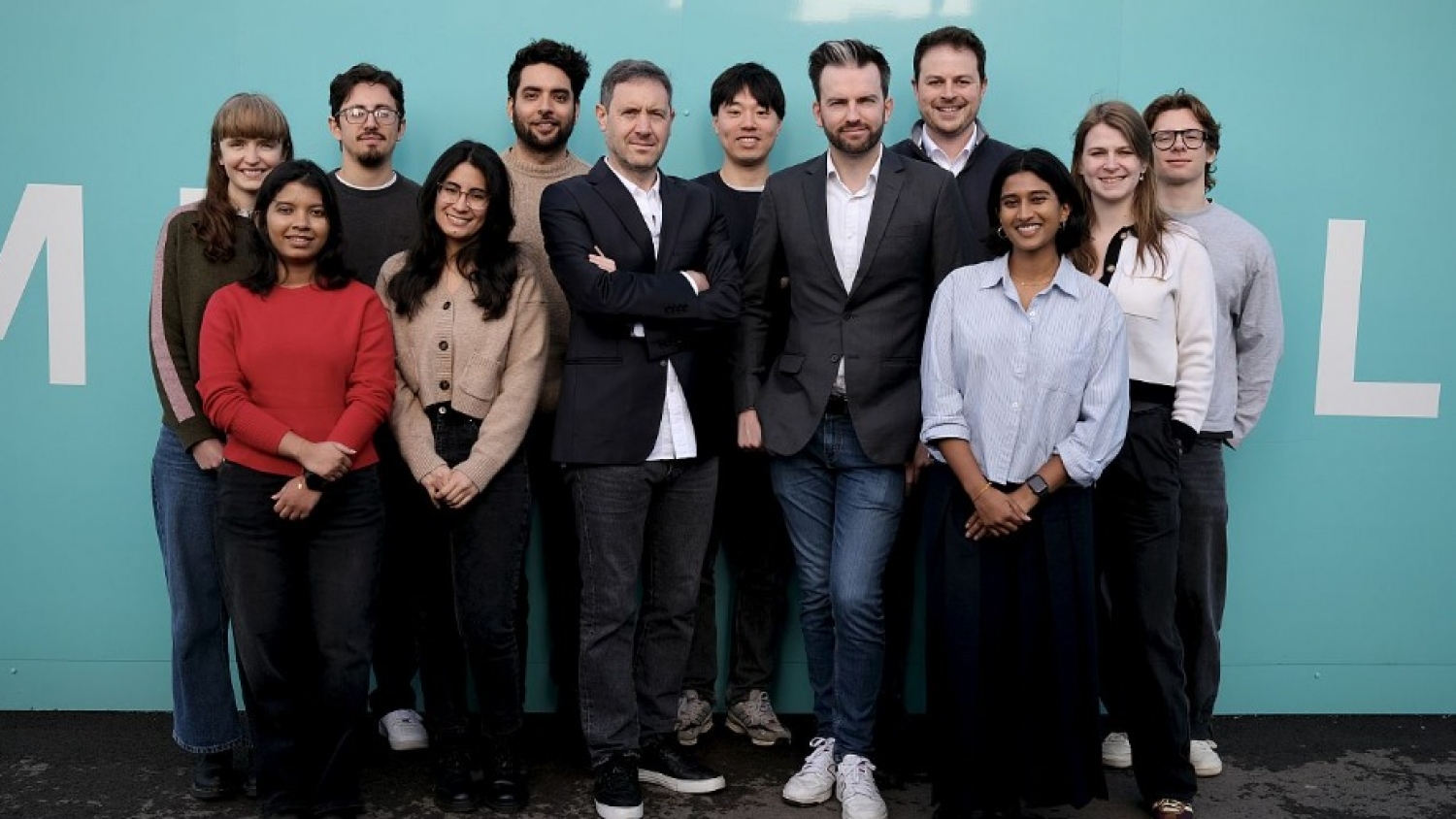
UK-based agtech startup Resurrect Bio has raised $8.1 million in the initial close of its Series A round to advance technology designed to restore crops’ innate disease resistance. According to AgFunderNews, the funding was led by Corteva through its Corteva Catalyst platform, with participation from Calculus Capital, Pymwymic, UKI2S, SynBioVen, and AgFunder. The capital will support product development and team expansion as the company scales its platform.
Founded in 2021 as a spinout from The Sainsbury Laboratory in Norwich, Resurrect Bio develops genetic strategies that enable crops to defend themselves against pathogens without relying on chemical crop protection. The company previously raised $2.1 million in seed funding in 2023.
The startup focuses on strengthening plants’ internal immune systems by targeting interactions between crops and pathogens. Over time, pathogens have evolved proteins that suppress plants’ immune responses, making them more vulnerable to disease. Resurrect Bio aims to identify and disrupt these molecular interactions so crops can regain their natural defenses.
Head of operations Robert Lo Bue explained that the company analyzes how pathogen “effector” proteins bind to plant immune receptors known as NLR helper and sensor proteins. Once those binding sites are identified, small genetic edits can prevent the interaction, effectively blocking the pathogen.
“The theory behind the science is that because we are locking out the pathogen, you can get up to 100% resistance,” said Lo Bue. “Now, of course, it’s an evolutionary arms race and that pathogen will eventually overcome the changes over decades. But our goal is really 100% immunity [in the meantime].”
Unlike breeding approaches that target single traits in specific crops, Resurrect Bio has built a platform that can be applied across multiple crops and multiple threats, including fungal diseases, oomycetes and nematodes. According to Lo Bue, the company’s approach centers on rapidly identifying and breaking the molecular interaction between plant and pathogen.
“What makes Resurrect Bio unusual is that we can work with any crop, most pathogens, and many pests. The base science is about rapidly discovering the interaction between pathogen and plant and then breaking it, which sets us apart from the competition,” he said.
In some cases, resistance can be restored through minimal changes. “The magic of it is that some of those changes are as little as [introducing just] one amino acid [change at the binding site of the helper protein]. So as little as one small change will break that interaction and make the plant resistant to the pathogen again.”
The company’s patented technology rests on three pillars. First, FloraFold®, a proprietary AI-based protein prediction tool trained on plant–pathogen interactions, helps identify likely binding partners. Second, high-throughput in-silico and in-planta screening platforms test those predictions at scale. Third, what the company calls “resurrection tech” identifies precise genetic modifications that can prevent binding.
Rather than conducting gene editing itself, Resurrect Bio provides seed companies with detailed instructions on where edits should be made within their germplasm. “We essentially make the template for the seed company to implement into their own unique germplasms,” said Lo Bue. “Our goal is to find the interaction [and identify how to] break the interaction, but the actual gene editing with technologies such as CRISPR, are not done by us.”
The company initially demonstrated resistance to potato cyst nematode and has since expanded into major crops including soy, corn, wheat, rice, cotton and brassicas. It is currently conducting greenhouse trials on several crops and has entered joint development agreements with seed companies, with additional partnerships expected to be announced.
Resurrect Bio has committed to delivering 18 disease-resistance traits in key crops over the next three years, alongside improvements to its FloraFold AI system. “The more we train it on data, the smaller the search scope becomes, and that means the quicker we can find traits,” said Lo Bue. “And that’s quite significant because some companies will take 10 years to just make one.”
As regulatory and environmental pressures increase around chemical crop protection, technologies that enhance plants’ internal defenses are gaining attention. With fresh capital and backing from major agricultural investors, Resurrect Bio aims to position its platform as a scalable solution for disease resistance across global crop systems.