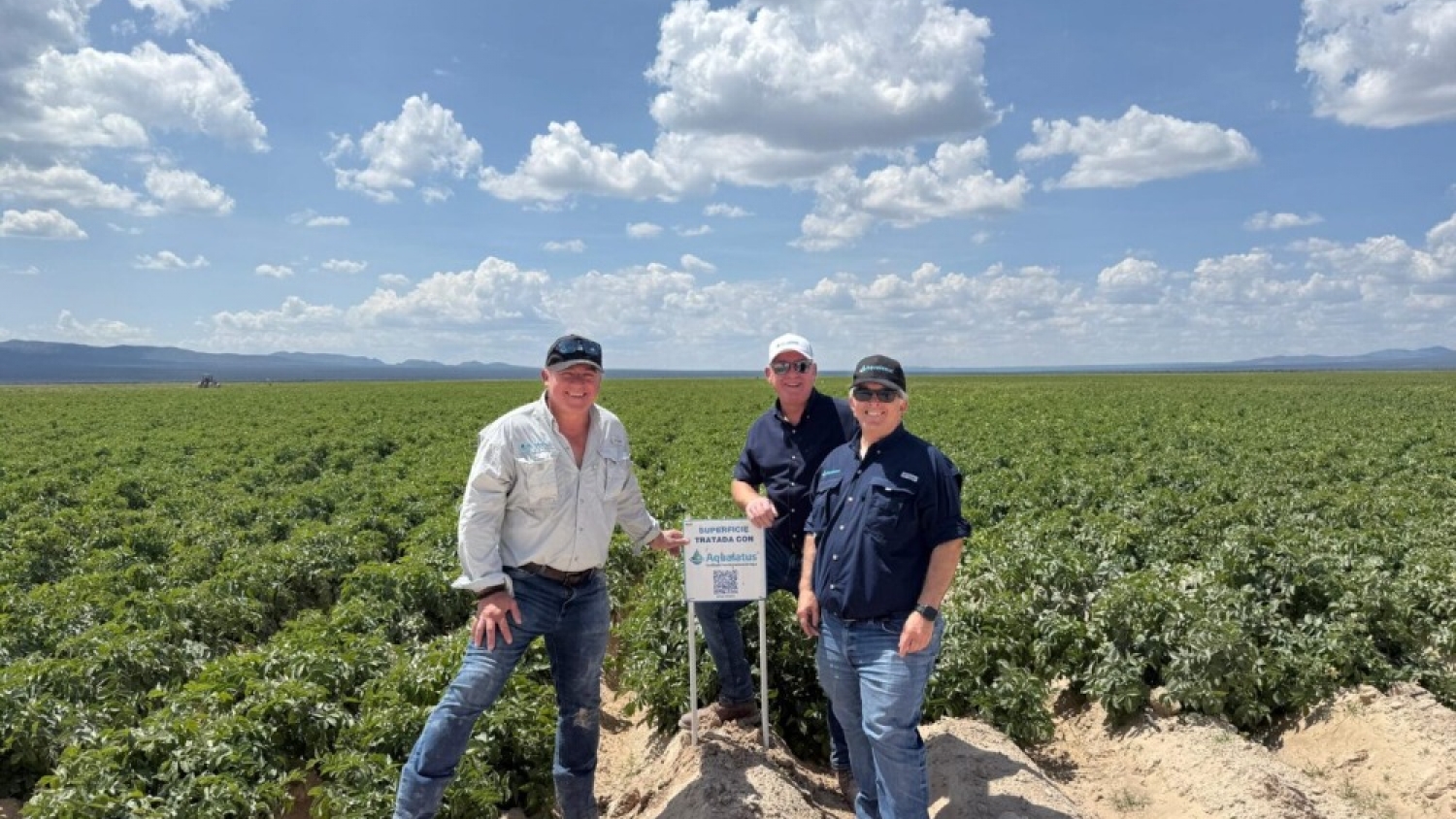
As water scarcity intensifies across major agricultural regions, farmers are increasingly searching for ways to improve productivity without increasing water consumption. In 2026, rising water costs, prolonged droughts and declining aquifer levels have made efficient water management a critical factor for farm profitability. According to AgFunderNews, UK-based company Engage Crop Solutions believes its Aqualatus technology can help growers achieve higher yields while using less water.
The challenge is particularly significant in the United States, where many agricultural areas are experiencing water shortages and declining groundwater reserves. Traditional solutions have focused on either improving water infiltration through surfactants or increasing retention with hydrogels. However, these approaches often address only one aspect of the soil-water relationship and may not consistently translate into better crop performance.
According to AgFunderNews, Engage Crop Solutions has spent more than a decade developing Aqualatus, a technology designed to improve how water interacts with the entire soil-plant system. Rather than focusing solely on moisture retention, the system seeks to enhance root growth, nutrient uptake and crop resilience.
Mike Panteli, co-founder and director of Engage Crop Solutions, explained the importance of maintaining the right balance between water and oxygen in the soil. “Crop health and associated root performance is governed by the balance between water and oxygen in the soil,” Panteli said, according to AgFunderNews. “When soil moisture is restricted, root activity declines—limiting development, nutrient uptake, and ultimately yield potential.”
Aqualatus consists of four liquid technologies built around microscopic micellar structures. These structures interact with soil particles and influence how water moves through the soil profile. The product can be applied through existing irrigation systems without requiring changes to current farming practices.
The company says the technology improves infiltration, distribution, retention and oxygenation simultaneously. By creating a structured network around soil particles, Aqualatus helps retain moisture within the root zone while preserving pore space for air circulation. This process allows crops to access water more efficiently and supports nutrient absorption.
Field trials have produced promising results. According to AgFunderNews, a 124-acre winter wheat trial conducted in Washington State recorded an average yield increase of 16 bushels per acre. The trial also showed a 14.5% reduction in irrigation water use and generated a four-to-one return on investment following a single application.
Researchers also observed stronger root development, improved leaf nitrogen levels and increased moisture retention in the root zone. These factors contributed to greater resistance to periods of water stress and more stable crop performance.
Globally, Engage Crop Solutions has conducted more than 350 field trials across 20 countries involving different crops, soil types and irrigation systems. According to the company, results consistently demonstrate improvements in water-use efficiency, nutrient uptake and yield performance.
The timing of the technology's expansion into the US market is significant. According to AgFunderNews, more than 60% of the country has experienced drought-related impacts, while key aquifers in regions such as the Great Plains and western states continue to face long-term depletion risks.
As water availability becomes a growing concern for agriculture worldwide, technologies that maximize the value of every acre-inch of water could play an increasingly important role in maintaining farm productivity and profitability. Engage Crop Solutions believes that improving how water functions within the soil may become just as important as securing access to the resource itself.