Brazilian agribusiness company SLC Agrícola is expanding the use of autonomous aerial crop spraying across its farms after signing an agreement with US-based robotics company Pyka to deploy its Pelican 2 aircraft. The decision follows a full growing season of on-farm testing in Brazil and reflects a broader shift toward unmanned solutions in large-scale agriculture, according to information reported by AgFunderNews.
The deal involves the supply of Pelican 2 autonomous spraying aircraft to multiple SLC Agrícola operations in Brazil. The company, one of the country’s largest producers of soybeans, corn, cotton, and cattle, tested the system during the previous season after Pyka trained two of its employees to operate the aircraft. Following the trial, SLC confirmed it would scale up the fleet to increase productivity and operational flexibility across its holdings.
“Our partnership with Pyka has exceeded expectations. Pelican 2 proved its ability to deliver reliable crop protection on a nightly basis in demanding field conditions,” said Ronei Sandri Sana, a representative of SLC Agrícola, in statements cited by AgFunderNews. “Based on the results we’ve seen this season, we are expanding our fleet to continue driving innovation and productivity across our operations.”
The agreement highlights the growing role of unmanned aerial systems (UAS) in Latin American agriculture, particularly for large-scale row crops traditionally treated with boom sprayers or piloted crop-dusting aircraft.
Night spraying as a key advantage
According to Michael Norcia, cofounder and CEO of Pyka, the ability to spray crops at night is the most compelling value proposition for Brazilian growers. Speaking to AgFunderNews, Norcia explained that many pesticides perform better under nighttime conditions, when wind is lower and evaporation rates are reduced.
“The ability to spray at night is probably the single largest value proposition for customers, at least in Brazil,” Norcia said. He added that the same logic applies globally, as environmental conditions at night often improve spray effectiveness while reducing drift.
Nighttime operations are particularly relevant in Brazil due to the widespread use of biological pesticides, which can degrade under high temperatures. “Biologic pesticides, which are very popular in Brazil, can also die when it gets too hot out, so they have to be sprayed at night,” Norcia noted, adding that some Brazilian customers are using the Pelican 2 almost exclusively for applying biological products.
Beyond agronomic performance, Pyka argues that its autonomous aircraft can compete economically with traditional aerial application methods. Norcia said the total cost of application is lower than that of piloted aircraft and comparable to boom sprayers, while avoiding crop damage caused by repeated passes of ground equipment.
A different approach to large-scale spraying
While smaller spraying drones have gained traction in orchards, hilly terrain, and hard-to-reach areas, Pyka positions Pelican 2 as an alternative for broadacre crops such as soybeans, corn, and wheat. These crops dominate Brazil’s agricultural landscape and are typically managed with large equipment or manned aircraft.
Pelican 2 has a 300-liter payload, can operate fully autonomously, and is capable of treating up to 100 hectares per hour, according to the company. Pyka describes it as the largest autonomous agricultural aircraft currently authorized for commercial operation at this scale.
“There’s literally no other company doing what we’re doing,” Norcia told AgFunderNews. He emphasized that Pyka developed most of the aircraft and the entire autonomy software stack in-house, including obstacle detection and avoidance systems that rely on LiDAR and radar technologies.
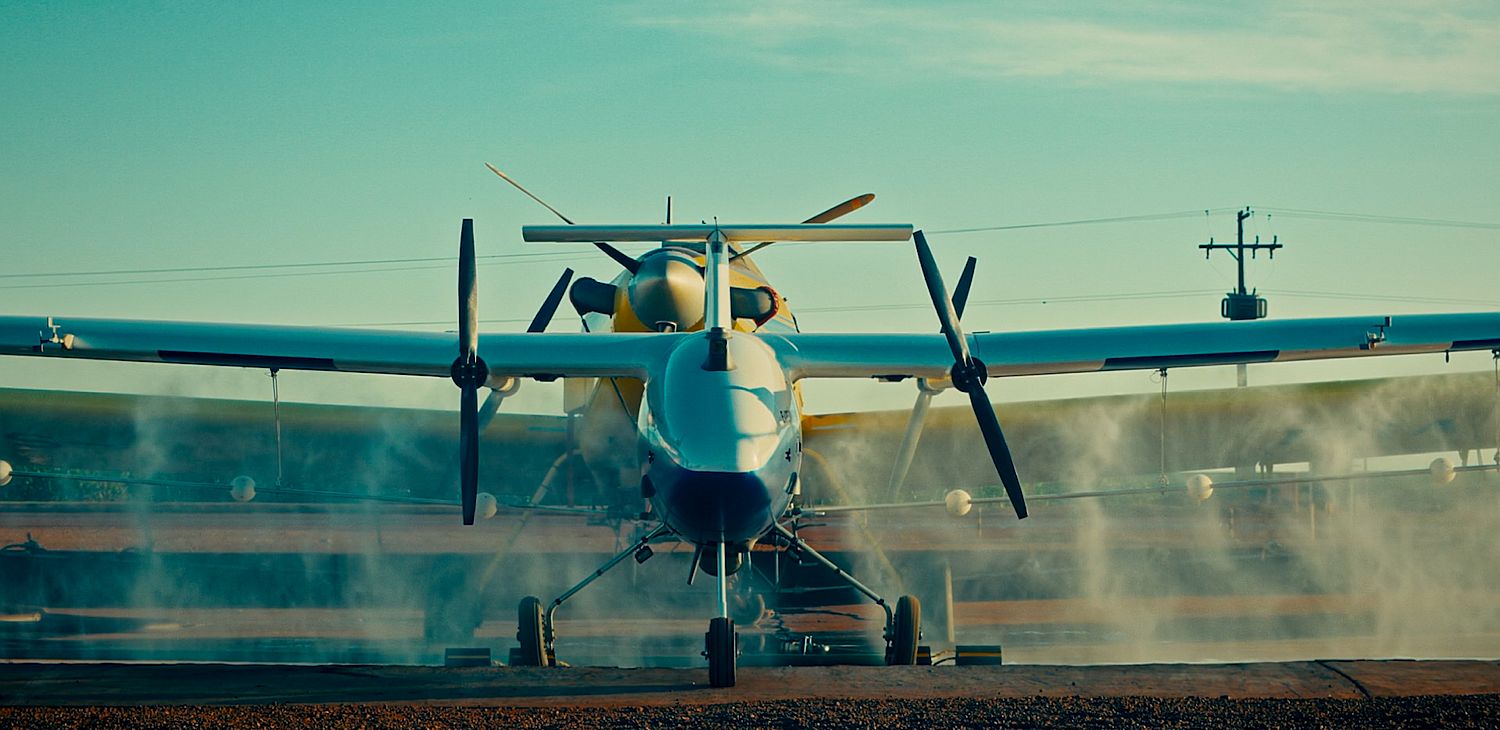
Norcia contrasted Pyka’s approach with that of Chinese drone manufacturers, arguing that existing obstacle-avoidance systems are not designed for high-speed, low-altitude flight over crops. Pelican 2 typically flies three to four meters above the canopy at speeds of up to 80 miles per hour, a combination that requires advanced sensing and real-time decision-making.
Brazil as a launchpad for growth
Pyka sees Brazil as one of its most important markets, reflecting both farm scale and the local business model for aerial application. In Latin America, large growers often own aircraft and employ pilots directly, unlike in the US, where aerial spraying is more commonly purchased as a service.
“The US is a little bit behind Brazil in terms of commercial rollout, but we are going after the same sort of customer type—large growers,” Norcia said.
The company currently assembles its aircraft in Alameda, California, using components sourced from a network of contract manufacturers. Pyka delivered seven Pelican 2 aircraft by the end of 2025 and aims to deliver an additional 30 units by the end of 2026. According to Norcia, orders already extend into 2027 and 2028, indicating strong demand.
In the medium term, Pyka is prioritizing Brazil, Central America, and the United States, with a particular focus on crops such as bananas in Central America. Looking further ahead, the company expects agricultural applications to account for roughly two-thirds of its revenue by the end of the decade, with the remainder coming from cargo and adjacent markets.
Regulatory tailwinds and market context
The expansion in Brazil comes amid tighter regulatory scrutiny of foreign-made drones in the United States. Recent decisions by the Federal Communications Commission (FCC) restrict new authorizations for certain foreign drone models and components on national security grounds.
Norcia said Pyka is well positioned under the new rules, as most of its production is based in the US. “With our aircraft production almost entirely based in the US, Pyka is well positioned under the FCC’s new rules,” he said, adding that the company plans to broaden its product lineup to serve more US farmers across different crops and operating conditions.
For SLC Agrícola, the partnership underscores a broader strategy of adopting advanced technologies to improve efficiency at scale. By integrating autonomous aerial spraying into its operations, the company aims to reduce reliance on manned aircraft, optimize pesticide use, and gain greater flexibility in timing applications.
As large agribusinesses in Brazil continue to experiment with automation and robotics, the SLC-Pyka deal signals that unmanned aerial spraying is moving beyond pilot projects and into mainstream use in industrial agriculture.