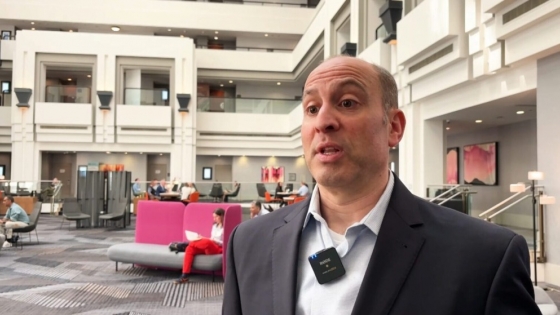
The agtech sector is not in decline but in transition. After several years marked by falling valuations, scarce capital and delayed exits, 2026 is shaping up as a turning point for investors willing to deploy patient and disciplined capital. That is the view of David Pierson, managing director of Syngenta Group Ventures, who argues that the industry has reached the bottom of the investment cycle and is now entering a phase where long-term opportunities outweigh short-term uncertainty, according to AgFunderNews.
Speaking to the specialized outlet, Pierson said that while predictions of consolidation, rollups and major exits dominated investor conversations in recent years, most of those expectations failed to materialize. Instead, companies spent much of 2025 focused on survival, extending their financial runways in an environment where capital was both scarce and expensive.
“Most companies and boards were focused on finding any source of capital they could to make it through the trough of the down cycle,” Pierson told AgFunderNews, noting that weak balance sheets and ongoing cash burn made mergers particularly difficult. Combining two financially stressed companies, he said, often results in “a bigger cash burn and a greater need to raise money.”
As a result, the consolidation wave many investors anticipated did not arrive. While some players, such as CropX, continued to pursue acquisitions, broader rollups proved complex and risky due to the challenges of integrating multiple organizations, technologies and product portfolios.
A necessary correction after years of excess
According to Pierson, the current environment is the result of a long period of excess capital that distorted valuations across the agrifoodtech landscape. Prolonged low interest rates between the mid-2010s and 2022 fueled aggressive dealmaking and inflated expectations, allowing ventures to raise money that would not have been available under more disciplined conditions.
“We are now living through the hangover,” he said. The ongoing shakeout, similar to those following the 2001 and 2008 crises, is pushing weaker companies and underperforming funds out of the market. In the long run, Pierson believes, this correction will strengthen the ecosystem by rewarding disciplined investors and well-managed companies capable of delivering innovation efficiently.
Capital has not disappeared entirely. Instead, it has become more selective. Active investors today include corporate venture capital arms backed by companies committed to long-term innovation, as well as traditional venture funds with strong track records that managed to raise capital before market conditions deteriorated.
Exits remain difficult, but not impossible
Despite growing optimism, Pierson cautioned that the exit environment will remain challenging throughout 2026. Large agribusiness corporations continue to prioritize financial stability and internal restructuring, limiting their appetite for major acquisitions.
Still, opportunities exist. Well-managed companies with strong intellectual property, accelerating customer traction and sound financials can attract buyers seeking technologies that fill strategic gaps. Pierson pointed to fertilizer and plant nutrition companies as examples of players actively pursuing acquisitions to improve margins and differentiate their offerings.
While some investors once hoped for “category-defining exits” similar to Monsanto’s acquisition of Climate Corp, Pierson noted that such expectations have not been met. “Many people thought that was category-defining, but it fizzled as the business model failed to pan out,” he said, adding that the SPAC boom also failed to deliver sustainable outcomes for agtech.
Why corporate venture capital matters now
In this environment, Pierson believes corporate venture capital (CVC) will play an outsized role in determining which technologies survive and scale. With access to stable balance-sheet funding, deep technical expertise and a longer investment horizon, CVCs are well positioned to support companies through the downturn.
Syngenta Group Ventures, one of the longest-running ag-focused CVC units, operates with a degree of independence that allows it to invest both strategically and financially. According to Pierson, the group can back startups even when there is no immediate strategic rationale for Syngenta, recognizing that relevance often emerges years later.
“Our job is to peek around corners,” he said, citing past investments in areas such as drones, satellite imagery, fintech and e-commerce, which later became strategically important for the broader organization.
Because Syngenta Group Ventures invests off the corporate balance sheet, it is not bound by the fixed timelines that constrain traditional venture funds. That flexibility allows the team to take a longer-term view and avoid premature exits driven by fund life cycles.
Biocontrols, precision application and AI
Despite the cautious market, Pierson stressed that innovation in agtech is stronger than ever. He highlighted several areas where Syngenta Group Ventures is particularly active, including biocontrols, precision application technologies and artificial intelligence and machine learning.
Biological crop protection products, he said, are gaining traction as regulatory pressure increases on conventional chemistry and resistance issues mount. “Farmers across major markets are desperate for new solutions,” Pierson noted, adding that product performance and consistency in biocontrols have improved significantly.
AI and ML tools, meanwhile, are beginning to deliver tangible value across the agricultural value chain. Pierson identified three areas with near-term impact: accelerating the discovery of new active ingredients, enabling more targeted application of crop protection products, and improving operational efficiency across manufacturing, supply chains and digital sales channels.
AI platforms originally developed for pharmaceuticals, he said, are increasingly applicable to agriculture, reducing both the time and cost required to identify promising compounds. In the field, precision application technologies can help farmers apply the right input, in the right amount, at the right place—boosting returns while reducing environmental impact.
Lessons from a volatile decade
Looking back on his career in ag investing, Pierson emphasized the importance of fundamentals. He warned against falling in love with technology without a clear customer problem and urged boards to prioritize capital efficiency over aggressive growth.
“I look for three categories of risk that are difficult to mitigate,” he said, pointing to execution, technology and financing. Teams lacking sector experience, weak intellectual property and unrealistic financial projections remain major red flags.
As the sector moves through what Pierson describes as the bottom of the cycle, expectations are beginning to stabilize. While fundraising will likely remain difficult in the near term, he believes conditions will gradually improve as confidence returns to both the farm economy and the broader venture market.
For investors willing to be selective and patient, Pierson’s message is clear: agtech is not dead. It is sobering up—and the next wave of returns may well be built by those investing now, at the most disciplined point in the cycle.