Swiss fermentation company Planetary is exploring a strategic collaboration with Dhampur Bio Organics (DBO), one of India’s leading sugar producers, to manufacture mycoprotein at industrial scale in India at a cost below $1 per kilo. The initiative, still subject to final agreements and regulatory approvals, could significantly expand access to alternative proteins in developing markets while strengthening India’s position in the global bioeconomy, according to information reported by AgFunderNews.
The potential partnership would involve producing mycoprotein adjacent to DBO’s sugarcane processing facilities, leveraging abundant agricultural side streams, low labor costs and integrated energy infrastructure. The project aims to supply both export markets and domestic Indian applications, ranging from protein fortification to culturally adapted food products.
“Subject to final agreements and regulatory approvals, we expect this partnership to enable DBO to both export raw mycoprotein and introduce India-market applications such as mycoprotein-based protein fortification solutions and myco-tikka masala,” said Gautam Goel, managing director of Dhampur Bio Organics, as quoted by AgFunderNews.
Planetary, which currently operates a mycoprotein production facility in Aarberg, Switzerland, co-located with a sugar mill owned by Schweizer Zucker, is pursuing a global expansion strategy based on regional partnerships with agricultural processors. India represents a key opportunity due to its scale, feedstock availability and growing demand for affordable protein.
“Sugar side streams are abundant, labor costs remain low, and energy can be integrated with sugar mills,” Planetary noted, highlighting the structural advantages of co-locating fermentation facilities with existing agro-industrial infrastructure.
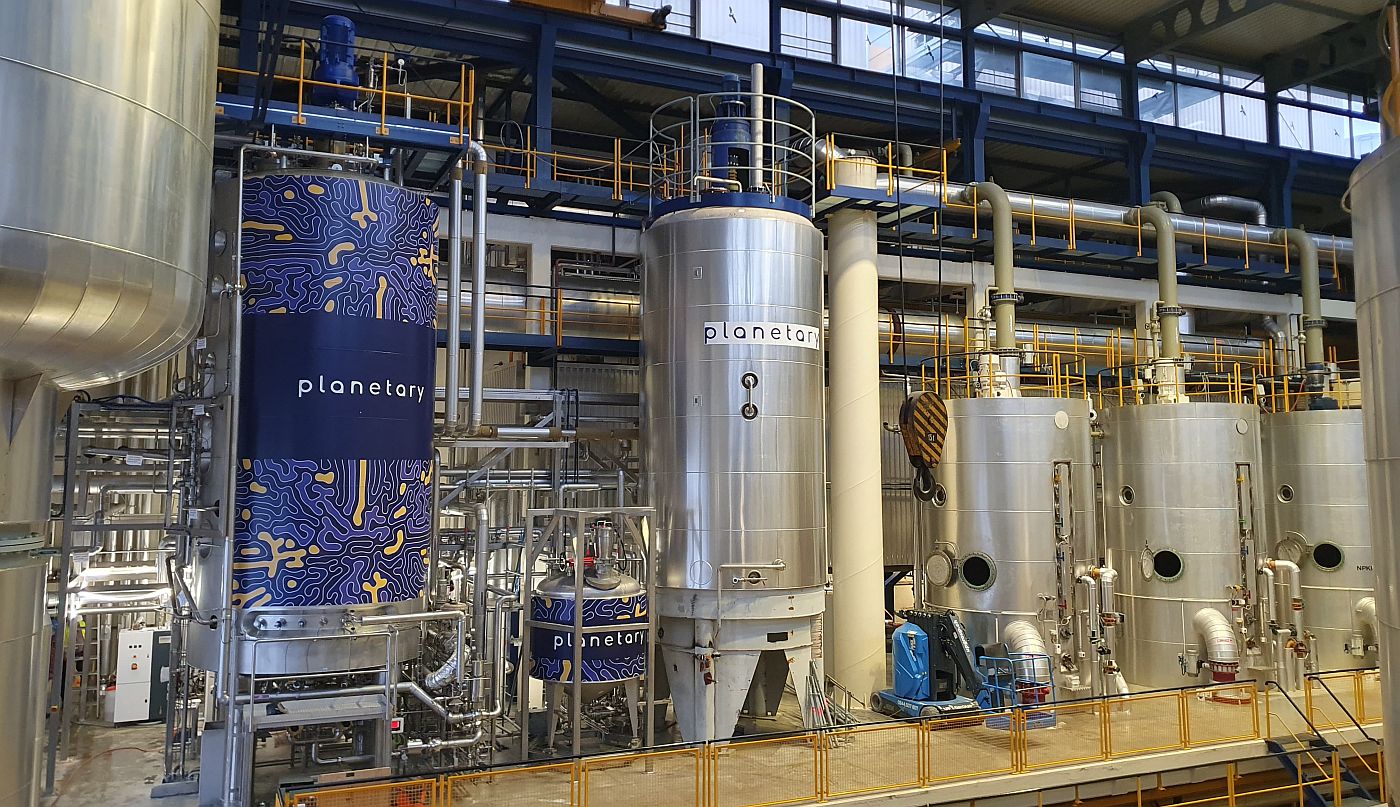
Under the proposed deal, Planetary would license its proprietary BioBlocks fermentation platform to DBO, allowing local production of mycoprotein next to sugarcane processing sites. According to Planetary cofounder David Brandes, the model is designed to accelerate time to market and improve unit economics.
“The end products we aim to produce will be both wet (frozen) and ambient or shelf-stable,” Brandes told AgFunderNews. While he declined to comment on timelines or distribution details, he emphasized that Planetary’s mycoprotein is intended for a wide range of applications, including meat alternatives, hybrid meat, dairy alternatives, and nutritional supplements, all at highly competitive price points.
As a benchmark, Brandes noted that Planetary’s Swiss facility became operational just nine months after the first equipment was delivered, underscoring the scalability and speed of deployment of the company’s fermentation systems.
Planetary currently produces mycoprotein using Fusarium venenatum, a fungal strain also used by established players such as Quorn and ENOUGH Food. According to Brandes, it remains “the only fungi strain that has almost global regulatory approval,” although the company is developing additional strains to broaden future applications.
“Planetary’s production set-up is designed to deliver almost immediate gross-margin positive operations,” Brandes said, pointing to the economic viability of the model even in capital-intensive industrial settings.
The company’s business strategy is based on a dual approach: selling mycoprotein as a B2B ingredient and licensing its fermentation technology to agricultural partners worldwide. This model allows Planetary to scale production rapidly without bearing the full capital burden of each new facility.
“Sales of mycoprotein as a B2B ingredient and technology licensing of our proprietary BioBlocks fermentation platform to agricultural players around the world in strategic co-location are the two pillars of our business,” Brandes explained. While Planetary is currently focused on optimizing its internal production systems, it is also monitoring opportunities in precision fermentation and bio-based materials, given the adaptability of its platform to different microbial strains and end uses.
The expansion comes at a time when parts of the alternative protein sector are facing headwinds, particularly in retail-facing meat alternatives. Industry pioneer Quorn, for example, has reported muted sales growth despite improving margins. However, Brandes argues that market dynamics vary significantly by region.
“Sales of meat alternatives differ widely across geographies,” he said, pointing to growth in Germany, France, and Italy. He also highlighted rising demand for mycoprotein as a functional ingredient rather than a finished consumer product.
“We are witnessing an already large and growing market for mycoprotein as a versatile B2B ingredient, enabling private labels and brands to diversify their offerings across meat and dairy alternatives as well as hybrid applications,” Brandes noted.
Compared to other plant-based proteins, mycoprotein offers several competitive advantages, including a favorable nutritional profile, lower environmental impact, and a naturally fibrous texture that does not require extrusion or extensive processing. Additionally, it can be produced locally in many regions, reducing supply chain complexity.
Beyond fully plant-based products, Planetary sees hybrid meat as a major growth opportunity. “Mycoprotein is the key ingredient to creating hybrid chicken and beef that rivals conventional meat on price, taste, health, and sustainability,” Brandes said.
He cited the example of LIDL Belgium, where more than 30% of minced meat sales now come from hybrid products, driven by consumer cost savings and retailers’ efforts to meet Scope 3 emissions targets. According to Planetary, blended meat products containing mycoprotein have lower fat and sodium levels, improved Nutri-Score ratings, and significantly reduced carbon footprints compared to conventional meat.
“When paired with low-cost produced mycoprotein, a chicken product can be offered at over a 20% discount without compromising taste,” Brandes added.
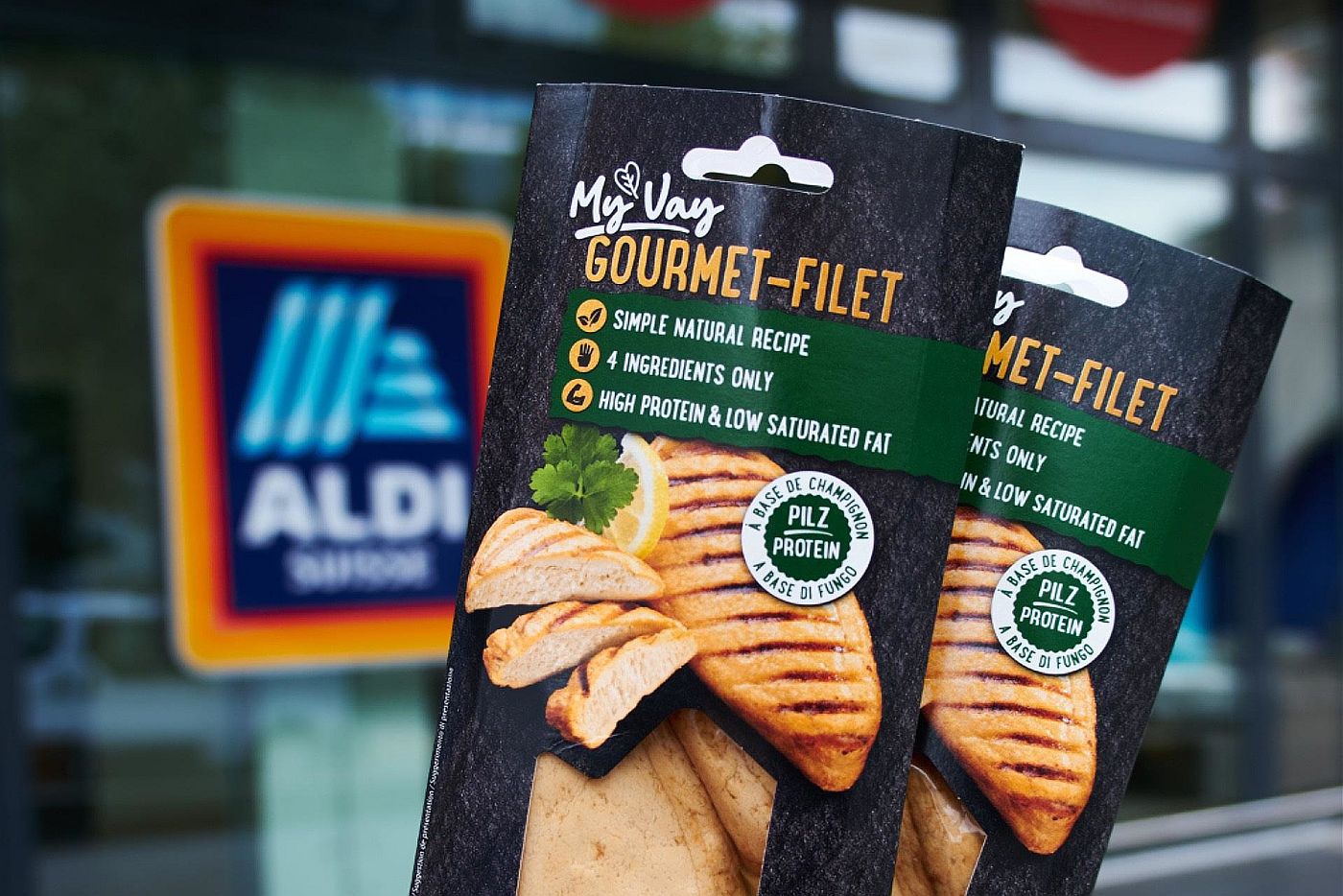
Since commissioning its Swiss facility, Planetary has supplied mycoprotein to ALDI Suisse for a nationwide retail rollout at price parity with chicken. Looking ahead, the company expects 2026 product launches to include private-label meat and dairy alternatives, as well as hybrid meat products blending mycoprotein with beef or chicken.
“Despite recent industry setbacks, the alternative protein market is poised for growth,” Brandes said, noting that major European retailers such as ALDI, LIDL, Albert Heijn, Carrefour, and REWE have committed to increasing plant-based product sales.
Regarding financing, Brandes said Planetary has raised a CHF 7.5 million seed round, secured a CHF 3 million strategic investment from Cosun, and received a CHF 1.8 million grant from Innosuisse, according to public records. He added that the company financed its current industrial production installations entirely through non-dilutive debt instruments, limiting shareholder dilution while supporting rapid scale-up.
If finalized, the partnership with Dhampur Bio Organics could mark a significant step toward democratizing access to affordable alternative proteins in emerging markets, while reinforcing fermentation-based manufacturing as a pillar of future food systems.