India-based startup Loopworm is emerging as a standout player in the insect protein industry, combining profitability with global expansion and biotech innovation. The company is ramping up production at its facility in Bangalore, targeting 6,000 tons of silkworm protein meal per year, según informó AgFunderNews.
Unlike many competitors, Loopworm does not farm insects directly. Instead, it processes silkworm pupae, a byproduct of the silk industry, transforming them into protein meal and oil for use in aquaculture feed. This model has already proven commercially viable.
“We are already profitable from this side of the business,” said cofounder Ankit Alok Bagaria.
A different model in insect protein
Loopworm’s success stands out in a sector where many startups have struggled to scale sustainably. The company’s approach relies on existing supply chains of insect farmers, reducing operational complexity and costs.
Its products are primarily targeted at the aquaculture industry, including shrimp, salmon, yellowtail, and tilapia. The company highlights that its silkworm oil is not only an energy source but also improves feed palatability, especially for crustaceans.
At the same time, its protein meal benefits from rising fishmeal prices and, according to the company, offers a stronger amino acid and lipid profile compared to alternatives like black soldier fly meal.
Why geography matters
Bagaria believes Loopworm’s advantage is tied to geography and economics. In his view, insect protein production is better suited to tropical and developing regions, where costs are lower.
“Many Western insect startups struggled because they were forced into high automation, expensive climate control, and high capex,” he explained.
Countries like India, Southeast Asia, Africa, and Latin America can operate with semi-automated systems and lower costs, making the business model more viable.
Expansion and global markets
Loopworm is already exporting its products internationally, with Japan as a key market and Kenya recently added. The company is also preparing to resume expansion efforts in the United States, depending on trade conditions.
This global footprint reflects growing demand for alternative protein sources in aquaculture, driven by sustainability concerns and cost pressures in traditional feed inputs.
Biotech ambitions: silkworms as bioreactors
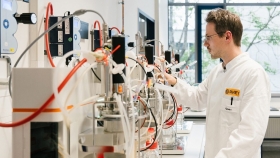
Beyond feed ingredients, Loopworm is advancing into biotechnology, using silkworms as mini bioreactors to produce recombinant proteins.
The company employs a transient expression system, where silkworms are injected with viral vectors that enable them to produce target proteins before being processed days later.
This approach avoids the need for genetically modified insect lines and allows for more flexible production.
Loopworm is pursuing two commercial strategies:
- A push model, building its own catalog of proteins for sectors like diagnostics
- A pull model, acting as a CRO/CDMO partner for companies with specific protein needs
Funding the next stage
To accelerate its biotech ambitions, Loopworm is preparing a Series A funding round of $8–10 million. The capital will be used to build a commercial recombinant protein facility, expand research and intellectual property, and establish business development operations outside India.
As the global food and biotech sectors search for scalable, sustainable solutions, Loopworm’s hybrid model—combining insect protein production with advanced biotechnology—positions it as a company to watch.