The United States-based meat company Force of Nature is challenging the role that third-party labels play in the future of regenerative agriculture, as CEO Robby Sansom warns that certification alone cannot guarantee ecological integrity or transparency for consumers. In a conversation originally reported by AgFunderNews, Sansom argued that the food industry is "off track" in its reliance on simplified labeling systems, urging producers and buyers to rethink what accountability and trust should look like in the regenerative movement.
Sansom, previously part of the founding team behind EPIC Provisions before its acquisition by General Mills in 2016, leads Force of Nature with a mission to scale regenerative meat production and reconnect consumers with the ecological processes behind their food. His concern, he explained, stems from a disconnect between what certification conveys and what actually occurs on farms and ranches. “We live in a society where we want to take something complex and reduce it to a couple of rudimentary components and then feel good about it".
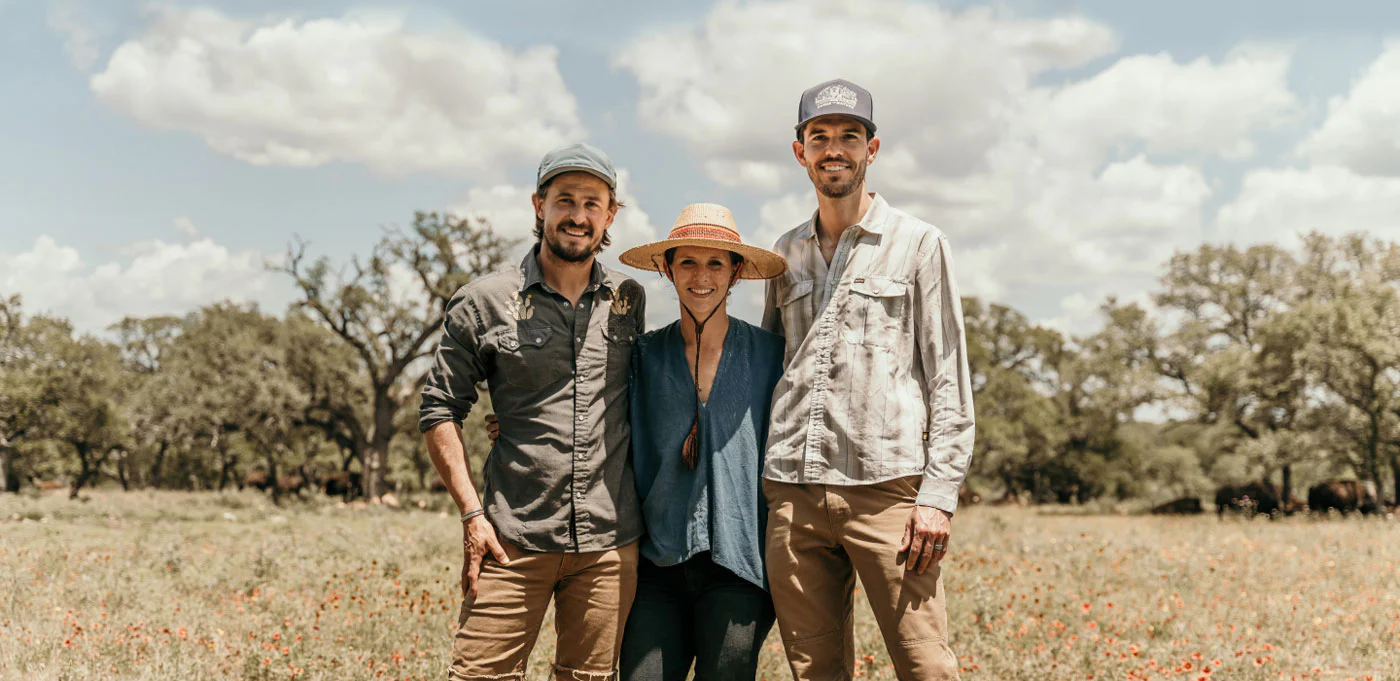
Force of Nature emerged from years of work tied to regenerative agriculture initiatives. Sansom recalled that he, along with EPIC founders Katie Forrest and Taylor Collins, helped fund Savory Institute’s Land to Market program and contributed to life-cycle research on carbon impacts in animal agriculture. From those early efforts grew the intention to expand regenerative principles from packaged snacks to fresh meat channels, with a particular emphasis on ecological function and land restoration.
Sansom defined regenerative agriculture as production modeled after natural ecosystems, with practices designed to strengthen soil structure, biodiversity, and biological cycles such as carbon, water, nutrients and energy. Rotational grazing, year-round living plant cover, limited mechanical disturbance and careful integration of livestock are core to the system as he describes it. Yet he believes these principles are often diluted or selectively interpreted under existing certification schemes.
In his view, the fragmentation of standards — where one program permits tilling and another discourages it entirely, or where chemical use thresholds differ — contributes to confusion rather than clarity. “Consumers don’t know what they don’t know. They can’t be experts,” he said, noting that labels such as “organic,” “grass-fed,” or even “regenerative” can create an inflated perception of sustainability outcomes. Certification, he argued, may tell a narrow part of the story while leaving out critical variables like land impact, animal welfare or true ecological recovery.
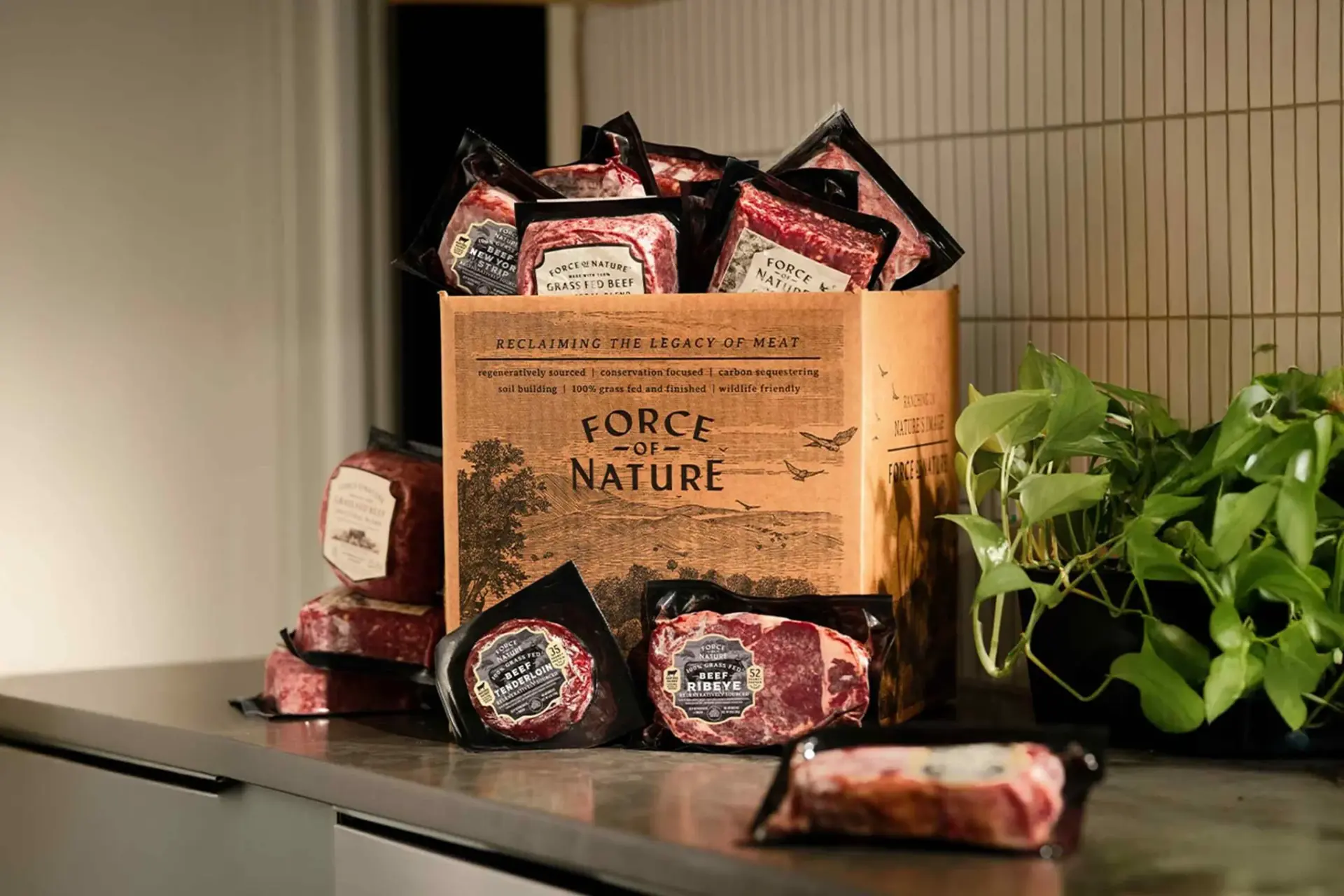
Force of Nature attempts to fill those gaps through internal sourcing protocols rather than a single external accreditation. According to Sansom, the company evaluates feed, animal health interventions, grazing conditions, transportation logistics and processing frameworks, building upon — rather than depending on — established definitions such as USDA organic or grass-fed. He noted that the brand’s approach emphasizes testing over assumptions, including screening for chemical residues, omega ratios, phytochemical content and antibiotic presence even when labels suggest compliance.
This approach is not the industry standard. Sansom pointed out that many companies use certification to meet consumer expectations at minimum cost, positioning a label as the product’s primary sustainability claim. In contrast, smaller producers who operate regeneratively may lack the funds to enter certification programs, leaving them overshadowed by larger actors who gain consumer trust through recognizable seals rather than outcomes. “There are brands that exist to identify a minimum bar [and] give them maximum credit for minimal effort,” he stated.
The CEO believes long-term credibility will depend less on stamps and more on relationship-building, education and transparency. Digital access, social media and traceability tools enable producers to communicate directly with buyers — a dynamic he sees as more powerful than third-party endorsements. “Trust should come from connection,” he emphasized, arguing that responsible brands must demonstrate commitments rather than outsource verification entirely.
Sansom further illustrated this tension with the example of organic beef. While consumer perception frames “organic” as a comprehensive guarantee of ecosystem stewardship, he described the classification as primarily assurance of non-GMO production and reduced exposure to certain chemicals. Organic livestock, particularly beef, is costly to certify, meaning participation often favors major corporations over small-scale ranchers operating under similar or more advanced practices. According to Sansom, this structure restricts innovation and reinforces market imbalances.
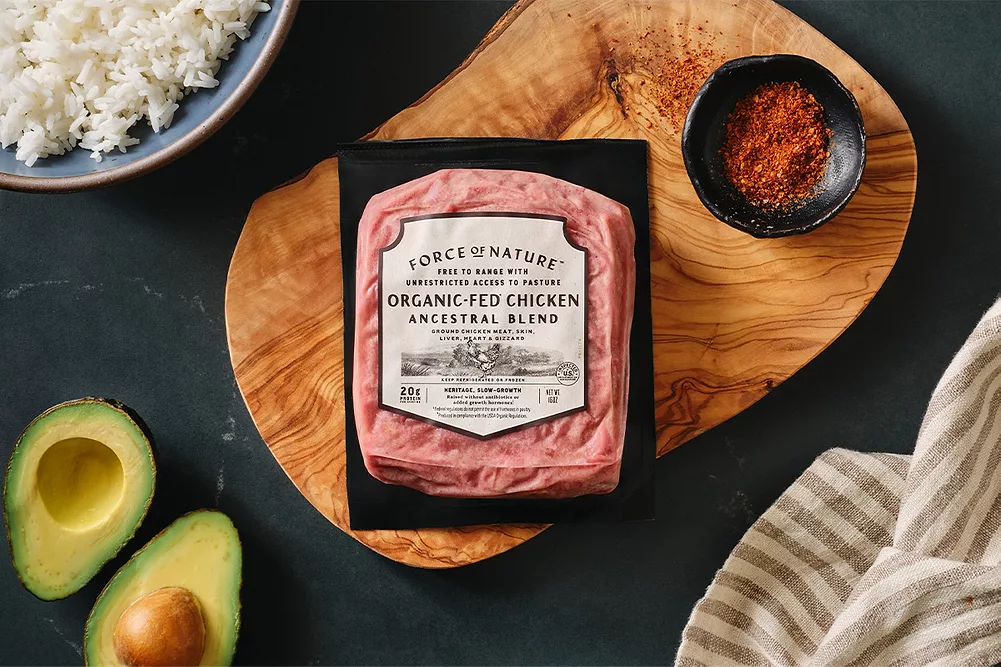
The company’s internal model extends beyond cattle. Force of Nature is restructuring its chicken line by benchmarking production systems against organic, grass-fed and additional welfare and lifecycle criteria. Factors such as breed selection, lifespan and behavioral health are considered alongside land impact and nutrient profile. The goal, Sansom said, is not to position certification as irrelevant, but to demonstrate that regenerative complexity exceeds current labeling frameworks.
His critique does not dismiss the value of accountability mechanisms. Instead, he calls for greater nuance, scientific rigor and ecological literacy in how regenerative systems are evaluated and communicated. Sansom cautioned that if regenerative agriculture aligns itself too closely with conventional marketing strategies, it risks becoming another oversimplified claim. “My hope is that we can course-correct,” he told AgFunderNews, “because we’re off track.”
The debate reflects a broader transition underway in global food systems, where sustainability claims are scrutinized with increasing urgency. As climate-driven agricultural instability grows, interest in regenerative production has surged — sometimes faster than verification structures can adapt. Force of Nature’s stance contributes to an evolving conversation over how results-based metrics, soil carbon assessment and biodiversity indicators should inform certification.
Whether Sansom’s rejection of traditional accreditation will reshape industry benchmarks remains uncertain. Yet his message underscores a key tension: regenerative agriculture promises ecological restoration, but translating that promise into consumer-facing guarantees requires more than branding.
To many advocates, the future of regenerative agriculture will depend on accountability frameworks that capture ecosystem outcomes rather than procedural checklists. Force of Nature’s strategy presents one model — but one still reliant on buyers willing to trust data, transparency and agronomic detail over labels alone.
As the sector expands, so will the debate over how regenerative impact is measured, marketed and made accessible. For now, Sansom’s warning lands as both critique and call to action: if regenerative agriculture is to fulfill its potential, credibility must be earned through demonstrable ecological improvement, not awarded through static certification.