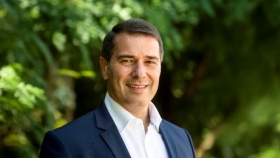
India is likely to see the first initial public offerings (IPOs) in agritech before the United States or Europe, according to Mark Kahn, cofounder of Omnivore, who argues that the country’s public markets, startup talent and agricultural business models make it one of the most attractive places in the world for venture capital investment.
According to AgFunderNews, Kahn said India’s capital markets are far more accessible for growth-stage companies than those in the US or Europe, creating a clear path for agritech exits through both mergers and acquisitions and public listings. “India has much better public markets than the United States and Europe, so I do think in the next year or two, you’ll see the first IPOs in the space,” he said.
Founded in 2011, Omnivore specializes in agritech and foodtech investments across India. Kahn explained that the fund emerged at a time when venture capital largely ignored agriculture, despite the sector’s central role in the Indian economy. After initially operating as a corporate venture fund, Omnivore became independent in 2017 and has since raised multiple funds, the most recent totaling $215 million.
Kahn said India’s agritech ecosystem has followed a different trajectory from Western markets. While the US and Europe saw heavy investment in areas such as alternative proteins and vertical farming, India’s growth was driven by the need to organize highly fragmented supply chains and serve millions of small and mid-sized farmers. Business models that convert expensive equipment into affordable services, along with farm-to-consumer and business-to-business marketplaces, played a central role in that expansion.
After rapid growth between 2017 and 2021, the sector experienced a sharp correction in 2022 and 2023, in line with global venture capital trends. Investment levels stabilized in 2024 and 2025, and Kahn expects a moderate recovery in 2026. Despite the slowdown, he pointed to continued deal flow and recent funding rounds as evidence that Indian agritech startups may currently find it easier to raise capital than peers in more mature markets.
On exits, Kahn highlighted ongoing acquisition activity involving Indian agritech companies and global strategic buyers, while reiterating that public listings are becoming a realistic option. He compared India’s current market dynamics to the US Nasdaq in the 1990s, citing strong appetite from both retail and institutional investors.
Kahn also rejected the notion that India’s smallholder farming structure limits the adoption of technology. He argued that agriculture in the country is already built around engaging large numbers of small producers through established networks, village-level entrepreneurs and service providers. “People see small farmers, and they assume that you must not use technology. That’s wrong,” he said, adding that India remains a critical market for major global agribusiness companies.
Looking ahead, Omnivore is focusing on areas such as biomanufacturing, material science, robotics and full-stack contract development and manufacturing organizations (CDMOs), which Kahn believes represent the next wave of opportunity. He also sees growing potential for Indian agritech companies in international markets, particularly the Gulf region and parts of Asia, as founders seek growth capital and strategic partnerships beyond domestic borders.