According to AgFunderNews, the latest Consumer Electronics Show (CES), held in January 2026 in the United States, offered a clearer picture of where robotics in the produce sector is heading and why, after years of experimentation, adoption is finally accelerating. The key takeaway from industry leaders and technology developers is that success in agricultural robotics is not about fully replacing farm labor, but about reinforcing the most vulnerable points of produce operations.
The discussion emerged from a CES panel on robotics and autonomy moderated by Vonnie Estes, vice president of innovation at the International Fresh Produce Association. The panel brought together executives from agtech startups and established machinery manufacturers to assess whether robotics is ready to transform specialty crop production. The conclusion was direct: robots are beginning to work in produce precisely because they are no longer trying to do everything.
Produce farming presents unique challenges. Harvest windows are short, quality deteriorates quickly, and labor shortages can leave crops unpicked in a matter of days. These structural constraints, rather than futuristic ambitions, are shaping the direction of robotics adoption. At CES, panelists emphasized that the most effective technologies focus on improving timing, movement, and workflow instead of attempting full biological automation.
One of the strongest themes highlighted during the discussion was the value of selective automation. Instead of universal harvesting robots, growers are adopting systems that remove the most physically demanding and inefficient tasks from daily operations. Autonomous carts, harvest-assist platforms, and rolling systems in greenhouses are designed to reduce walking, lifting, and idle time for workers, increasing productivity while improving safety and retention.
“The goal isn’t to replace people. It’s to take away the worst parts of the job so people can focus on the work that actually matters,” said Charlie Andersen, CEO of Burro, in statements cited by AgFunderNews. That approach, he explained, aligns far better with the realities of produce farming than fully autonomous solutions that struggle to adapt to biological variability.
Another important insight from CES is that automation in specialty crops is inherently incremental. Tim Bucher, CEO and cofounder of Agtonomy, stressed that growers adopt technology step by step, integrating new tools only when they clearly fit existing operations and solve specific problems. According to Bucher, this gradual process explains why robotics adoption is advancing first in high-value crops and controlled environments such as greenhouses, where spacing, lighting, and crop flow can be engineered to accommodate machines.
Selective harvesting technologies, for example, are gaining traction in greenhouse strawberries and tomatoes. In contrast, the broader industry has largely moved away from the idea of a single robot capable of harvesting all crops under all conditions. The focus has shifted toward reliability, consistency, and integration into real-world workflows.
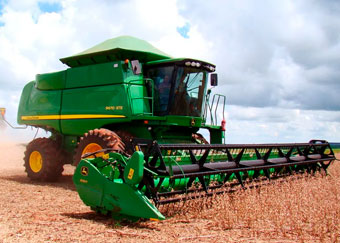
The investment perspective also played a central role in the CES conversation. Ryan Krogh, global combine and FEE business manager at John Deere, explained that the company views autonomy as foundational infrastructure rather than a finished product. From this standpoint, enabling machines to move safely and reliably creates a platform upon which additional capabilities can be layered over time.
This platform-based strategy mirrors how produce operations adopt technology across multiple tasks and seasons. Rather than disruptive overhauls, growers prefer modular improvements that can scale gradually. As a result, some of the most impactful robotics applications are emerging outside the field.

Packing-house automation for grading, sorting, packing, and palletizing is already widespread, largely because it operates in controlled environments. These systems directly address labor bottlenecks, improve quality consistency, and reduce waste. Similarly, precision weeding and spraying technologies are gaining importance as growers face stricter expectations around chemical use, worker exposure, and export standards.
CES also underscored that success in agricultural robotics depends less on eye-catching demonstrations and more on solving everyday operational problems. For startups, the message was clear: design technologies that work with people, not against them, and tailor solutions to specific crops and production systems. Reliability and seamless integration matter more than ambitious promises.
For investors, the implications are equally significant. According to sources cited by AgFunderNews, the most successful robotics companies in produce will not necessarily be the most visible. Instead, they will be the ones whose technologies quietly become embedded in daily operations, delivering measurable value without constant attention.
Andersen summarized this perspective during the panel, noting that “the best robots are the ones growers stop talking about because they just work,” as reported by AgFunderNews. That statement reflects a broader shift in expectations across the agtech ecosystem.
Rather than eliminating labor, robotics is increasingly viewed as a tool to make fragile systems more resilient. By helping growers hit narrow harvest windows, reduce waste, and maintain productivity amid tightening labor markets, these technologies are supporting the long-term viability of high-value specialty crops.
While the progress may not resemble science fiction, the developments showcased at CES suggest meaningful change is underway. From fields and orchards to greenhouses and packing facilities, robotics is beginning to deliver practical benefits. As the produce sector continues to adapt to labor constraints and operational pressures, the lessons from CES indicate that thoughtful, problem-driven innovation may finally be unlocking the potential of agricultural automation.