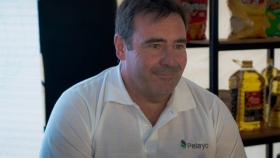
Amid a difficult funding cycle in which venture investors have slowed deployment or withdrawn completely, Paulig’s Helsinki-based corporate venture arm PINC is continuing to invest. Led by Marika King, the fund maintains a strategy focused on early-stage agrifood technologies with both impact potential and strategic adjacency for the parent company. King argues that PINC’s structure gives it an unusual advantage: the ability to pilot solutions not only inside Paulig but across its supplier network, providing sharper technical validation before capital is committed.
All factual information and direct quotations referenced in this article originate from an interview published by AgFunderNews (AFN), which spoke with King about the fund’s thesis, founder evaluation and the role of transparency in investment decisions.
Investing while many pull back
King maintains that the challenges facing global food systems—climate impact, resource scarcity, supply risk—are growing rather than receding. In that context, she believes cutting innovation budgets is short-sighted. PINC was created with two parallel objectives: accelerate innovation within Paulig’s business units and support solutions that contribute to planetary resilience. Over time, that dual focus refined into a clearer identity: a corporate impact investor with strategic-value potential.
Unlike traditional CVCs that require strict synergy with the core business, PINC behaves more like a venture fund. It invests in startups at pre-seed and seed stage, typically where technology is unproven and risk remains high. Sometimes the link to Paulig is immediate—as with Kaffe Bueno, which upcycles coffee by-products into high-value ingredients. In other cases, like enzyme-design startup Scindo, potential alignment may surface later or not at all. King stressed to AFN that even without direct synergy, backing solutions that move the industry forward is valuable.
Most corporate VC setbacks, she noted, stem from structural inflexibility. PINC avoids that by reporting to an investment committee rather than to operating executives. Independent governance allows faster decision cycles and reduces the risk of strategic drift when leadership priorities change.
Testing before investing
PINC’s most distinctive feature may be its ability to run real-world validation trials. For founders, that means earlier technical feedback and potential customer exposure. For Paulig’s committee, it means clearer evidence when assessing adoption risks. King recalled that before investing in Improvin’, an AI-based sustainability performance platform, PINC tested the tool internally and with suppliers. The response was so positive that the investment case strengthened quickly.
She believes this approach builds trust. Rather than screening ventures purely on pitch decks, the fund observes performance where it matters—inside supply chains. That feedback not only influences investment outcomes but also gives startups credibility when fundraising beyond Paulig.
A culture of radical candor
Among King’s most defining philosophies is the practice of radical candor. In her interview with AFN, she stated: “We don’t string people along, because it just wastes everyone’s time.” Rather than withholding decisions or delivering vague rejections, PINC aims to clarify why a startup is not the right fit. Timing, market size, technological defensibility, and founder readiness are common decision points.
She acknowledged that the hardest conversations are those tied to the leadership team rather than to the product: “Sometimes it’s not the technology—it’s the impression that a founder is not coachable.” She shared that after she once told an entrepreneur he came across as arrogant, his subsequent investor pitch improved dramatically and resulted in a term sheet. Transparency, she argued, creates value even when the answer is no.
Investment scope and long-term horizon
PINC has capital allocated from Paulig’s balance sheet, operating in five-year cycles without the fixed 10-year liquidation requirement of standard venture funds. This structure lets PINC stay consistently early-stage rather than shifting to later-stage investments as time constraints narrow. Despite that flexibility, King emphasized that exits remain necessary: the long-term goal is evergreen capital, but recycling depends on liquidity events.
The fund typically targets three investments per year, always co-investing with VCs or CVCs to ensure alignment across expectations, governance and exit timing. King considers investor alignment one of her greatest learnings—especially in complex sectors like biocontrol or fermentation, where technological maturity and regulatory timelines stretch far beyond the pace traditional VC prefers.
A case that illustrates this dynamic is BlueRedGold, an indoor saffron-growing startup. Many investors dismissed the opportunity due to perceived market size, but PINC determined that high unit economics and emerging medical and cosmetic applications made the thesis compelling. With support from another CVC, angels and eventually a Spanish venture fund, the company secured capital to scale.
What raises red flags in a pitch
King highlighted several weaknesses she sees repeatedly in founder decks:
-
Unclear problem articulation
If the startup cannot define the pain point for a paying customer, the model collapses.
-
Weak differentiation
Many founders describe features, not defensible advantage.
-
Superficial competitor analysis
The status quo, parallel technologies and alternative workflows are all competition. King warned that ignoring them signals lack of market understanding.
For PINC, sustainability is necessary but insufficient. The team evaluates whether a startup could scale on its value proposition alone, even without regulatory pressure or ESG positioning. However, she pointed out that European legislation increasingly transforms nice-to-have into mandatory. Innovation, she argued, is becoming survival rather than choice.
The market reset — and what comes next
Reflecting on the past three years, King described a cycle of exuberance followed by correction. During the era of cheap capital, investor behavior became herd-driven, particularly in segments like plant-based alternatives where differentiation was thin. Now, as AI surges and climate skepticism grows, the sector is recalibrating.
Yet for King, one truth persists: food and climate pressures are not slowing. “We keep swimming like salmon against the current,” she told AFN. “The problems aren’t going anywhere, so neither are we.”
Her view positions PINC not as a speculative investor but as a committed operator in a sector that demands resilience. Long-term transformation, she argues, cannot rely on trend cycles—it requires capital that continues moving forward when markets contract.