The Canadian plant-based seafood startup Konscious Foods has ceased operations in early 2025 after failing to secure new financing or complete a restructuring process, marking another setback for the alternative protein industry in North America. The company, founded in 2020 and headquartered in Richmond, British Columbia, confirmed the shutdown following action taken by its primary secured lender, which issued a demand letter and a notice of intent to enforce its security over the firm’s assets.
The closure comes at a time of growing pressure on plant-based food companies, particularly those operating across borders. In an automated response now returned by company email addresses, Konscious Foods explained that “unforeseen changes in US–Canada trade relations, combined with headwinds in the plant-based sector,” had significantly affected its business. According to the same message, the lender’s move directly led to the cessation of operations and the pending transfer of assets.
The company’s main phone line is no longer in service and its website has gone offline, reinforcing indications that operations have fully stopped.
Industry sources familiar with the situation said the startup had been actively seeking funding, merger opportunities and recapitalization options in recent months, including exploring overseas co-manufacturing arrangements. Those efforts, however, appear to have been unsuccessful. “Everyone I knew who was working with them has left. They’re no longer operating,” one sector source told AgFunderNews, which first reported the shutdown.
Neither founder and CEO Yves Potvin nor president and COO Michael Watt responded to requests for comment. Watt, former CEO of dairy-free brand Daiya, had joined Konscious Foods earlier in 2025 as part of an effort to stabilize and scale the business.
Konscious Foods was founded by Potvin, a veteran of the natural and plant-based food industry best known for creating and exiting two major brands: Yves Veggie Cuisine, sold to Hain Celestial in 2001, and Gardein, acquired by Pinnacle Foods (now part of Conagra Brands) in 2014. Leveraging that track record, the company positioned itself as a premium alternative seafood player, producing frozen plant-based sushi, onigiri snacks and poke bowls for retail, as well as developing a foodservice business.
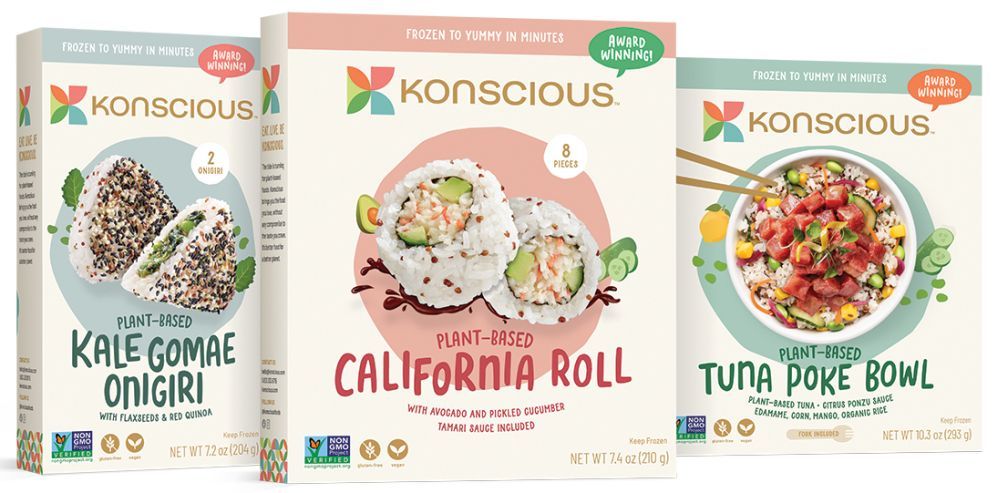
The startup operated a 34,000-square-foot facility in Richmond, where it manufactured products that were entirely plant-based and, where possible, organic. Its ambition was to redefine convenience seafood through a health- and sustainability-focused lens, targeting both mainstream grocery chains and institutional buyers.
In mid-2023, Konscious Foods raised C$26 million (approximately US$18.9 million) from backers including Protein Industries Canada, Zynik Capital and Walter Group. In February 2025, the company also announced an additional C$5 million in funding from Pacific Economic Development Canada (PacifiCan), the federal economic development agency for British Columbia, although industry sources indicate that these funds were received earlier than publicly disclosed.
At the time of the 2023 funding round, Potvin said the company expected to reach 4,500 North American grocery stores by the end of the year. In an interview with AgFunderNews, he emphasized that while Konscious operated in the plant-based space, its competitive mindset was rooted in traditional food business fundamentals. “I don’t see my competition as plant-based companies,” he said at the time. “I run a food business. It’s about operations, margins, brand integrity and consumer trust.”
Potvin also acknowledged the economic realities facing mission-driven food startups, adding: “It’s great to change the world. But you’re still running a business, and at some point you have to make money.”
The shutdown of Konscious Foods reflects broader challenges facing the plant-based and alternative protein sector, which has seen slowing sales growth, tighter capital markets and increasing scrutiny of unit economics over the past two years. Several companies have scaled back operations, delayed expansion plans or exited the market altogether as investors shift focus from growth-at-all-costs strategies to profitability and cash flow discipline.
Trade frictions between the United States and Canada have added another layer of complexity, particularly for food startups reliant on cross-border supply chains, co-manufacturing agreements and US retail distribution. For companies like Konscious Foods, these dynamics compounded existing pressures from rising input costs, cautious retailers and more selective consumers.
While the company’s assets are now expected to change hands, it remains unclear whether the Konscious brand or its product portfolio will re-emerge under new ownership. For now, its closure stands as another sign of consolidation and recalibration within the global alternative protein landscape.