A UK agtech startup, Biographica, announced in early January 2026 that it has raised $9.5 million in seed funding and entered into a new strategic partnership with BASF, a move that underscores growing investor confidence in artificial intelligence as a driver of innovation in global agriculture. Founded in 2022 by Cecily Price and Dominic Hall, the company is developing an AI- and machine learning–driven platform designed to dramatically improve how crop traits are discovered and developed, a process long considered one of the most expensive and time-consuming stages of plant breeding. The announcement is relevant at a time when climate pressure, food security concerns, and sustainability goals are pushing the seed industry to rethink how new crop varieties are brought to market.
The funding round, equivalent to £7 million, was led by Faber VC, with participation from SuperSeed, Cardumen Capital, The Helm, and existing backers Chalfen Ventures and Entrepreneurs First. According to the company, the fresh capital will be used to expand proprietary data generation, scale its AI platform across additional crop traits, and deepen commercial relationships with major seed and breeding companies worldwide.
Biographica is headquartered in London and operates at the intersection of artificial intelligence, genetics, and computational biology. Its core proposition is to solve what the industry describes as the “discovery bottleneck”: while technologies such as CRISPR allow scientists to edit genes with high precision, identifying which genes to edit in order to improve complex traits—such as drought tolerance, disease resistance, or nutritional value—remains slow, risky, and inefficient.
“We’ve seen AI reshape pharma, turning trial-and-error pipelines into learnable biological systems. We’re bringing that same discipline to crops,” said Cecily Price, chief executive officer and cofounder of Biographica, in statements reported by AgFunderNews.
An old problem with new tools
Developing improved crop varieties typically takes many years and significant investment. Traditional approaches rely heavily on literature reviews, expert intuition, and large-scale experimental screening. According to Biographica, these methods often yield hit rates below 1%, forcing seed companies to test thousands of genetic edits to identify a single viable trait, while potentially overlooking novel genes with high commercial or agronomic value.
Dominic Hall, Biographica’s chief technology officer, explained that widely used techniques such as Genome-Wide Association Studies (GWAS) and Quantitative Trait Loci (QTL) mapping tend to identify correlations rather than direct causal relationships between genes and traits. “The challenge is moving beyond association to a more mechanistic understanding of why a gene affects a trait,” Hall noted, as cited by AgFunderNews.
Biographica’s platform aims to bridge that gap by using knowledge graphs, foundation models, and machine learning trained on large, multimodal genomic datasets. These models analyze gene–gene and gene–trait interactions to predict which genes are most likely to causally influence a given trait and how they can be edited with fewer unintended effects.
Speed, scale, and validation
In pilot projects conducted with several seed and breeding companies—including two of the world’s top five global seed players—the startup claims its platform identified validated gene targets up to 12 times faster than conventional discovery pipelines. Beyond speed, the system also surfaced novel genetic targets that had not previously been prioritized by partners, potentially opening the door to new, high-value crop traits.
Biographica is now combining its computational platform with rapid experimental testing in what it describes as a “lab-in-the-loop” model, inspired by recent advances in pharmaceutical drug discovery. In this setup, experimental results are continuously fed back into the AI models, allowing them to improve accuracy over time.
“With climate change intensifying the pressure on agricultural systems, improving crop genetics is the most powerful lever we have to sustainably increase yields and build resilience,” said Sofia Santos, partner at Faber VC, according to AgFunderNews.

A strategic alliance with BASF
Alongside the funding announcement, Biographica confirmed a new partnership with BASF’s vegetable seeds business, Nunhems. While specific project details have not been disclosed, the agreement represents a significant commercial milestone for the startup and reinforces its positioning as a technology provider to the global seed industry.
Price emphasized that commercial validation played a crucial role in securing the seed round. In addition to BASF, Biographica has existing collaborations with companies such as Cibus, focusing on disease resistance in oilseed rape and canola, as well as other undisclosed industry players.
“We sit at the intersection of AI, climate, biotech, and agriculture,” Price explained. “That opens doors, but it also means convincing investors who may not be ag specialists. Being able to demonstrate real contracts and active partnerships with major seed companies was critical.”
Hall added that while true technical validation in crop trait development can take years, early proof points demonstrating high accuracy in commercial settings helped build investor confidence.
A platform built for flexibility
Unlike many in-house AI systems developed by large seed companies—which are often tailored to specific crops or traits—Biographica positions its technology as crop- and trait-agnostic. The models are pre-trained on vast amounts of public genomic data and then fine-tuned using data generated in Biographica’s own laboratories. This approach allows the platform to deliver insights without requiring access to sensitive partner datasets from the outset.
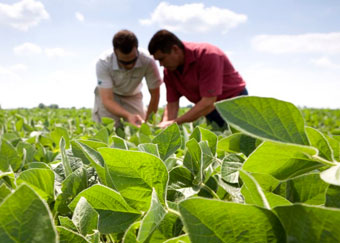
From vegetables and tomatoes to chickpeas, oilseeds, and major cereals, the company has already applied its models across a wide range of crops. According to Hall, several novel gene targets identified through the platform are now progressing through downstream R&D stages within customer pipelines.
Looking ahead
As global agriculture faces mounting challenges—from climate volatility to the need for more sustainable production systems—Biographica’s approach reflects a broader shift toward data-driven biology. By borrowing concepts and tools from drug discovery and applying them to plant science, the startup aims to shorten development timelines, reduce costs, and unlock traits that traditional methods struggle to deliver.
For investors and industry partners alike, the combination of advanced AI, early commercial traction, and a clear focus on real-world agronomic problems has positioned Biographica as one of the more closely watched startups in the agtech landscape, according to AgFunderNews.