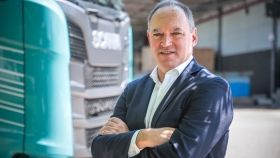
The global agri-food technology sector is entering a new chapter after several challenging years marked by fewer exits, tighter liquidity and more cautious investors. The period of rapid expansion fueled by abundant capital has given way to a more selective environment, where funding is harder to secure but increasingly concentrated in startups with robust business models, credible commercialization paths and measurable impact. According to Mark Durno, managing partner for agri-food at Rockstart, this shift reflects a necessary correction rather than a loss of confidence in the sector’s long-term prospects.
Speaking about current market dynamics, Durno explained that while the overall investment pipeline has shrunk, the quality of deals has improved. Fewer transactions are being completed, but those that move forward tend to involve stronger technologies and more realistic valuations. In his view, speculative capital has largely exited the space, leaving behind investors who understand the complexity of agriculture and food systems and are willing to engage for the long term.
Durno acknowledged that the past two years have been particularly difficult for early-stage funds and founders alike. Limited distributions and a lack of high-profile exits have reduced the amount of capital available for reinvestment, forcing venture firms to prioritize lower-risk opportunities. This has made fundraising more challenging across the board, especially for pre-seed and seed-stage startups. Still, he stressed that the underlying thesis for agri-food innovation remains intact: the global food system must transition toward more sustainable, regenerative and resilient models.
Recent signs suggest the market may have reached a turning point. Durno noted that high-quality transactions are beginning to close again, supported by valuations grounded in commercial metrics rather than expectations alone. Developments in the broader venture ecosystem, including renewed activity in public markets, are also helping to restore confidence. While agri-food technology is not the primary beneficiary of this momentum, it stands to gain as capital slowly returns to early-stage innovation.
One of the major challenges for the sector has been competition for venture dollars from artificial intelligence, which continues to attract significant investment across industries. Durno argued, however, that agri-food tech’s funding slowdown cannot be attributed to AI alone. Several high-profile disappointments within the sector, combined with a general market correction, led investors to reassess risk and reallocate capital elsewhere. As a result, agri-food startups now face a higher bar, but those that succeed are backed by investors with deeper conviction and domain expertise.
Rockstart’s current strategy reflects this more disciplined environment. The firm is actively investing from its second agri-food fund, having completed an initial close at the end of 2023. Across its two funds, Rockstart manages approximately €40 million in assets and holds stakes in around 70 portfolio companies. The firm expects to continue deploying capital through 2027, with a focus on pre-seed and seed-stage investments.
While Rockstart’s thematic focus has remained largely unchanged—centered on the transition to a more sustainable and regenerative food system—its financial approach has evolved. Earlier ambitions to support companies from pre-seed through later growth stages within a single fund have been scaled back. Instead, the firm now concentrates its capital at the earliest stages, partnering with other investors as companies mature. This shift allows for tighter risk management while maintaining exposure to transformative technologies.
Durno emphasized that not all innovation paths are viewed equally in the current climate. Technologies with long commercialization timelines, such as advanced biologicals or platform intellectual property, still have a place in the portfolio, but there is a growing preference for scalable software solutions and tools that can reach market faster. This pragmatic balance, he said, is essential to building a resilient portfolio without abandoning long-term impact goals.
Contrary to the narrative that venture capital success depends on producing unicorns, Durno made clear that Rockstart is not chasing billion-dollar valuations. Instead, the firm looks for “decent exits”: companies with healthy margins, defensible market positions and valuation frameworks grounded in real revenues. Such outcomes, he argued, are more likely to rebuild investor confidence and ensure the sector’s stability over time.
Regulation remains a critical factor, particularly in Europe. While complex regulatory frameworks have long been a source of frustration for startups, Durno observed a notable shift in policy language over the past two years. European decision-makers are increasingly emphasizing competitiveness, clean technologies and resilience, rather than sustainability alone. This reframing, he suggested, could create a more supportive environment for agri-food innovation, especially in areas tied to food security and strategic autonomy.
In terms of thematic interests, Rockstart is closely watching developments that reduce reliance on petrochemical inputs, improve soil health and support precision agriculture. The firm is also investing in startups working on alternative ingredients, waste valorization and biological solutions for crop and pest management. In the digital realm, applications of AI that enhance data collection and decision-making at the farm level are seen as particularly promising.
Durno also addressed the limits of certain high-profile trends, such as large-scale indoor farming. While controlled-environment agriculture can play a role in local food supply, he cautioned that its economics often struggle to meet venture capital expectations. In his view, future success in this area will depend on more modest, targeted deployments rather than capital-intensive vertical farming models.
Looking ahead, Durno believes the agri-food tech sector will emerge leaner but stronger. The emphasis on resilience, both at the policy level and within investment strategies, aligns closely with the realities of climate change, resource constraints and global food demand. Although the era of rapid hype may be over, he argued that the next phase—defined by disciplined capital, credible innovation and realistic returns—offers a more sustainable foundation for long-term growth.