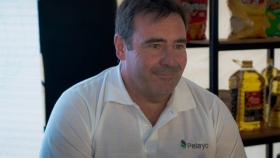
At the World Economic Forum in Davos, the US ag-biotech company Holganix positioned soil health as a central pillar for addressing some of the most pressing global challenges, from climate change and water security to food system resilience and financial risk. Speaking during the annual gathering of political and business leaders, the company’s chief strategy officer, Tim Weaver, argued that soil should no longer be treated as a background variable in agriculture, but as a strategic asset with direct implications for markets, supply chains and public policy.
According to AgFunderNews, which interviewed Weaver on the sidelines of Davos, the discussion around planetary boundaries and sustainability is increasingly shifting toward the idea of nature as an asset class. In that framework, soil emerges as a critical yet historically undervalued component. Weaver stressed that degraded soils amplify volatility across agricultural systems, while healthy soils help stabilize yields, reduce input dependence and mitigate environmental risks.
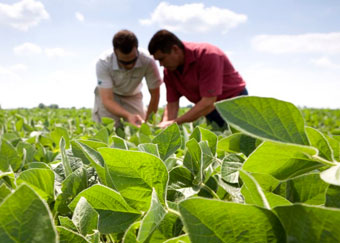
Holganix operates in the field of soil biology, developing microbial soil amendments designed to restore soil function and reduce reliance on chemical fertilizers. Its flagship products, including Bio 800+, are used by farmers seeking to improve productivity while transitioning toward more regenerative practices. The company also runs the Farm Possible program, aimed at supporting growers as they adopt regenerative agriculture systems at scale.
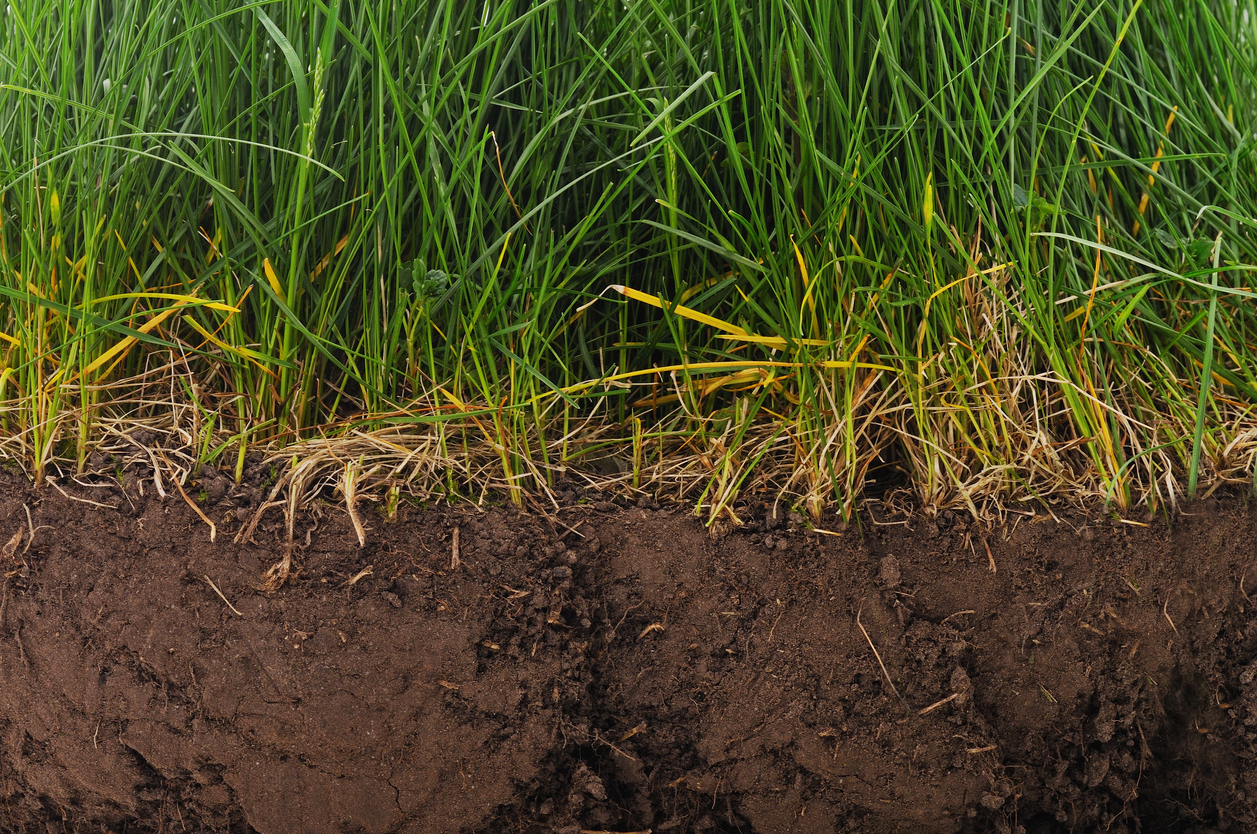
During the conversation, Weaver highlighted that soil health plays a role far beyond farm-level outcomes. In his view, it directly affects insurance markets, food inflation, corporate supply chains and even sovereign stability. As climate volatility increases, the capacity of soil to retain water, cycle nutrients and support microbial life becomes a key factor in managing risk across the entire food system.
“Soil is the quiet asset class we’ve been depreciating for a century,” Weaver said in remarks cited by AgFunderNews. “It’s both a financial asset and an environmental one—the physical foundation that determines whether all our other solutions compound or collapse.”
Soil, planetary boundaries and systemic risk
Weaver framed soil as a unifying element within the concept of planetary boundaries, a scientific framework that defines the limits within which humanity can safely operate. While debates often focus on individual metrics such as carbon emissions, fertilizer runoff or water use, he argued that these issues are deeply interconnected and converge at the soil level.
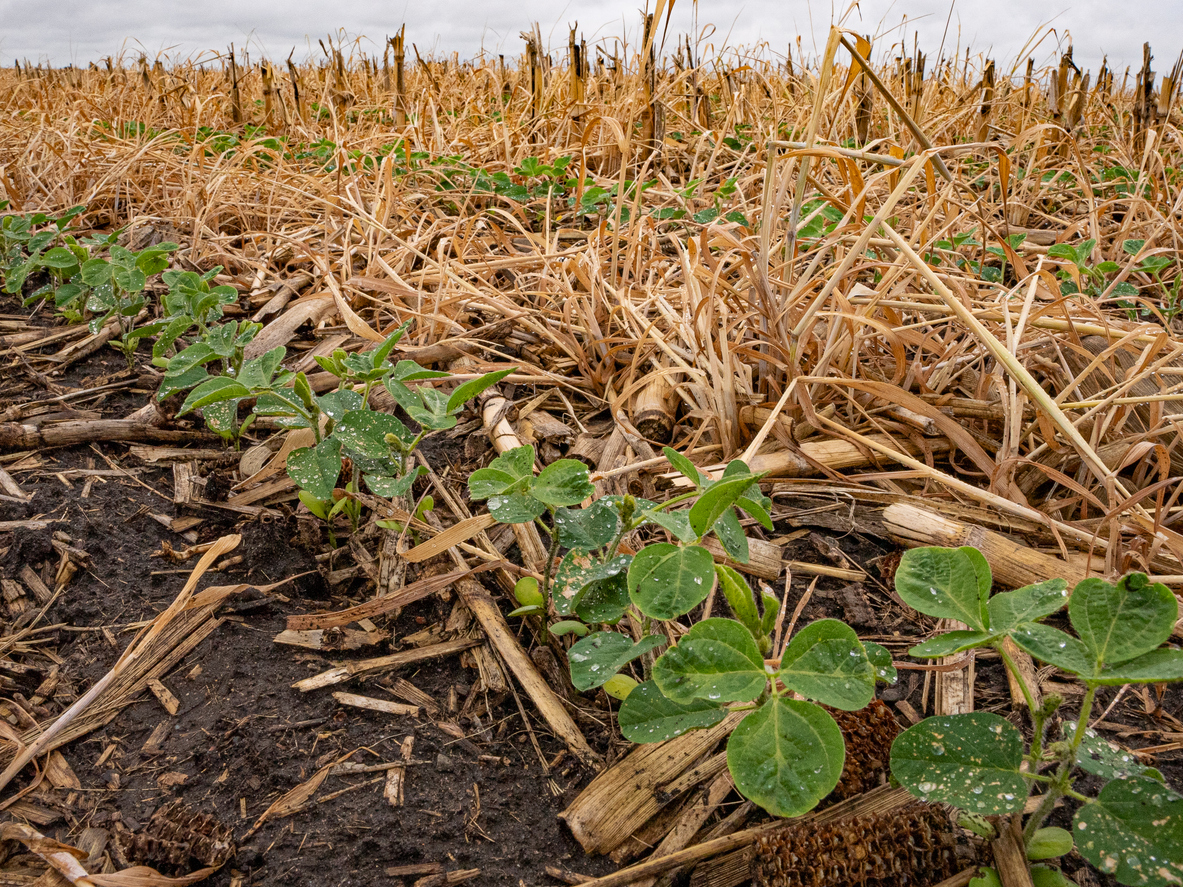
Healthy soils, he explained, have the capacity to store carbon rather than release it into the atmosphere, absorb water instead of contributing to runoff or drought stress, and support biodiversity that reduces the need for chemical inputs. These functions, taken together, allow agricultural systems to remain productive while lowering their ecological footprint.
From a global perspective, Weaver described soil health as a form of risk management at planetary scale. When soils are degraded, governments and companies are forced into constant trade-offs between productivity and sustainability. Functional soils, by contrast, reduce those trade-offs and enable more reliable food production under increasingly uncertain conditions.
“If planetary boundaries are the guardrails, soil is the road itself,” Weaver stated, emphasizing that policy frameworks and sustainability targets cannot succeed if the underlying biological systems continue to deteriorate.
Technology convergence in soil health
Asked about the technologies shaping the future of soil management, Weaver pointed not to a single breakthrough, but to a convergence of advances across biology, measurement and data integration. He noted that agriculture is moving away from a model based on controlling nature through heavy chemical and mechanical inputs, toward one that collaborates with biological systems.
In recent years, progress in microbial science and formulation has made it possible to deploy living biological products with greater consistency and scale. According to Weaver, this marks a shift from short-term yield support to rebuilding soil function as a long-term investment. Treating soil as a productive asset, rather than an expendable input, changes how farmers and investors think about returns.
At the same time, improvements in measurement technologies are making soil visible to markets in ways that were previously impossible. Remote sensing, in-field sensors and AI-driven soil models allow outcomes to be monitored, verified and trusted. This visibility is critical not only for agronomic decision-making, but also for financing, insurance and emerging environmental asset markets.
Weaver underscored that data alone is not enough. The software layer that connects biological performance to farm economics plays a crucial role in adoption. Growers need tools that translate soil outcomes into concrete implications for yield risk, input costs and financial planning at the field level, season by season.
Together, these developments are reshaping how soil is valued. As Weaver noted in comments reported by AgFunderNews, soil is increasingly moving “from being treated like an expense to being treated like an asset,” a shift with implications that extend well beyond agriculture.
Dialogue and alignment in agtech
The 2026 edition of the World Economic Forum is centered on the theme of dialogue, and Weaver reflected on what that concept means for the agtech sector. He argued that agriculture sits at the intersection of economics, culture, politics and biology, making it both powerful and vulnerable to polarization.
For decades, debates in agriculture have been framed in binary terms—technology versus nature, sustainability versus profitability, or large-scale versus smallholder systems. Weaver suggested that these divisions no longer reflect reality and often hinder progress.

In the United States, he pointed to growing cross-spectrum support for reducing chemical intensity in soils, driven by concerns ranging from public health to input costs and farm resilience. Water management, he added, is another area where interests align across rural communities, cities, insurers and food companies, all of which benefit when soils retain water and mitigate extremes.
A genuine spirit of dialogue, in Weaver’s view, requires involving farmers early in the design of technologies and policies, aligning scientific models with economic realities, and grounding conversations in measurable outcomes rather than ideology. Agriculture, he concluded, does not allow for abstract debates disconnected from the field.
As global leaders in Davos grapple with climate risk, food security and sustainability, Holganix’s message positions soil not as a niche environmental concern, but as a foundational element of resilient economic systems. In an era of growing volatility, the condition of the ground beneath our feet may prove to be one of the most decisive factors shaping the future of agriculture and beyond.