French startup Amatera has raised €6 million ($7 million) in a seed funding round to accelerate the development of climate-smart perennial crops using a platform that combines plant cell culture, robotics and artificial intelligence. The company plans to expand its technology beyond coffee and wine grapes, aiming to reduce the time and cost required to develop new crop varieties, according to AgFunderNews.
The round was co-led by Demea Sustainable Investment and Oyster Bay, with participation from existing investors PINC, Mudcake and Exceptional Ventures. The capital will support the scaling of Amatera’s breeding platform and the expansion of its crop portfolio.
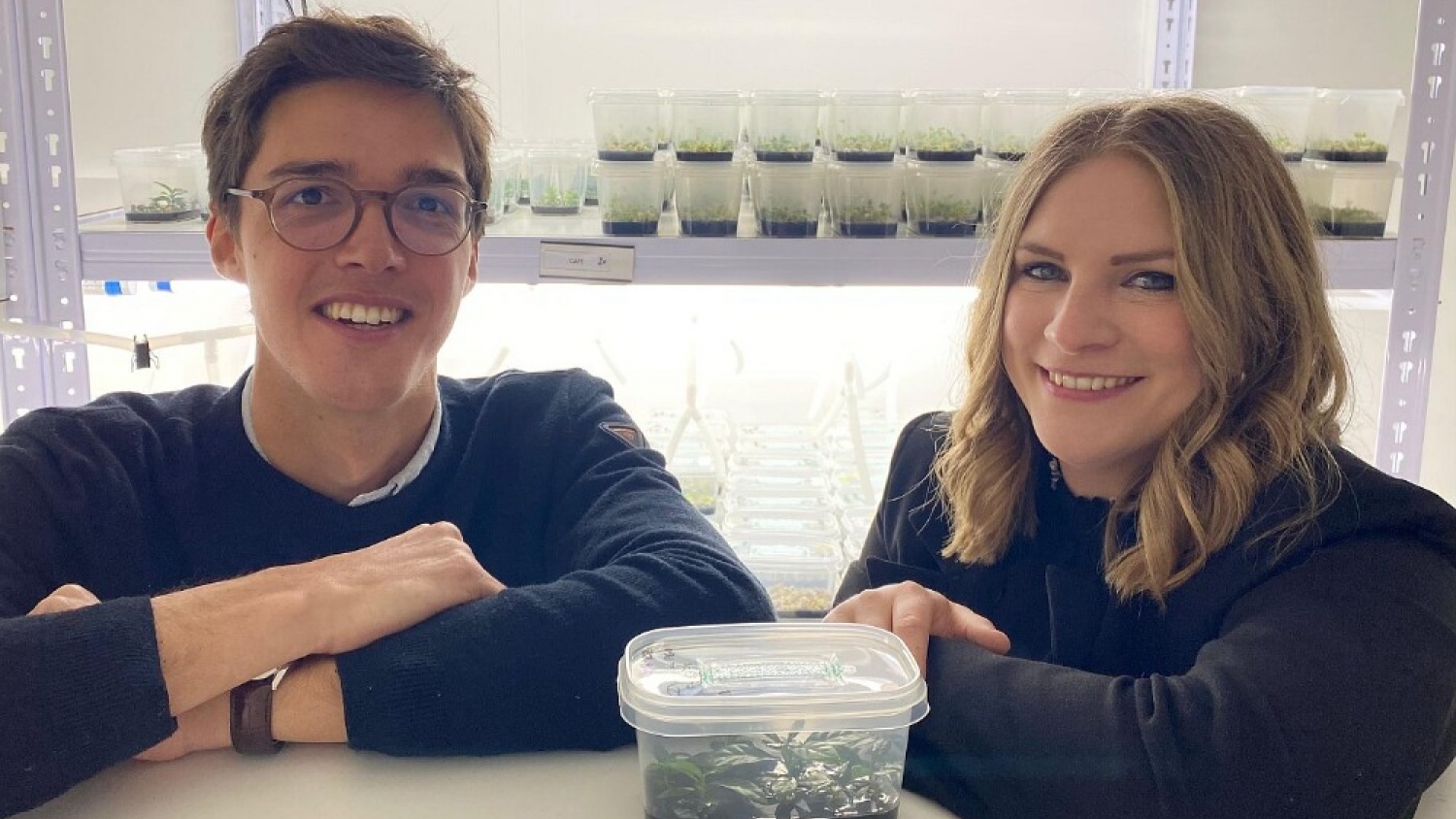
Founded in 2022 by Omar Dekkiche and Dr. Lucie Kriegshauser, the company focuses on accelerating plant breeding for perennial crops, which traditionally require decades of research and large financial investments before new varieties reach farmers.
“It can take more than 20 years and millions of euros to create a new coffee or wine grape variety with conventional breeding techniques. We are accelerating the breeding of perennial crops to create new varieties at a fraction of the cost and timeline,” said Omar Dekkiche, cofounder and CEO of Amatera.
Removing a major bottleneck in crop breeding
The company’s technology targets one of the most expensive and time-consuming stages in plant breeding: screening large numbers of potential plant varieties.
Amatera generates genetic diversity in plant cells using physical and chemical methods that stimulate natural variation without producing genetically modified organisms. These cells are then isolated and grown in plant cell cultures, where automated systems analyze thousands of samples to identify promising genetic traits.
According to Dekkiche, this process allows researchers to identify desirable characteristics at the cell stage, before regenerating them into full plants.
“Today, the standard approach is to take these cells, turn them into plants, and then do genotyping to see what you have,” Dekkiche told AgFunderNews. “We are completely changing this by isolating all the cells, one from the other, to grow them in plant cell culture at a lab scale, and then we identify the cell lines of interest and only regenerate those into plants.”

He added that this approach significantly reduces the number of plants that must be grown and tested in greenhouses or fields.
“This saves a ton of money and time. Instead of regenerating all the cells into plants and then screening the plants, we have removed the screening bottleneck.”
The automated screening system can also be used with cell lines created through other breeding technologies, including gene editing.
From coffee and grapes to broader crop applications
Amatera initially focused on perennial crops, particularly coffee and wine grapes, which face increasing pressure from climate change, plant diseases and shifting growing conditions.
Among the early developments currently being tested in nurseries are a “Robustica” coffee variety designed to combine the resilience of Robusta with the flavor profile of Arabica, and a naturally caffeine-free Arabica variety.
The company is also working on grape varieties resistant to diseases such as downy mildew and black rot, two major challenges for vineyards.
While perennial crops remain a core focus, Amatera is expanding its business model to include annual crops such as row crops and vegetables. In those cases, the company plans to offer its screening technology as a platform for seed companies, allowing them to integrate the system into their breeding pipelines.
“We started with coffee and then got traction on wine grapes so signed a partnership on that, and then the seed companies on annual row crops and vegetable crops became interested in our technology,” Dekkiche said.
For perennial crops, Amatera intends to develop new varieties internally and license them to growers or agricultural companies. For annual crops, the company expects to sign several partnerships with seed companies in the near future.
Climate pressure driving innovation
The startup’s approach is part of a broader effort in the agricultural technology sector to develop crop varieties capable of adapting to rising temperatures, shifting rainfall patterns and new disease pressures.
Perennial crops such as coffee and grapes are particularly vulnerable because breeding new varieties typically requires decades of field trials before commercialization. By shortening this process, companies like Amatera aim to help agriculture adapt more quickly to environmental changes.
With its new funding round, the company plans to scale its automated breeding platform and expand research across additional crops, while continuing field trials of its early coffee and grape candidates.