UK-based agtech startup Bindbridge has secured $3.8 million in funding to accelerate the development of next-generation crop protection products using a technology known as targeted protein degradation. The investment, led by Nucleus Capital and Speedinvest, will support early laboratory testing of its first compounds and partnerships with major agrochemical companies, according to AgFunderNews.
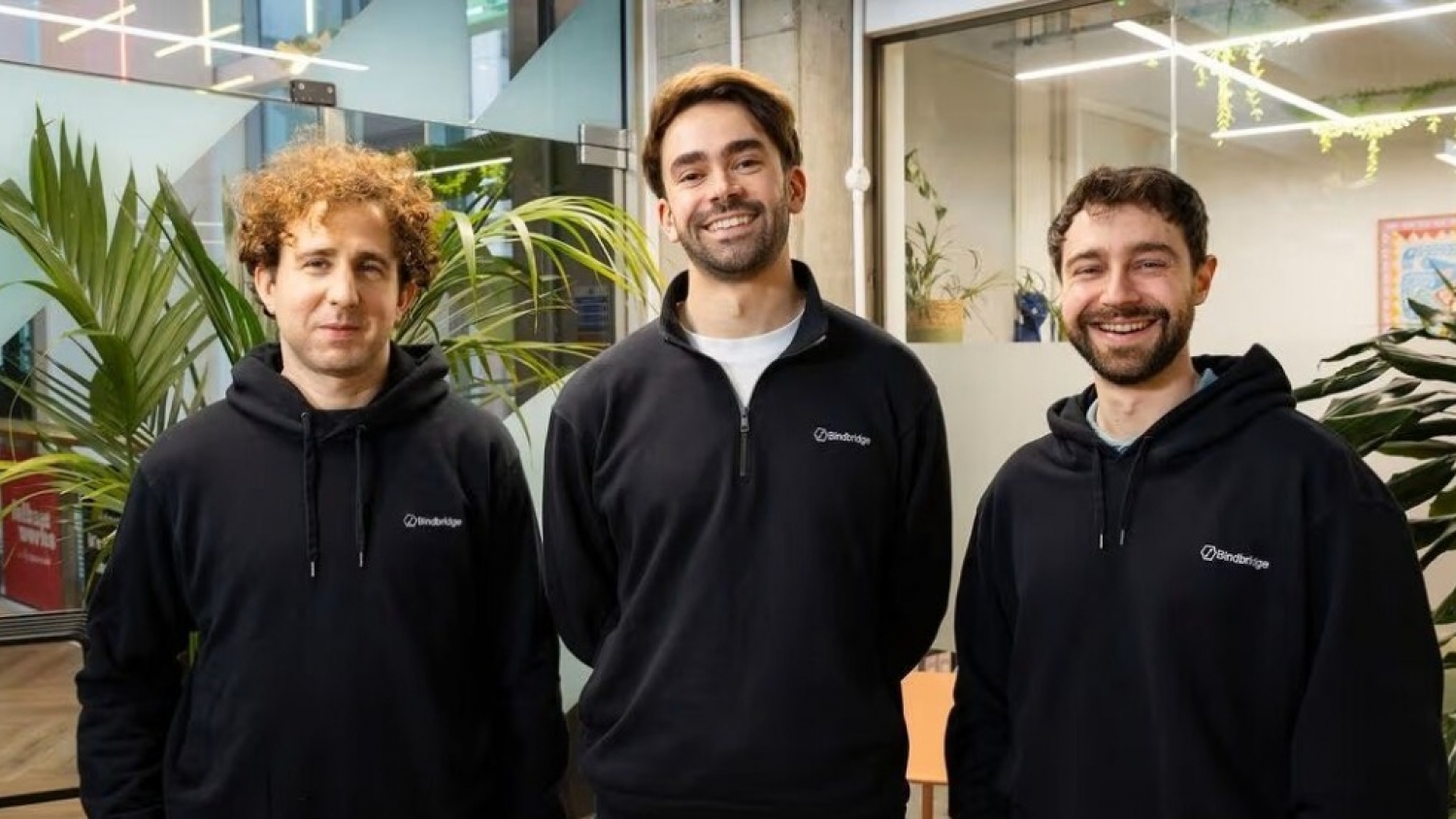
The company, founded in March 2025 by George Crane, Simeon Spasov and Alex Campbell, is building a computational platform designed to create new molecules capable of selectively destroying proteins essential to the survival of weeds, pests or pathogens. The goal is to provide an alternative to conventional herbicides at a time when resistance to widely used chemicals is increasing globally.
According to Crane, the startup aims to apply a concept originally developed in pharmaceutical research to agriculture.
“There’s no affordable, rational, or systematic way to discover molecular glues products… we’re changing that,” he said.
A new strategy for crop protection
Cells naturally possess a recycling system that identifies and breaks down damaged or unnecessary proteins. These proteins are tagged with a molecule called ubiquitin, which signals other cellular components to destroy them.
Bindbridge’s technology exploits this natural process. By designing specific molecules, researchers can trigger the degradation of proteins that weeds or pests need to survive. This approach effectively pushes harmful organisms to destroy their own essential biological components.
While elements of this mechanism already exist in some herbicides, the process historically emerged through trial and error rather than deliberate design.
Bindbridge aims to change that through its BRIDGE computational platform, which uses artificial intelligence and structural modeling to design small molecules capable of linking a target protein with the cellular machinery that destroys it.
These compounds, often referred to as “molecular glues,” are designed to force interactions between proteins that would not normally interact. Once bound together, the cell’s internal system removes the targeted protein.
According to the company, these molecules are structurally similar in size to conventional crop protection chemicals and may be easier to manufacture and deliver in field conditions than other experimental approaches.
Learning from pharmaceutical innovation
The concept of targeted protein degradation has gained significant attention in the pharmaceutical sector, where researchers are exploring it to treat diseases by eliminating problematic proteins.
Crane said the agricultural sector is now beginning to adopt similar strategies.
“I was working at Yara Growth Ventures, investing in agtech, biotech and deep tech startups, and there were several startups licensing tech from the pharmaceutical industry and this idea of AI drug discovery, targeted protein degradation, particularly via molecular glues, was receiving a lot of attention,” he said.
“We are now, for the first time in agriculture, rationally designing these targeted molecular glues in a similar way to how the pharmaceutical industry is designing them for novel oncology targets.”
This strategy could also open the door to addressing biological targets that were previously considered impossible to manipulate.
On the pharmaceutical side, Crane noted, such molecules are sometimes described as “drugging the undruggable.”
“And for us, we can go after protein targets which have previously not been targetable,” he explained.
Toward alternatives to glyphosate
One of the first applications Bindbridge is exploring is the development of a broad-spectrum herbicide that could potentially serve as an alternative to glyphosate, one of the most widely used weed control chemicals in the world.
At the same time, the company sees broader potential for its technology across different segments of agriculture.
Targeted protein degradation could be used to develop insecticides, fungicides or crop traits that help plants respond to environmental stress.
For example, certain proteins inside plant cells act as regulators that suppress stress-response pathways. By selectively removing those regulators, plants could activate internal defense mechanisms more effectively.
That approach may help improve nutrient use efficiency, drought tolerance or resilience to extreme temperatures, according to the company.
Designing molecules for real-world agriculture
Bindbridge says one of the strengths of its platform is its ability to design molecules that are not only scientifically effective but also suitable for real-world agricultural conditions.
The BRIDGE system filters potential molecules according to characteristics that influence their performance in the field, including chemical size, electrical charge and hydrophobicity.
This allows the company to prioritize compounds that can function as practical crop protection products rather than remaining purely theoretical discoveries.
“It’s really important for us to predict what will make good products, not just what’s good science,” Crane said.
Business strategy and development
Bindbridge plans to operate with a dual business model. The company intends to collaborate with large agricultural companies on joint development projects, while also licensing its own intellectual property.
To validate its technology, the startup follows a step-by-step testing process. First, researchers confirm that the molecules can bind target proteins in laboratory assays. Successful candidates then move into plant cell experiments to verify protein degradation before advancing to greenhouse trials.
If the results prove promising, the next phase would involve further development with industry partners and potential commercialization.
With herbicide resistance increasing in many agricultural systems, companies developing new molecular strategies for crop protection are attracting growing interest from investors and the agrochemical sector.
Bindbridge’s founders believe targeted protein degradation could become an important tool in the next generation of agricultural technologies.