Franco-German startup SMEY Lab launched Lipid Atlas in March 2026, a platform that combines artificial intelligence and fermentation to create custom oils using non-GMO yeast strains. The development is relevant as industries seek sustainable alternatives to traditional oils like palm and cocoa butter.
A new player in the foodtech and biomanufacturing space is aiming to reshape how oils are designed and produced. Franco-German startup SMEY Lab has introduced Lipid Atlas, a searchable platform built on a proprietary database of more than 1,000 yeast strains, designed to help companies develop customized oils through fermentation.
According to agfundernews, the platform allows companies in food, cosmetics, and specialty ingredients to identify yeast strains capable of producing oils with specific fatty acid profiles, melting points, and functional properties. These can replicate existing products like cocoa butter or palm oil, or enable entirely new formulations.
AI and fermentation combined
At the core of Lipid Atlas is the integration of artificial intelligence and machine learning. These tools analyze genomic data to predict whether a yeast strain can produce oil and what its composition will be.
SMEY’s Chief Scientific Officer, Pavel Elizarev, explained that AI is also used to optimize fermentation processes, improving efficiency and scalability.
“By combining the biological diversity of our Neobank of Yeasts with AI-driven discovery, we provide the missing link: the data to identify the lipid profiles industry needs and the biotechnology to produce them ethically, locally, and at scale,” he said.
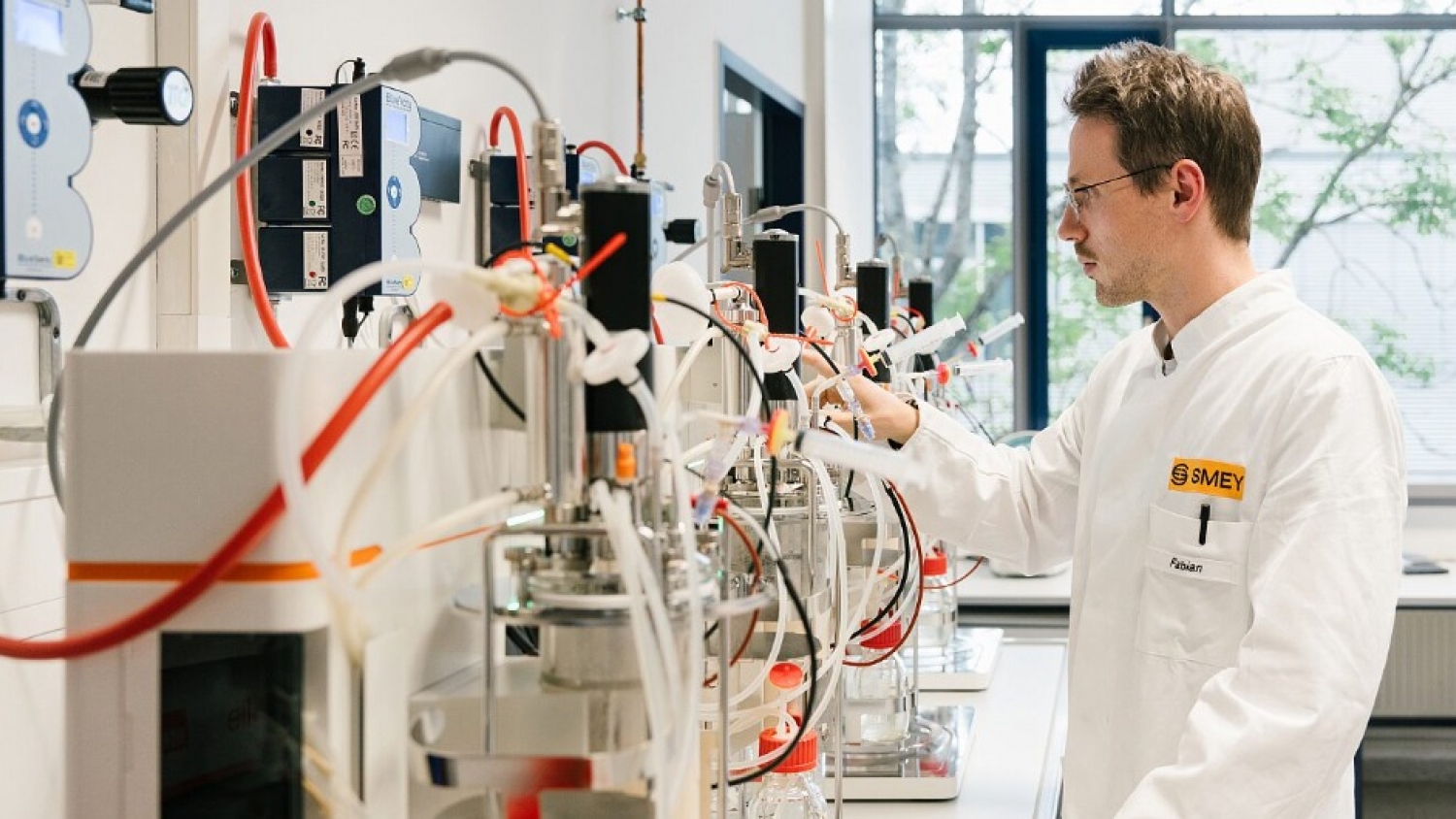
The company’s model goes beyond discovery. Once a client selects a desired oil profile, SMEY moves through stages that include lab-scale fermentation, pilot production with manufacturing partners, and eventual industrial-scale output.
A database built from natural yeast diversity
One of the key differentiators of SMEY’s approach is its focus on non-GMO yeast strains. Instead of genetically engineering microorganisms, the company explores natural biodiversity to identify strains that already produce lipids efficiently.
The firm has cataloged more than 1,000 yeast species, with around 300 capable of producing oils. Some of these strains can accumulate up to 80% of their dry weight as oil, offering strong potential for industrial applications.
“It takes so much time and effort to make your GMO organism, which no one likes at the end because it is a GMO,” Elizarev noted. “Instead we’re asking what’s already out there in nature?”
This approach also helps reduce regulatory hurdles and accelerates development timelines compared to traditional genetic engineering.
From cocoa butter alternatives to designer oils
SMEY has already launched its first commercial products, including Noyl Silk, a cosmetic oil designed for fast absorption, and Noyl Cocoa, a cocoa butter alternative suitable for both food and cosmetics.
These products reflect a broader trend toward sustainable and functional ingredients, especially as industries look to replace tropical oils linked to environmental concerns.
Beyond replication, the company is targeting the development of “designer oils” with properties that do not exist in conventional plant-based sources. This includes oils with improved stability, tailored melting points, or specific fatty acid compositions.
“The oils used today are not necessarily the best ones. They are used because they are available at scale,” Elizarev said. “Wouldn’t it be better to have an oil that already has the composition you want?”
Scaling production and future outlook
Looking ahead, SMEY plans to scale production through partnerships and eventually deploy localized micro-factories to manufacture oils closer to customers.
This decentralized model could reduce logistics costs and environmental impact, while offering greater flexibility to clients.
The launch of Lipid Atlas highlights a broader shift in the industry toward data-driven ingredient development, where biology, AI, and manufacturing converge to create more efficient and sustainable solutions.
As demand grows for alternatives to traditional oils, platforms like Lipid Atlas could play a key role in reshaping supply chains across food, cosmetics, and beyond.