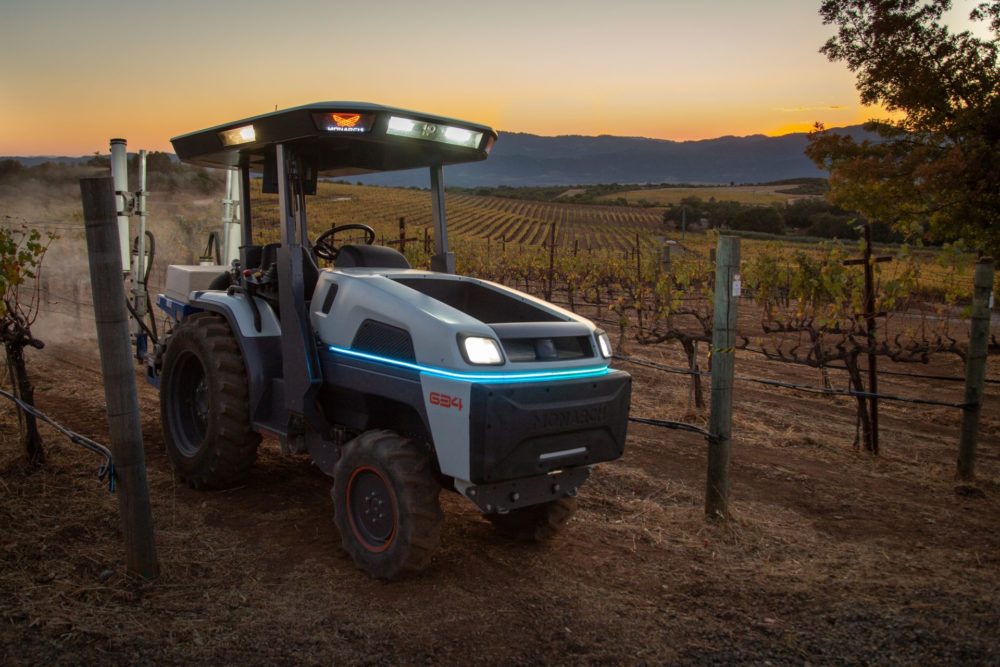
The agtech startup Monarch Tractor shut down operations after failing to sustain its business model, despite delivering functional technology. Cofounder and CEO Praveen Penmetsa acknowledged that the key mistake was not pivoting quickly enough in a rapidly changing economic environment.
The collapse of Monarch Tractor highlights a central tension in the agtech sector: the gap between successful technological innovation and sustainable business models. As explained by CEO Praveen Penmetsa in statements cited by agfundernews, the company did not fail because of its technology, but because of strategic decisions made under shifting market conditions.
“The reality is we did not succeed in our mission but we moved the needle on the tech side,” said the executive, reflecting on the shutdown of a company that raised more than $240 million and deployed over 500 machines in the field.
The original vision was based on a full-stack model, combining electrification and autonomy in multi-purpose tractors designed for smaller farms. The goal was to integrate hardware, software, and data into a single platform. However, this approach became increasingly difficult to sustain as investor sentiment shifted and costs rose.
One of the main turning points was the change in capital markets. According to Penmetsa, investors moved away from rewarding companies that captured full margins and began prioritizing capital efficiency, making vertically integrated models less attractive.
External pressures also played a major role. Rising tariffs on imported components such as batteries, electronics, and machinery parts significantly increased costs. Even though the company assembled products in the United States, its reliance on global supply chains made the hardware business less profitable.
In response, Monarch attempted to transition toward a technology licensing model, aiming to partner with established manufacturers that already had scale and distribution. However, the shift came too late. “With the benefit of hindsight, we should have pivoted faster,” Penmetsa admitted.
He also acknowledged that internal restructuring was too gradual. “When you need to pivot, you need to pivot hard and do it in one shot,” he said, referring to multiple rounds of layoffs before the company ultimately shut down.
Despite the outcome, the CEO defended the company’s technological achievements. Monarch demonstrated that electric tractors could reduce operating costs by $7 to $12 per hour compared to diesel, while also delivering environmental benefits through lower emissions.
At the same time, scaling autonomy proved more complex than expected. Each type of agricultural operation—from dairy farms to vineyards—required specific adaptations, making widespread deployment slower and more resource-intensive. “Each environment required a huge amount of effort to automate,” Penmetsa explained.
The shutdown also triggered disputes, including lawsuits from dealers over alleged equipment issues. While declining to comment on specific cases, Penmetsa acknowledged that service levels declined as financial constraints tightened.
Meanwhile, the company sold its core technology—including its software-defined vehicle platform and electrification systems—to a major global manufacturer. Reports have linked the deal to Caterpillar, although no official confirmation has been made.
The Monarch case offers a clear signal for the agtech ecosystem. Innovation alone is not enough; success depends on aligning technology, business model, and market timing. It also reinforces a broader reality: breakthrough technologies often require multiple attempts before reaching scalable success.
For Penmetsa, the company’s end is not the end of the story. “We proved what is possible,” he said, emphasizing the need for continued investment in agricultural innovation. In his view, as seen in other technology sectors, early failures are often part of the path toward long-term success.