“No mission without margin”: the finance gap in regen ag
Access to capital remains the main barrier to scaling regenerative agriculture, despite growing interest and proven profitability
martes 28 de abril de 2026
In the United States, regenerative agriculture is gaining attention for its environmental and productivity benefits, but limited access to financing continues to slow adoption. According to AgFunderNews, Brandon Welch, cofounder of Mad Capital, said farmers face structural financial barriers that prevent the transition, even as the model becomes more profitable and scalable.
The core issue, Welch explained, is that traditional financial institutions are not designed to support regenerative or organic farming models. These systems require different practices, longer transition periods, and alternative revenue structures, which create friction in lending processes.
“You can’t have mission without margin,” Welch said, emphasizing that financial viability must go hand in hand with environmental performance.
One of the biggest gaps lies in working capital financing, which farmers need to manage short-term operations. Unlike conventional farming, regenerative systems involve shifting asset values—from seeds to crops to inventory—making them harder to evaluate for lenders. This complexity discourages banks from engaging with the sector.
According to Welch, the transition to organic or regenerative farming takes at least three years, requiring long-term partnerships that most traditional lenders are unwilling or unable to provide.
Another key barrier is scale. Only 1–1.5% of farmland in the US is certified organic, making it a niche market. For lenders, focusing on conventional agriculture is simply easier and more predictable.
Beyond financing, cultural resistance also plays a major role. Farmers often operate within established systems where deviation carries social and economic risks. Adopting regenerative practices can mean stepping outside long-standing norms, which requires both confidence and risk tolerance.
“There’s inertia in how farming is done,” Welch noted, pointing to the influence of community practices and generational knowledge.
Market dynamics further complicate the transition. While organic products often command premium prices, regenerative conventional crops do not yet benefit from the same consumer recognition, limiting financial incentives for producers.
In addition, access to technical support and technology remains uneven. Innovations such as robotics for weed control could reduce reliance on chemical inputs, but adoption is still in early stages.
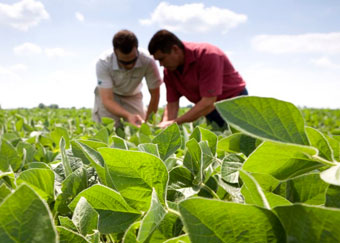
Despite these challenges, there are signs of progress. Welch highlighted a shift from “mission-driven” farmers to commercial operators entering regenerative agriculture for profitability reasons. Larger farms—ranging from 3,000 to 5,000 acres—are increasingly adopting these practices as they demonstrate stronger financial outcomes.
“What we’re seeing is that when a farmer transitions to organic and uses regenerative practices, they’re more profitable than their conventional neighbors,” he said.
Alternative financing models are also emerging. Firms and organizations are beginning to offer flexible loans, land leasing options, and infrastructure funding tailored to regenerative systems. These approaches aim to bridge the gap left by traditional institutions.
Mad Capital, for example, provides four types of loans: operating capital, real estate, infrastructure, and equipment financing. The firm currently manages around $100 million in assets and supports farming operations across 200,000 acres in 18 US states.
Looking ahead, Welch believes that data will be critical in accelerating adoption. As more evidence demonstrates lower risk and higher returns, financial institutions may begin to adjust their models.
“If it starts hitting the bottom line, we should see a larger shift in the food system,” he said.
Ultimately, the expansion of regenerative agriculture will depend not only on environmental goals, but on building a financial system capable of supporting long-term agricultural transformation.
Invertí en periodismo de calidad
En Agroempresario trabajamos para acercarte contenidos que agregan valor.