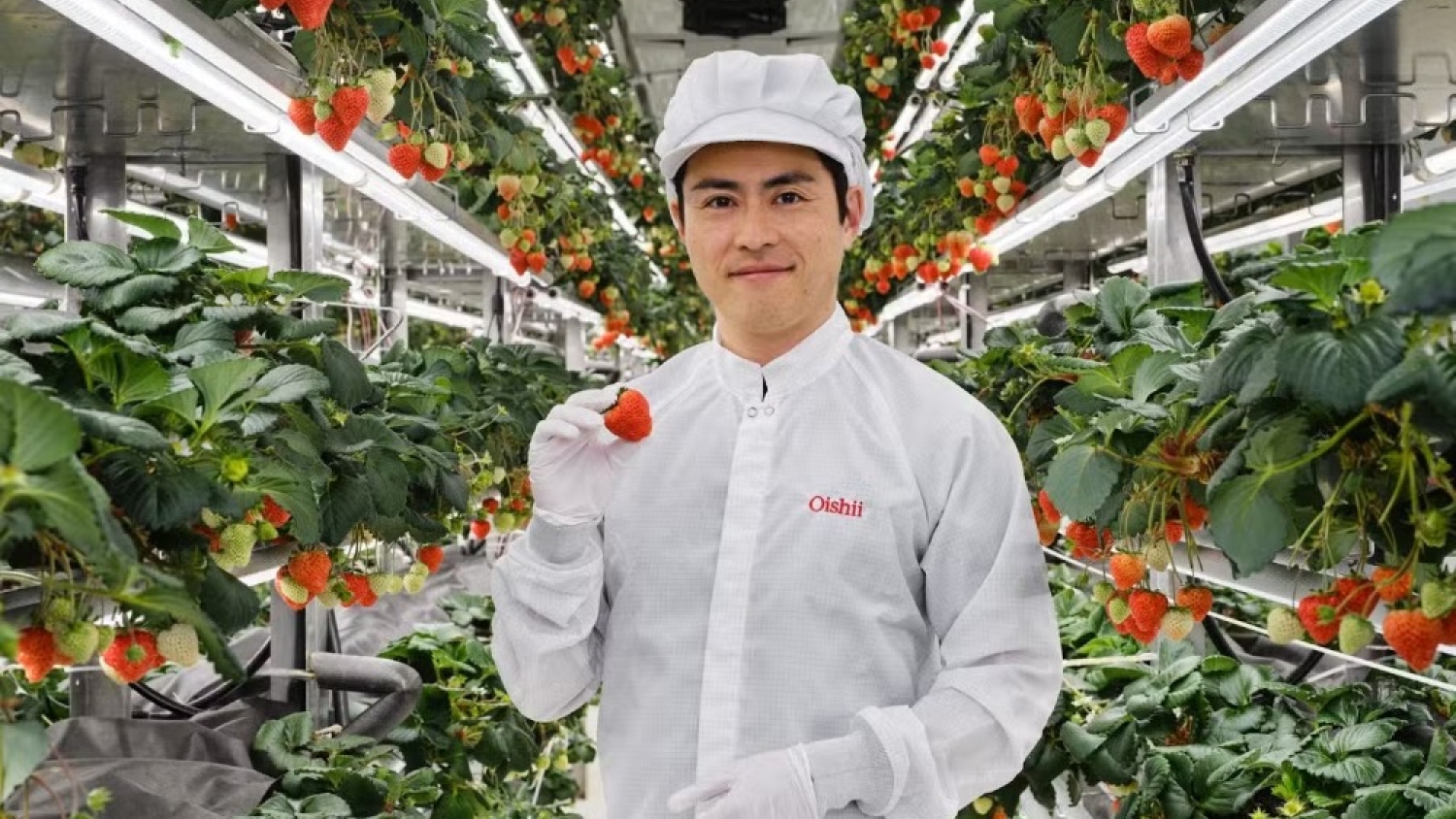
Vertical farming company Oishii announced the first close of a $150 million Series C funding round after achieving what founder and CEO Hiroki Koga described as a breakthrough in unit economics, a challenge that has undermined much of the indoor agriculture industry. According to AgFunderNews, the company prioritized operational sustainability over rapid expansion, helping it attract investors despite the broader downturn affecting vertical farming startups.
Koga said the company deliberately avoided the aggressive growth strategies that impacted several high-profile indoor farming businesses focused on leafy greens. “Ultimately, many companies in the sector struggled to raise capital because they couldn’t convincingly prove their unit economics to investors,” Koga said, according to AgFunderNews. “We crossed that chasm, which is why we were able to successfully raise our Series C.”
Over the last several years, the vertical farming industry has faced major setbacks as companies including Plenty, Bowery and AeroFarms struggled to meet expectations tied to high valuations and rapid expansion. Oishii, however, followed a different strategy centered on premium strawberries, automation and proprietary growing systems.
The company initially became known for selling luxury strawberries priced at around $5 each. Since then, it has expanded distribution to a broader consumer base while maintaining its focus on high-value crops instead of competing directly in the crowded leafy greens market.
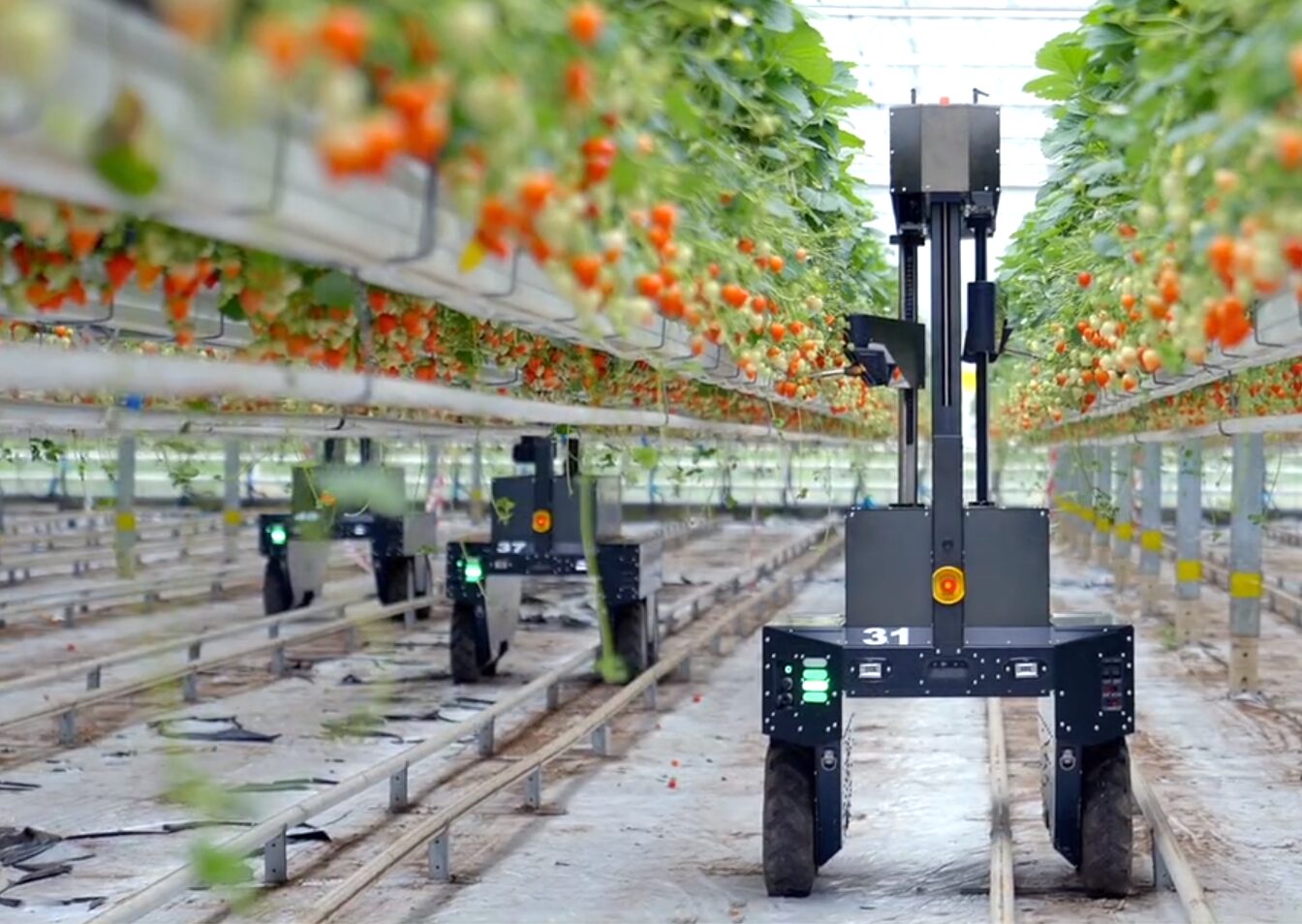
According to AgFunderNews, Oishii combines advanced robotics and automation with traditional Japanese growing methods. The company operates its main vertical farming facility in New Jersey and expanded distribution to 18 US states during the past year. It also launched berry sales in Canada and announced a new research and development center in Japan.
Koga explained that the company’s long-term strategy was designed to avoid the operational pressures that affected competitors. “We made a very strategic decision to focus on premium strawberries,” he said, according to AgFunderNews. “By operating in a highly differentiated category without significant competitive pressure, we were able to stay disciplined and focused on proving out the operation and unit economics before chasing revenue.”
Oishii also accelerated its technology investments through acquisitions and partnerships. The company acquired robotics startup Tortuga AgTech and partnered with MISUMI Group to strengthen automation inside its farms. Koga said vertical integration allowed Oishii to improve production systems more quickly while building a stronger competitive position.
The latest funding round was led by SPARX Asset Management and Resilience Reserve, with additional participation from Nomura Real Estate Development, MISUMI Group and Mizuho Bank, among others. The new capital increases Oishii’s total funding to approximately $370 million.
Koga acknowledged that raising capital for vertical farming remains difficult because many investors continue prioritizing shorter-term sectors such as artificial intelligence and cryptocurrency. However, he argued that indoor agriculture requires patient investment strategies focused on long-term infrastructure, operational excellence and differentiated technology.
“Indoor agriculture takes a different mindset,” Koga said, according to AgFunderNews. “Patient capital remains critical for the category.”
The company plans to use the new financing to expand production capacity, strengthen farm infrastructure and continue research and development initiatives in both the United States and Japan.
Oishii’s latest milestone comes at a critical moment for the controlled-environment agriculture industry, where investors are increasingly demanding evidence that indoor farming can achieve sustainable profitability rather than relying solely on growth projections.