Toronto-based agricultural biotechnology startup Molagri has raised $5.8 million in pre-seed and seed funding to develop a new generation of precision biopesticides capable of targeting specific insect pests and adapting as resistance emerges. The company aims to provide farmers with more selective crop protection tools while reducing unintended harm to beneficial insects, including pollinators.
According to AgFunderNews, the seed round was led by Convective Capital, with participation from Superorganism, Y Combinator, Julian Capital, and angel investors, including Y Combinator cofounder Paul Graham.
The investment will support research, laboratory development, and recruitment as Molagri advances its technology toward practical agricultural applications.
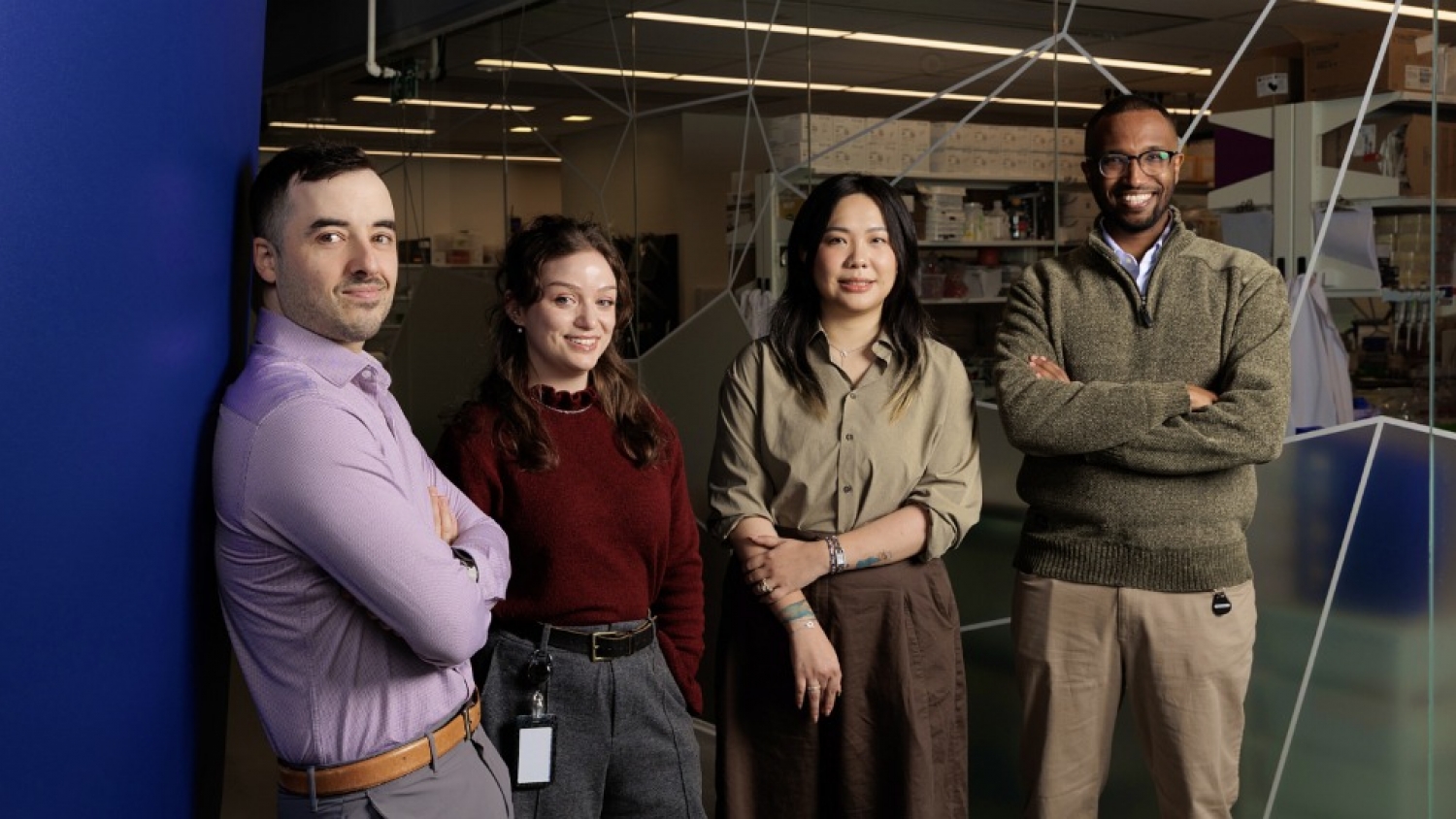
Founded by Zaky Hassan and Min Jin, the company is developing a platform based on engineered, non-infectious virus-like particles, known as VLPs.
These particles are designed to deliver genetic instructions directly into targeted insect pests, offering a potential alternative to conventional broad-spectrum pesticides.
The technology addresses two persistent challenges in agriculture: pesticide resistance and the unintended effects of crop protection products on non-target organisms.
As insect populations evolve, pesticides can become less effective, forcing growers to seek alternative products or control strategies.
At the same time, broad-spectrum insecticides may affect beneficial species that contribute to pollination and natural pest management.
Molagri's approach seeks to address both problems through molecular targeting and a delivery system that can potentially be modified as pests develop resistance.
The platform uses engineered virus-like particles designed to be consumed by specific insects.
Proteins on the particles' surfaces are engineered to recognize and attach to receptors in the digestive systems of targeted pests.
Once inside the insect's cells, the particles deliver messenger RNA, or mRNA, containing genetic instructions that prompt the insect's cellular machinery to produce a toxic protein.
The intended result is the elimination of the target pest without affecting beneficial insects that lack the receptors required for delivery.
However, the company has not yet demonstrated this selectivity under commercial field conditions.
Molagri is using structural biology and protein engineering to identify molecular differences between harmful insects and beneficial species.
Researchers have already used cryo-electron microscopy (cryo-EM) to determine the structure of a receptor in honeybees.

This information may help the company design targeting proteins that recognize receptors in agricultural pests while avoiding those found in pollinators.
The approach remains experimental, and its effectiveness and safety will need to be demonstrated through further testing.
One of the company's main objectives is to create biopesticides that can be updated as insects evolve resistance.
Instead of developing an entirely new pesticide whenever a pest population becomes resistant, Molagri hopes to modify specific components while retaining its underlying delivery platform.
If insects develop resistance to a particular toxic payload, researchers could potentially replace it with another that operates through a different biological mechanism.
Similarly, if a mutation changes the receptor used by the particles to enter insect cells, the company could redesign the targeting protein.
This modular approach could allow the development of different insecticidal payloads for the same pest, giving growers additional options for rotating modes of action.
In the longer term, Molagri wants to monitor insect populations for genetic changes associated with resistance and use molecular analysis to anticipate emerging problems.
Such a system could help developers respond more quickly to resistance, although its practical effectiveness remains unproven.
Regulatory approval will be a major factor in determining whether this model can operate as intended.
If each updated formulation requires a completely new pesticide registration, the time and cost advantages of the modular platform could be reduced.
Molagri is therefore exploring how regulators might evaluate modifications to an established technology without necessarily treating every change as an entirely new product.
The company's initial commercial focus will be on tree nuts and tree fruits, where insect damage can cause significant economic losses.
Potential targets include the navel orangeworm, a major pest affecting almond and pistachio production, and the codling moth, which damages apples.
These pests represent possible applications for a more selective crop protection technology.
Over time, Molagri also sees opportunities in major commodity crops, including corn and canola.
The company plans to manufacture its virus-like particles through yeast fermentation, a production method commonly used in industrial biotechnology.
However, the technology remains at an early stage.
Molagri has identified molecular structures of relevant insect receptors and is developing its first engineered particles for testing.
The startup has also obtained an initial letter of intent from a grower, but field efficacy, manufacturing costs, formulation stability, and commercial performance have not yet been established.
To advance its research, Molagri recently expanded into a laboratory in Toronto equipped with biomanufacturing and tissue culture facilities.
The company has also filed a provisional patent covering its targeted VLP delivery system.
The new funding will support the recruitment of scientists specializing in insect biology, virology, and particle production.
Molagri is still evaluating its business model, with licensing agreements involving established crop protection companies among the potential commercialization strategies.
The startup's technology represents an emerging approach to precision agriculture, combining molecular biology, genetic engineering, and adaptable pest management.
If future trials confirm its effectiveness, safety, and commercial viability, the platform could offer farmers additional tools to manage resistant pests while reducing unintended impacts on beneficial insects.
For now, Molagri's next challenge is to move from molecular research to validated products that can perform reliably under real agricultural conditions.