Por Agroempresario.com
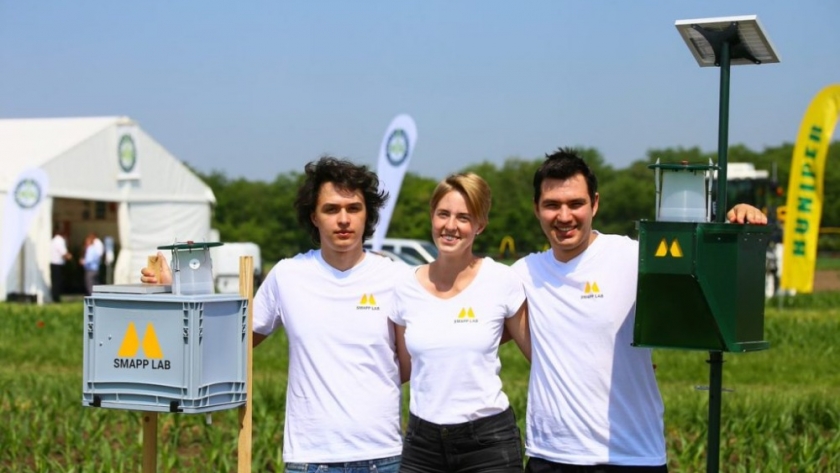
At the recent Salinas Biological Summit in California, the pressing need for more efficient trapping systems in specialty crops was a common theme among speakers and attendees. Donát Posta and Jimmy Fong, co-founders of Scoutlabs, were present at the event to discuss their company's innovative approach to digitizing pest management for agriculture.
Scoutlabs, previously known as SMAPP Lab, has developed a handheld device that aids in tracking insect migration and swarming. According to the company, their vision is to build a field-level, data-based AI co-pilot that transforms guesswork into data-driven decisions, making agriculture exciting and sustainable for the next generation of farmers.
Recently, Scoutlabs announced securing a $2 million seed round from Interactive Venture Partners, SVG Ventures | THRIVE, DEPO Ventures, and Impact Ventures.
Origins of the idea
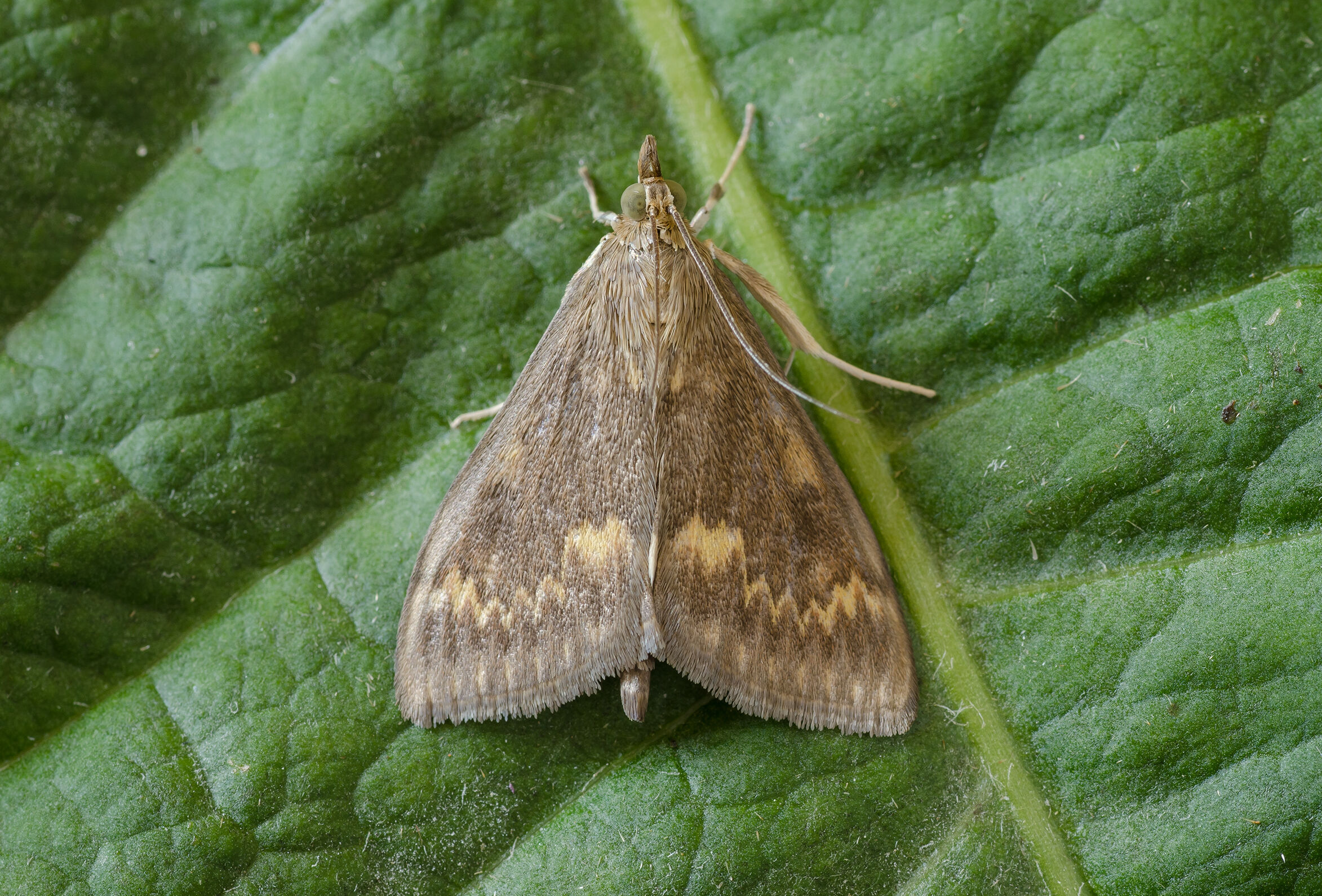
Donát Posta explained that his family's farm faced significant challenges using manual traps to monitor pests like the European corn borer. The labor-intensive process was not only costly but also yielded questionable data quality, leading to large yield losses. This situation prompted Posta to explore more efficient solutions. After finding existing market solutions prohibitively expensive, he decided to develop a more affordable digital solution that could use less labor while providing better data and decision-making capabilities.
Jimmy Fong added that the project began as Posta’s university research project, initially creating a device that was slightly more affordable than existing technologies. However, they soon realized that the economics for row crop growers, with their thinner margins, posed a challenge. Over the last 18 months, Scoutlabs has transformed their device to address these economic constraints more effectively.
Technology overview
Scoutlabs has integrated a simple camera-based IoT device with existing manual pheromone traps. This retrofit turns manual traps into digital ones, capturing images each morning and sending them to Scoutlabs’ servers. An image-recognition algorithm then differentiates the insects, with an agronomist team validating the data to ensure quality. This data is visualized for farmers, enabling them to make spraying decisions in about 30 seconds.
The new device is significantly more affordable than its nearest competitor, with Jimmy Fong noting that it costs 20 to 30 times less, making it economically viable even for smaller farms.
Benefits to growers
According to feedback from customers, the new devices save considerable time in setting up and managing traps. Farmers can use a smartphone to scan a QR code, register the trap, and automatically collect data, streamlining the entire process.

Distribution strategy
Despite conventional wisdom advising against direct-to-grower sales, Scoutlabs plans to bypass traditional distributors. Posta pointed out that the new generation of farm managers prefers to make purchasing decisions independently, avoiding the high costs and delays associated with distributors. Their product's affordability and the direct distribution model are aimed at appealing to this new type of buyer who values transparency and instant access.
Unique selling proposition
Scoutlabs has a pending patent for the method of compressing images and sending them via super-low bandwidth to the cloud. This approach provides growers with daily images and heat maps of pest pressure, reducing the need for manual inspections. Over time, with more devices in the field, Scoutlabs aims to offer predictive analytics for pest invasions.

Current pilots and future plans
Most of Scoutlabs' pilot projects are in California and Washington State, where the need for efficient pest management is high due to extensive manual trap networks. Posta plans to relocate to California early next year to oversee these projects.
The recent $2 million seed funding will be used to ramp up manufacturing and focus on direct-to-grower distribution. The goal is to deploy 50,000 traps next year, scaling production and commercialization efforts to meet growing demand.
Scoutlabs’ innovative approach to digitizing pest management represents a significant advancement for the agriculture industry, promising better data, lower costs, and more efficient use of resources.