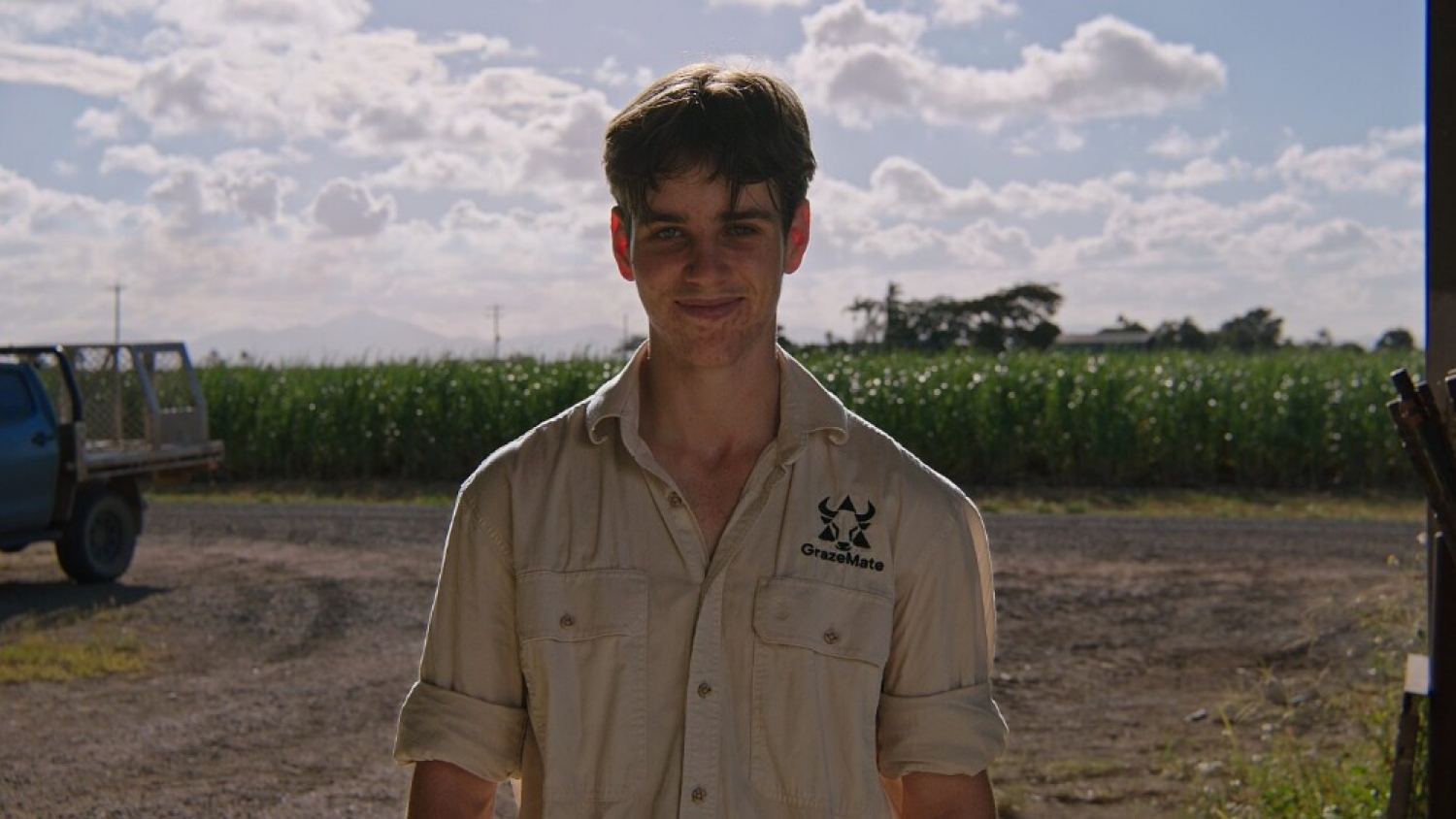
A new generation of agricultural technology is reshaping livestock management. GrazeMate, a startup founded by 19-year-old Australian innovator Sam Rogers, has secured $1.2 million in pre-seed funding to accelerate the development of fully autonomous drones capable of herding and monitoring cattle without human pilots. The company’s proposal, tested on farms in Queensland and New South Wales and now preparing to expand toward the United States, seeks to address a growing problem in the sector: the shortage and high cost of skilled rural labor. The information was reported by AgFunderNews.
GrazeMate enters a competitive but still emerging segment of agtech, where multiple solutions are being developed to help ranchers move and track livestock more efficiently. Some startups focus on solar-powered smart collars, while others train farmers to manually operate drones for mustering. GrazeMate’s approach is different: its drones are designed to make decisions autonomously, using artificial intelligence to interpret animal behavior and guide herds with minimal stress.
The project was conceived by Rogers, who grew up on a cattle station in Australia and experienced firsthand the time and effort required to manage large herds. “The hair on fire problem we’re looking to immediately address is that skilled labor is really difficult to find and often very expensive,” he said, in remarks cited by AgFunderNews. That challenge, common across rural economies worldwide, is one of the main drivers behind the rapid adoption of automation in agriculture.
Funding and early traction
The $1.2 million pre-seed round was led by Y Combinator, with participation from Antler and NextGen Ventures, a signal of growing investor confidence in agricultural automation. Although the amount is modest compared with later-stage funding rounds, it represents a significant milestone for a company still in its early development phase.
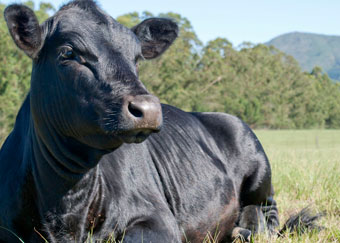
Rogers is currently piloting the technology on two farms in Australia, where the system is being used to muster thousands of cattle per week across approximately 1.7 million acres. These early trials are designed to validate the system under real-world conditions, including variable terrain, weather, and herd behavior.
The startup is also turning its attention toward the US market, where large-scale ranching operations and rising labor costs could create strong demand for autonomous mustering tools. According to AgFunderNews, GrazeMate believes its model could scale more efficiently than solutions that require hardware deployment on every animal.
How the technology works
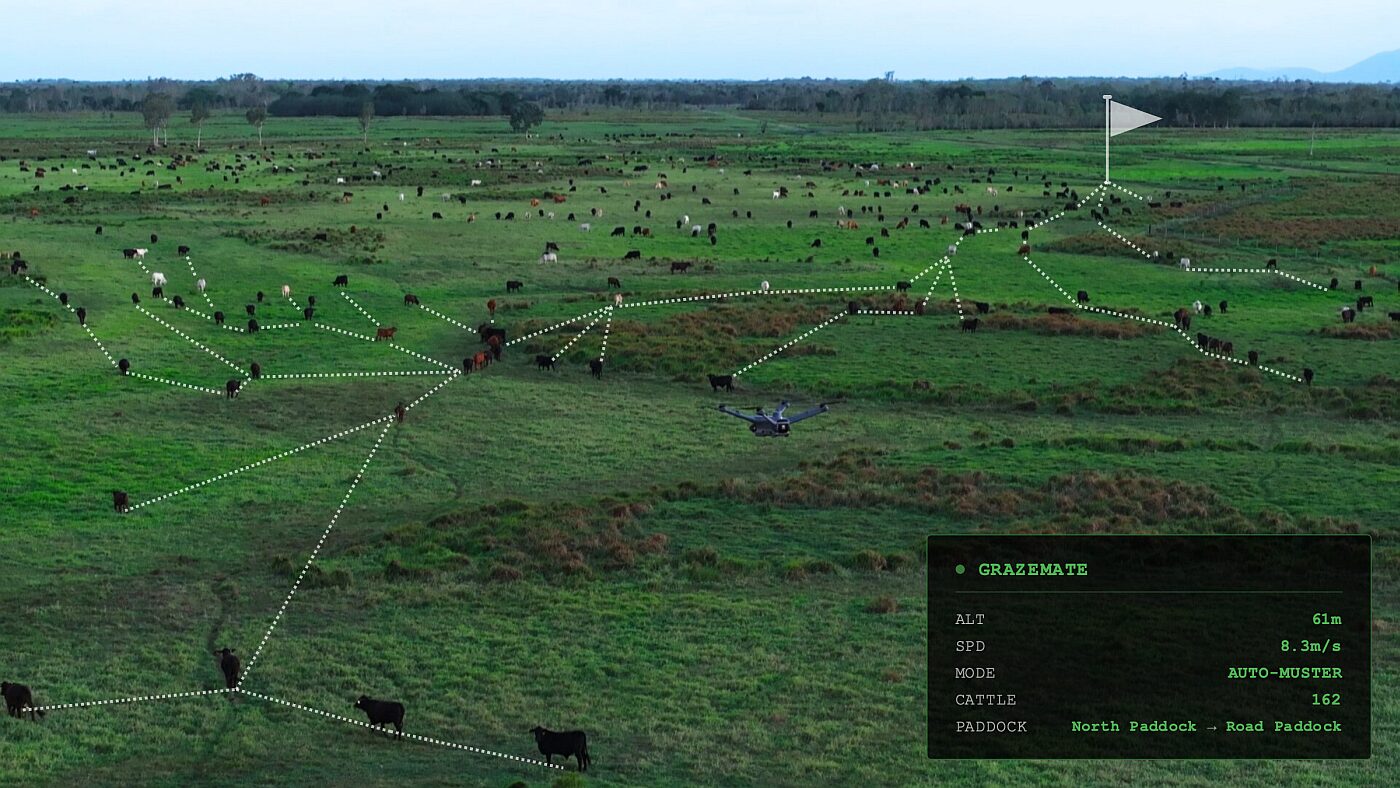
GrazeMate’s system currently runs on DJI drones, combined with proprietary software built around reinforcement learning models. These models allow the drone to respond dynamically to cattle behavior, mimicking the decision-making process of experienced stockmen.
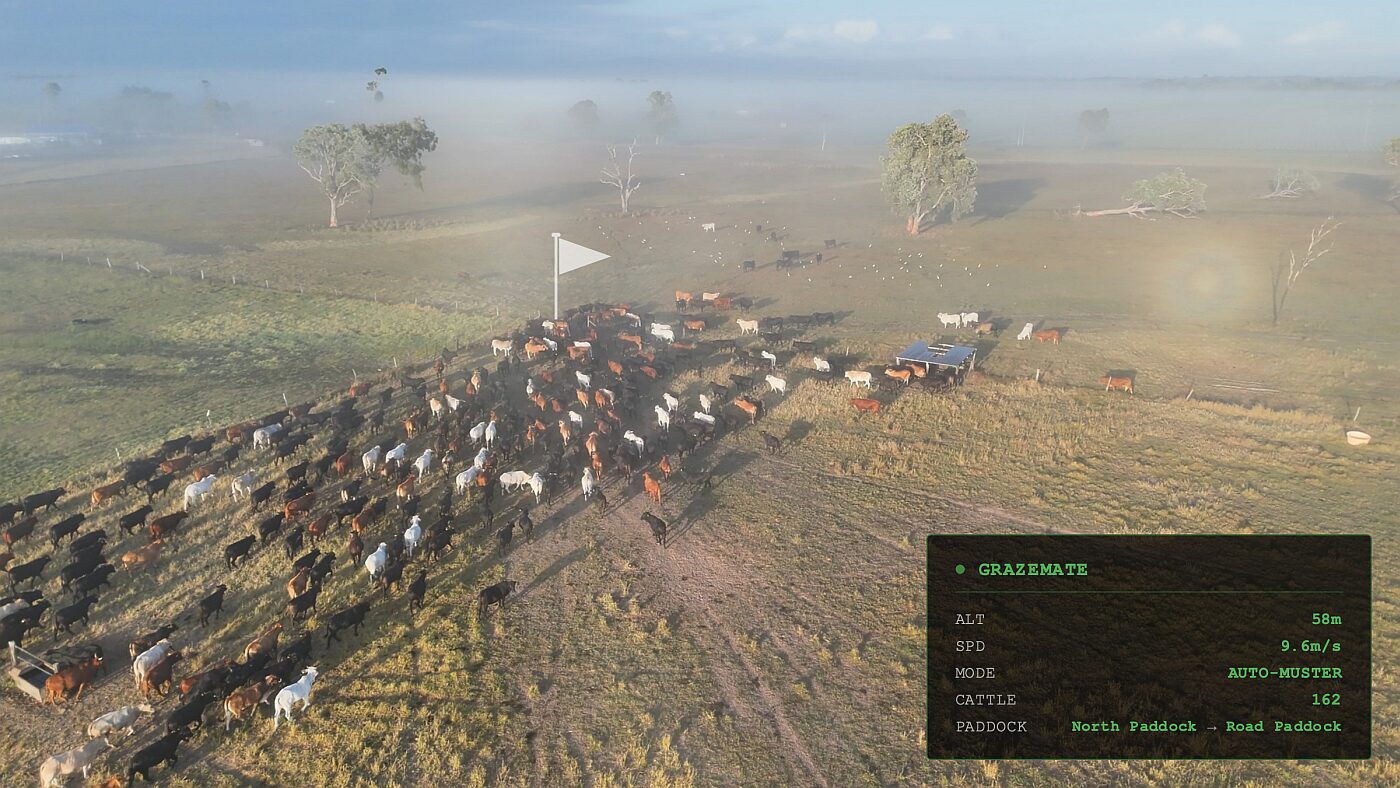
The first generation of the product focuses on autonomous mustering. Through a mobile app, ranchers can upload information about their land, open gates as needed, and initiate a mustering session. The drone then flies over the herd and gently guides the animals from one paddock to another. Once the task is complete, the user receives a notification on their phone.
Beyond herding, the drones can also collect visual data from the property, including images of water troughs and fence lines, enabling producers to quickly detect potential issues without physically inspecting every corner of their land.
A second-generation system, currently in beta testing, adds more advanced analytics. According to Rogers, this version is designed to help estimate cattle weight and dry matter availability, providing valuable information for decision-making in rotational grazing systems.
Lower stress for animals, more time for producers
One of the central claims behind GrazeMate’s approach is that autonomous drones can move cattle more calmly than traditional methods. Rogers explained that the system continuously monitors animal behavior. If cattle begin to show signs of stress, the drone adjusts its position and distance.
“If cows start running, we back away immediately as we want to make sure they’re moving calmly and efficiently,” he said. “Typically, if the head is down, it shows they’re not stressed and they’re moving along well. As soon as it pops up, our models are trained to back away.”
This capacity for slow, adaptive operation could represent an advantage over conventional mustering, which often involves motorbikes, horses, trucks, or even helicopters, all of which can increase stress levels in animals and demand significant human time and effort.
Rogers also emphasized the broader value proposition for producers. By automating routine tasks such as mustering, farmers gain greater flexibility in how they allocate their time. According to his assessment, the technology does not simply reduce labor costs; it can also enable more frequent movement of cattle, which supports rotational grazing practices and potentially improves soil health and pasture utilization.
Business model and scalability
Rather than selling drones as standalone hardware, GrazeMate has chosen a leasing model. The company provides the drones and software as part of a subscription-based service, with pricing linked primarily to the size of the ranch and the number of cattle managed.
“We price based on the size of the ranch, primarily, how many cattle you’re running, and how much we can help with that,” Rogers explained. He added that the cost is expected to be lower than what many ranchers currently spend on traditional mustering.
This model reflects a broader trend in agtech toward “technology as a service”, where farmers pay for outcomes and ongoing support rather than making large upfront investments in equipment. It also allows the company to continuously update software and improve performance without requiring customers to replace hardware frequently.
Hardware dependence and future flexibility
GrazeMate’s reliance on DJI hardware has raised questions, particularly as DJI has faced regulatory scrutiny in some markets, including the United States. Rogers acknowledged the issue but noted that existing models remain fully supported and meet the company’s technical needs.
“We work with the off-the-shelf hardware and then build out our own computers that go on a base station with the charging station for DJI and talk to the app,” he said. He also indicated that if restrictions were to intensify or existing models became unsuitable, the company believes it could transition to alternative hardware platforms relatively quickly.
A DJI spokesperson, quoted by AgFunderNews, stated that existing products continue to be supported and that the company remains committed to the US market, suggesting that near-term disruption may be limited.
A growing ecosystem of livestock tech
GrazeMate is not alone in targeting innovation in livestock management. Across Australia, North America, and other regions, startups are developing technologies ranging from virtual fencing to smart collars and operator-controlled drones. Each approach addresses similar challenges—labor shortages, rising costs, and the need for more sustainable production—but with different technical and economic trade-offs.
Rogers argues that autonomous drones offer a particularly attractive balance. While collar-based systems require hardware on every animal, a single drone can potentially manage thousands of cattle, making it more scalable for large operations. This scalability is central to the company’s long-term vision.
“If we can help you move your cattle more often and help you run an operation that’s more efficient with its grass usage, you can have a better impact overall, on grass, the soil, the cattle and the ranch,” Rogers said.
Outlook
Although GrazeMate remains in an early stage, its progress highlights the rapid pace of change in agricultural technology. The combination of artificial intelligence, robotics, and practical farming knowledge is opening new possibilities for sectors that have traditionally relied on manual labor and experience passed down through generations.
If the company succeeds in scaling beyond pilot projects and entering large markets such as the United States, autonomous mustering could become a standard tool in modern ranching. For now, GrazeMate’s early funding, real-world testing, and clear focus on solving concrete problems position it as a startup to watch in the evolving landscape of global agtech, as reported by AgFunderNews.