Saga Robotics accelerates US vineyard expansion with new leadership and fresh capital for UV-C robots
The ag robotics company reinforced its US strategy with a new general manager and additional funding to scale autonomous UV-C technology that replaces fungicides in vineyards
viernes 23 de enero de 2026
Saga Robotics, the Norway-based ag robotics company, is stepping up its expansion in the United States vineyard market with the appointment of a new US general manager and the closing of additional funding to support the growth of its autonomous UV-C robots, a technology designed to control fungal diseases without synthetic chemicals. The move, announced in January 2026, underscores the company’s bet on viticulture as one of the most promising segments for chemical-free crop protection, according to information published by AgFunderNews.
The company confirmed that Caine Thompson, formerly general manager at O’Neill Vintners & Distillers, will take over as US general manager starting January 26. At the same time, Saga Robotics secured an undisclosed investment from Xinomavro Ventures, a venture capital firm focused on technology for the wine industry. The funding acts as a supplementary close to Saga’s US$11.2 million round completed in 2025 and will be used to expand operations and scale its fleet of autonomous robots across US vineyards, particularly in California.
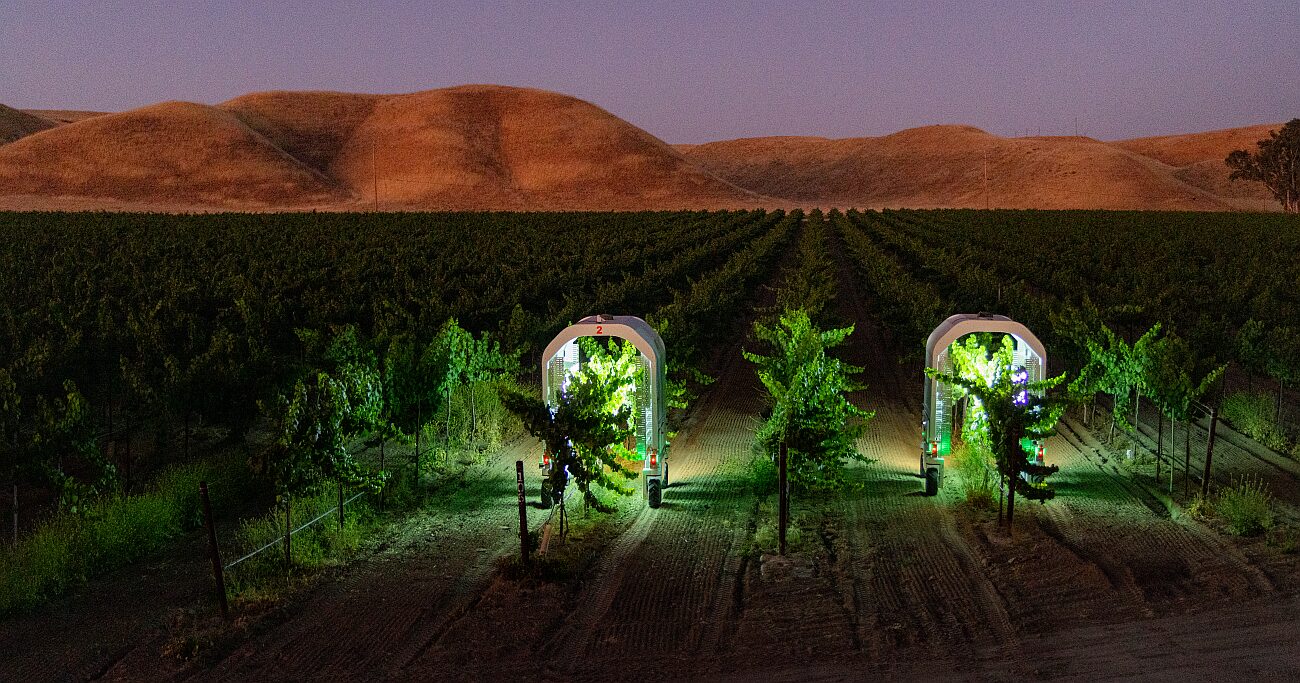
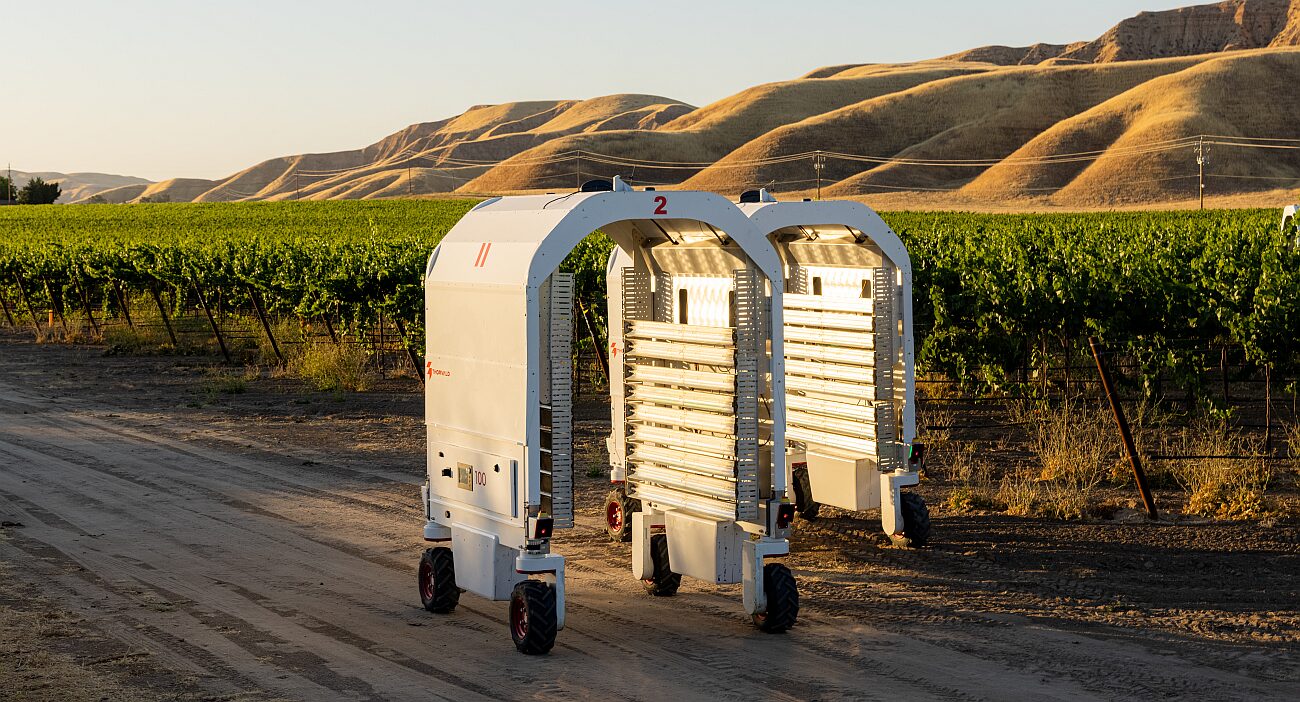
Saga Robotics develops the Thorvald autonomous platform, a robot that applies UV-C light to crops at night to combat diseases such as powdery mildew. The technology targets the DNA of fungal pathogens, disrupting their ability to reproduce. Nighttime application is critical, as exposure to sunlight—especially blue light—can activate a natural repair mechanism in fungi that reverses UV-C damage. By operating in darkness, the robots significantly improve treatment effectiveness.
Founded in Norway in 2016 by Dr. Pål Johan From and Dr. Lars Grimstad, Saga Robotics initially gained traction in the United Kingdom, where its robots are widely used in tabletop strawberry production under polytunnels. Over the past two years, the company has increasingly shifted its focus toward California vineyards, where powdery mildew represents a persistent and costly challenge for winegrowers.
According to the company, the 2025 California wine grape season marked a turning point. Saga Robotics reported a tenfold increase in the number of acres treated with its UV-C robots compared to the previous year. For the 2026 season, the company expects to nearly triple the treated acreage again, reflecting growing confidence among growers and rising demand for alternatives to chemical fungicides.
The company operates under a Robots as a Service (RaaS) model, in which growers pay a fee per acre for treatments rather than purchasing the machines outright. This approach lowers upfront costs and reduces the financial risk for producers, making it easier to adopt new technology. As traditional fungicides lose effectiveness due to resistance and face increasing regulatory and consumer scrutiny, Saga positions its UV-C solution as both an economic and environmental alternative.
“To accelerate sustainable and regenerative viticulture further, chemical-free winegrowing is the holy grail,” Thompson said in an interview with AgFunderNews, highlighting the strategic importance of the technology. He added that the Thorvald robot represents “a rare technological breakthrough” that reduces the barriers to entry for organic and regenerative practices by eliminating the need for synthetic chemicals.
Thompson also acknowledged that adopting UV-C robotics requires a shift in mindset for growers. “There are two major changes to ‘normal’ vineyard operations,” he said. “One is using autonomous machines instead of tractors, and the second is the use of UV-C light to control diseases instead of chemicals.” According to him, the risk for growers is mitigated by independent third-party research validating the effectiveness of UV-C treatments, as well as by the growing number of vineyards that have successfully expanded their use of the technology.
Leadership changes are also part of Saga Robotics’ broader growth strategy. Pål Johan From, who had been leading US operations, will return to Norway to take on a new role as chief growth officer. In this position, he will focus on strategic partnerships, technology development, expansion into new crops and markets, and supporting future fundraising. To ensure continuity during the 2026 growing season, From will remain actively involved in US operations through June.
From said that building trust has been essential to scaling in California’s wine industry. “Typically, we might start with 10 to 20 hectares in the first season, then move to half the farm in season two, and eventually the entire farm,” he explained to AgFunderNews. As performance data accumulated and results proved stronger than conventional chemical treatments, adoption accelerated. The company’s strategy of working with well-known growers has also helped establish credibility and drive wider acceptance.
Beyond disease control, Saga Robotics is expanding the capabilities of its robots to deliver additional value to growers. The latest versions of the Thorvald platform are equipped with cameras and sensors that collect data while moving through vineyard rows. This data can be used for early disease detection, yield prediction, and virus monitoring, as well as for tasks such as beneficial insect release, weed control, mowing, and crimping.
Yield prediction, which began generating commercial revenue in 2025, relies on analyzing the number and size of grape clusters, or flower counts in the case of strawberries. According to Thompson, growers have shown strong interest in these add-on services, which can improve vineyard economics while supporting overall fruit and wine quality.
The additional funding from Xinomavro Ventures reflects investor confidence in the scalability of the technology. “Saga Robotics is addressing one of the wine industry’s most pressing challenges with a solution that is both practical and transformative,” said Guillaume De Pracomtal, founding partner at Xinomavro Ventures, in statements cited by AgFunderNews. He emphasized the company’s ability to scale autonomous UV-C treatment in commercial vineyards as a key differentiator.
While Saga Robotics faces competition from other companies using UV-C for crop protection—such as firms developing larger machines for open-field strawberries—the company has chosen to focus on applications that require smaller, highly precise robots, including polytunnel strawberries and vineyards. This niche positioning aligns with the structural characteristics of vineyards and the need for precision around vines.
Looking ahead, Saga Robotics sees opportunities beyond California. Thompson said the company is exploring wine-producing regions worldwide where powdery and downy mildew are major issues and where demand for chemical-free farming is increasing. In the UK, the company expects to treat around 30% of the polytunnel tabletop strawberry area during the 2026 season, further consolidating its presence in that market.
As regulatory pressure, consumer preferences, and climate challenges reshape agriculture, Saga Robotics is betting that autonomous UV-C technology can become a cornerstone of sustainable viticulture. With new leadership, fresh capital, and rapidly expanding acreage under treatment, the company is positioning itself to play a central role in the transition toward lower-input, data-driven winegrowing in the US and beyond.
Invertí en periodismo de calidad
En Agroempresario trabajamos para acercarte contenidos que agregan valor.