The U.S. agricultural spray drone market is undergoing a rapid transformation after the Federal Communications Commission (FCC) blocked new foreign-made drones and critical components in December 2025, creating opportunities for domestic producers. Revolution Drones, founded by farmer Russell Hedrick, and Exedy Drones, a Michigan-based unit of EXEDY Globalparts Corporation, are stepping in to fill the gap and develop locally manufactured drones tailored to U.S. farms, according to AgFunderNews.
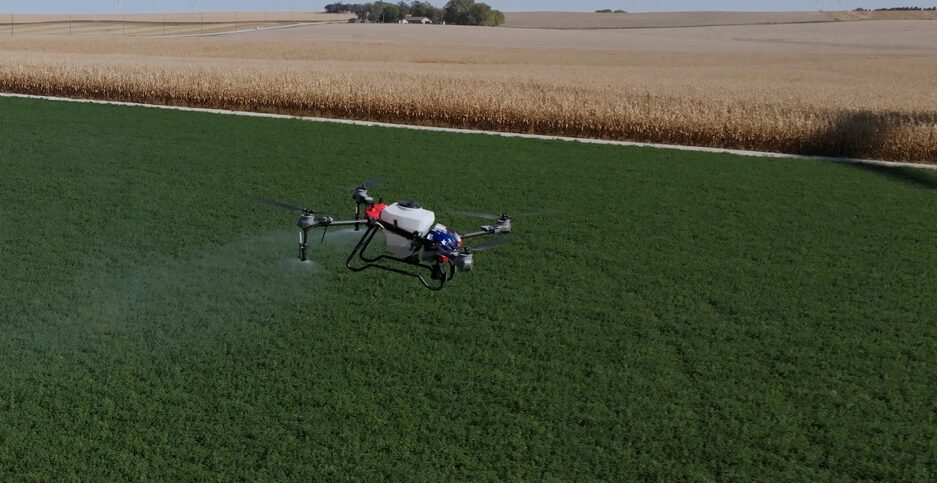
Exedy Drones: Automotive Expertise Moves into Agriculture
Exedy Drones leverages decades of automotive engineering, including expertise in Computational Fluid Dynamics (CFD), to develop agricultural drones. Scott Binder, VP of Engineering, Operations, and Technology, explained that the company pivoted from producing torque converters and clutches to drones due to electrification trends in vehicles.
Binder highlighted that the U.S. market is demanding locally produced solutions: “There was [Texas-based] Hylio, but everything else was coming from China. We decided we could add value with our automotive expertise and create a U.S.-based drone manufacturing facility.”
While most components are currently sourced domestically, batteries, motors, and some electronic systems still rely on foreign suppliers. Binder said Exedy is working to bring all production to the U.S. over time. Exedy Drones’ first products, with payloads between 50 and 70 liters, are expected to launch this year, supported by partnerships with AcuSpray for dealer networks and American Autonomy for software.
Revolution Drones: Building a Domestic Supply Chain
Russell Hedrick, a record-setting farmer from Hickory, North Carolina, founded Revolution Drones to create drones optimized for American crops. Hedrick’s team initially planned to manufacture in Brazil but shifted production to the U.S. following the FCC’s December intervention.
Hedrick said, “We have a company in North Carolina building electronics, Nebraska for plastics, Indiana for wiring harnesses, and Illinois for tanks. Final assembly is in North Carolina and either Kansas or Nebraska.” He added that while motors and radar systems are still partially imported from China, the company is sourcing alternatives from South America to comply with FCC rules.
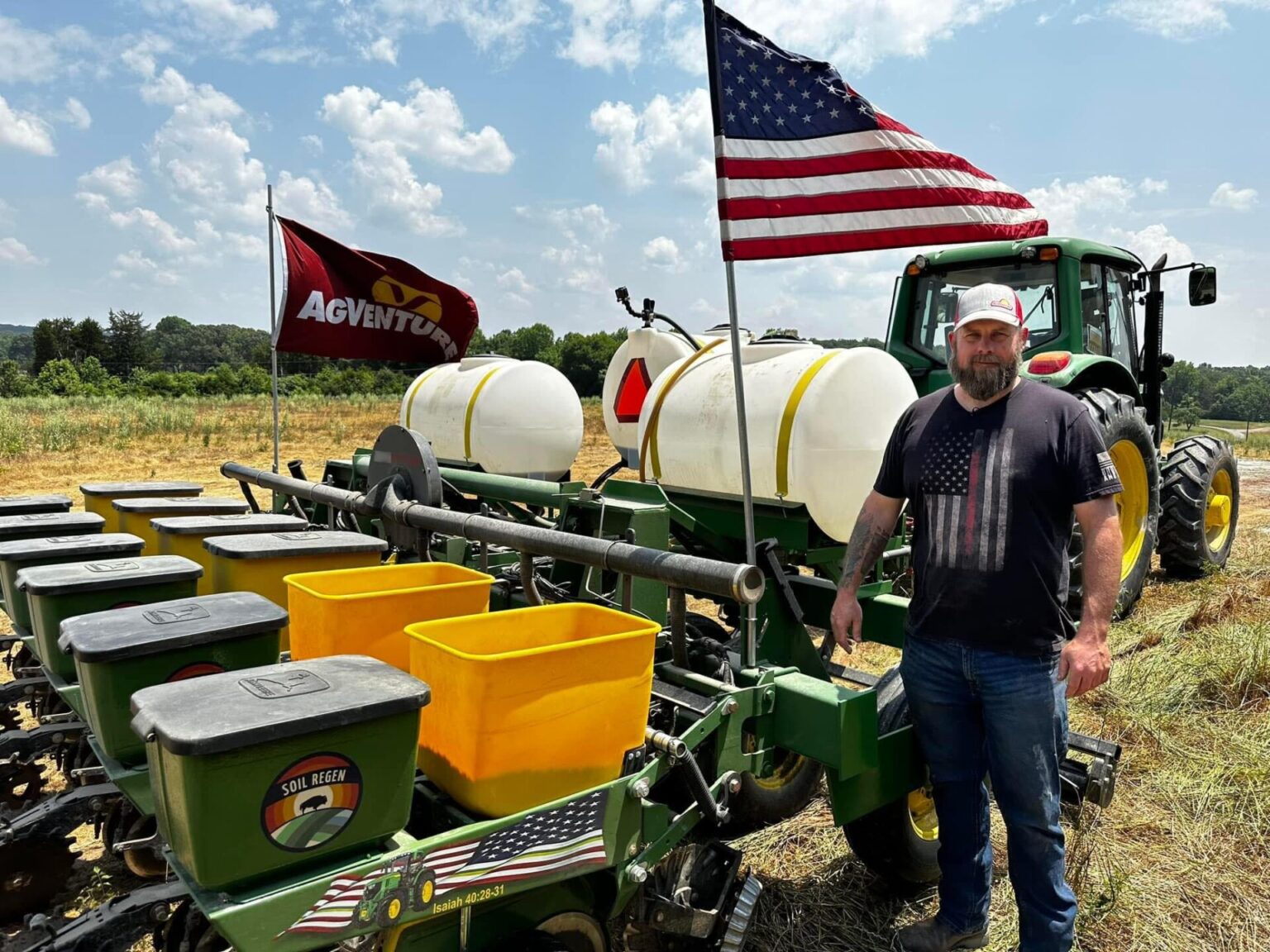
Revolution Drones recently launched its first spray drones at Husker Harvest Days, selling approximately 250 units with another 200 expected by February 2026. Hedrick emphasized innovation in design: “Our propellers are at least two times thicker than some competitors’, maintaining more constant thrust and faster processing speed across large coverage areas.”
Market Impact of FCC Restrictions
The FCC’s actions targeted all new foreign-made drones and critical components considered security risks, including motors, flight controllers, navigation systems, and batteries. Existing foreign drones with prior FCC authorization remain legal, while conditional exemptions are available for some foreign components.
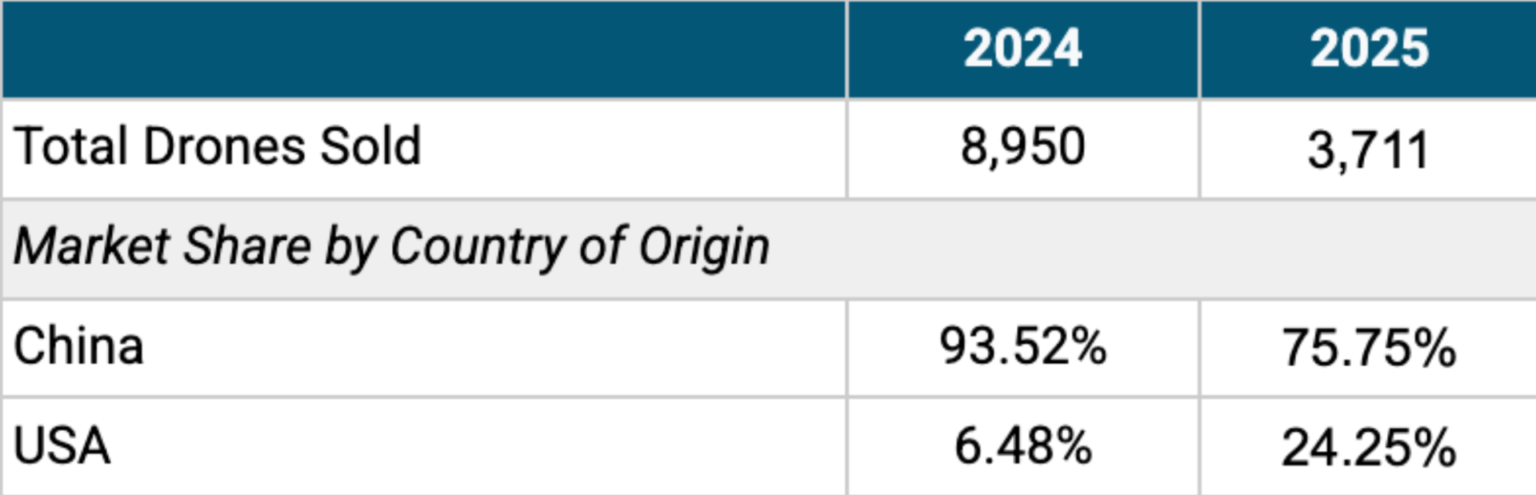
According to the American Spray Drone Coalition (ASDC), the total treated acreage in the U.S. grew 58.7% year-over-year to 16.4 million acres in 2025, but sales of new spray drones fell 59% to 3,711 units due to import restrictions on DJI, the market leader. Eric Ringer, founder of American Autonomy Inc, said, “While U.S.-made drone market share nearly quadrupled, this reflects the vacuum left by DJI imports rather than a sustained competitive shift.”
Opportunities and Challenges for U.S. Drone Manufacturers
The disruption has accelerated domestic production and encouraged companies to develop 100% U.S.-made drones. Exedy Drones and Revolution Drones are focusing on manufacturing components locally, establishing secure supply chains, and designing drones suited for U.S. agricultural landscapes.
Challenges remain, particularly in sourcing lithium batteries and high-performance motors domestically. Hedrick noted, “If you want to get an American-made motor at current specs, you’d have to shrink the drone by 80%. Batteries are also costly, even with local prototypes.”
Despite these hurdles, U.S. manufacturers are gaining momentum. Revolution Drones’ independent series covers up to 29 gallons, while the larger Revolution series handles 30 gallons or more. Exedy’s upcoming 50–70 liter payload drones will offer farmers alternative solutions to foreign imports, providing reliability, serviceability, and locally sourced parts.
Market Outlook
The combination of FCC restrictions, rising demand for spray drones, and the exit of major Chinese suppliers has created a rapidly evolving market. Domestic manufacturers have a unique opportunity to capture market share while foreign firms may explore partnerships or licensing agreements to remain competitive. Analysts predict that the U.S. agricultural drone landscape will continue to shift toward locally produced, regulated, and adaptable systems over the next several years.