The alternative meat industry is entering a decisive phase in 2026 as companies face mounting pressure to reach profitability, according to insights shared by Christie Lagally, founder and CEO of Rebellyous Foods. In an analysis reported by AgFunderNews, the executive argues that the sector’s future depends less on rapid expansion and more on fixing the underlying unit economics of plant-based meat production.
Lagally said that recent events across the industry illustrate the turbulence affecting companies once considered among the most promising in food technology. The closure of facilities and sale of assets at Meati, a $100 million loan and debt restructuring at Beyond Meat, corporate changes at Impossible Foods and the acquisition of Kellanova by Mars have all contributed to a major reset for the sector.
These developments, she explained, highlight a central issue that investors and stakeholders are increasingly focused on: the path to sustainable profitability. According to Lagally, financial performance and margins will ultimately determine the long-term impact and viability of alternative proteins.
“The only questions stakeholders ask of alt-meat companies today relate to the path and timeline to profitability,” she said.
Despite years of growth and investment, many companies in the sector have relied on the expectation that profitability would eventually come through scale. However, Lagally argues that this strategy has often overlooked a critical factor: the cost structure of producing plant-based meat.
“For the better part of two decades, profitability has been seen as the achievement for ‘once we scale,’ which translates more honestly to ‘if we scale’,” she said.
Profitability must start with product economics
According to Lagally, the industry must rethink how plant-based meat is designed and manufactured. Instead of assuming that larger production volumes will automatically generate profit, companies need to build sustainable margins into the unit economics of each product from the beginning.
If profitability depends entirely on massive scale, she warned, the business model becomes fragile.
The executive said the alternative protein industry has spent years experimenting with ways to match the taste, texture and price of animal meat. Yet attempting to compete directly with the global scale of conventional meat production may not be the most effective strategy.
Instead, she suggested that plant-based producers should initially focus on improving efficiency at smaller production levels, where traditional meat systems are less efficient.
Strategic shifts raise concerns
Lagally also pointed to recent product diversification moves by major companies as a potential sign of uncertainty within the sector.
Impossible Foods has expanded into high-protein pasta products, while Beyond Meat recently introduced protein beverages. For Lagally, these decisions may indicate that companies are searching for alternative revenue sources rather than strengthening their core plant-based meat offerings.
She compared these strategies to what business author Jim Collins described in his book How the Mighty Fall as “grasping for salvation,” a stage where companies attempt dramatic new moves instead of returning to fundamental business principles.
Consumers of plant-based meat, she noted, have consistently communicated two priorities: price parity with conventional meat and high product quality. Meeting those expectations remains the industry’s greatest challenge.
Technology remains a critical gap
One of the main reasons plant-based meat remains relatively expensive, Lagally argues, is the lack of modern production technology tailored specifically for alternative proteins.
According to her assessment, much of the equipment used to produce plant-based meat today is based on food processing techniques developed decades ago, particularly protein extrusion technology introduced in the 1960s.
Meanwhile, conventional meat production has undergone extensive technological evolution, from early industrial processing in the mid-20th century to today’s automated and robotic slaughterhouse systems.
Lagally believes significant innovation in production engineering, automation and process design is essential if plant-based meat is to reach competitive price levels.
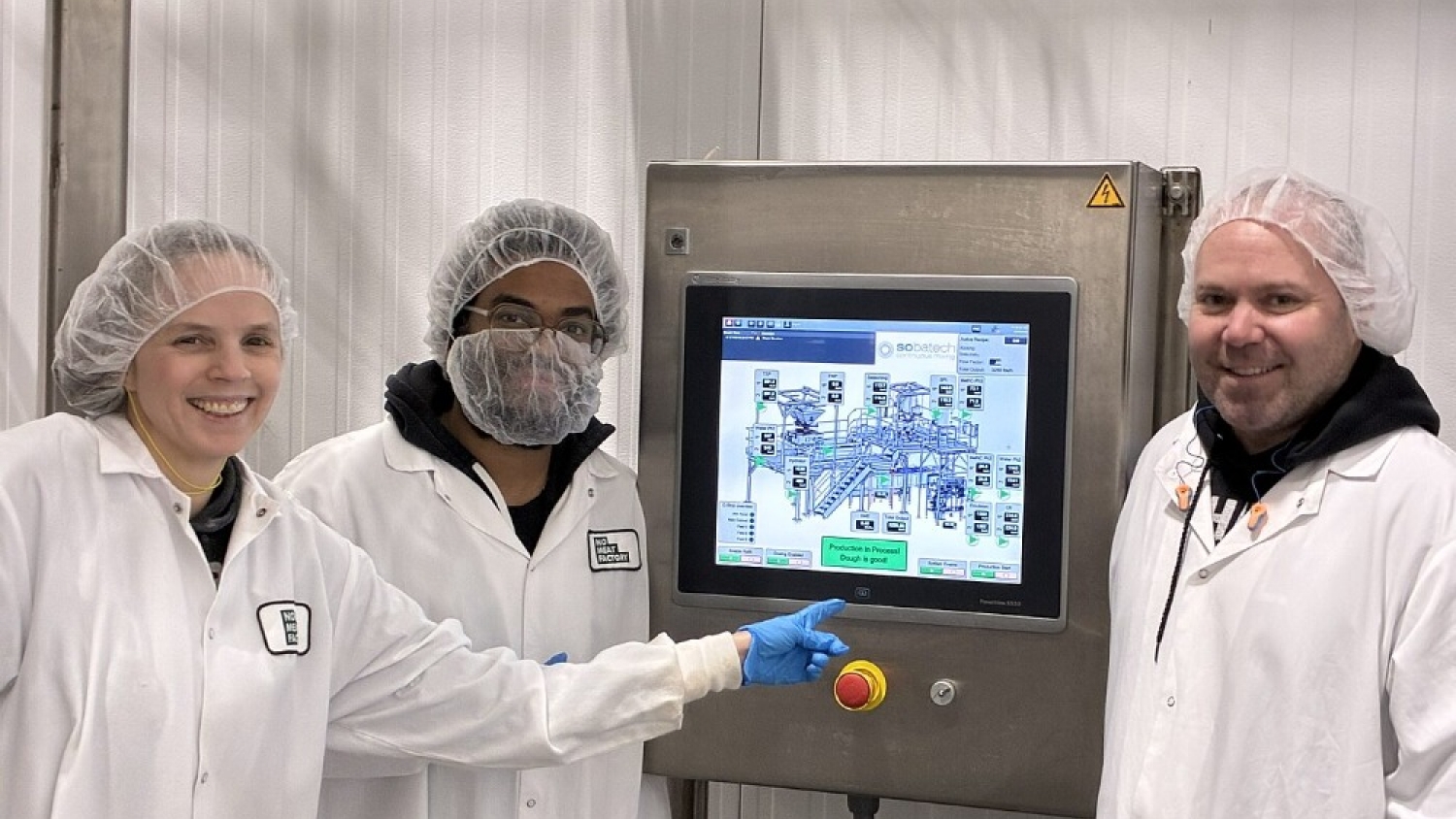
From her own experience developing continuous production systems at Rebellyous Foods, she said investments in food manufacturing technology can generate returns within relatively short periods.
“I know from first-hand experience that the ROI on this type of work is extraordinary and short term, often as little as 6 months to 2 years,” she said.
The broader protein transition
Despite financial pressures affecting some companies, analysts still expect the alternative protein market to expand globally. However, Lagally noted that conventional meat production is also growing, which means plant-based products risk losing relative market share.
For the alternative protein sector to fulfill its potential—both economically and environmentally—it must accelerate efforts to improve affordability and accessibility.
Lagally pointed to policy signals as an example of shifting consumer sentiment. The city of Amsterdam, for instance, has introduced restrictions on meat advertising in public spaces, similar to the bans applied to tobacco advertising decades earlier.
Still, she emphasized that the industry’s success will ultimately depend on its ability to deliver products that consumers want at competitive prices.
“2026 is the moment at which we need to accelerate our efforts on all fronts,” she said, highlighting the importance of focusing on consumer needs, investing in production technology and building profitable companies capable of long-term impact.