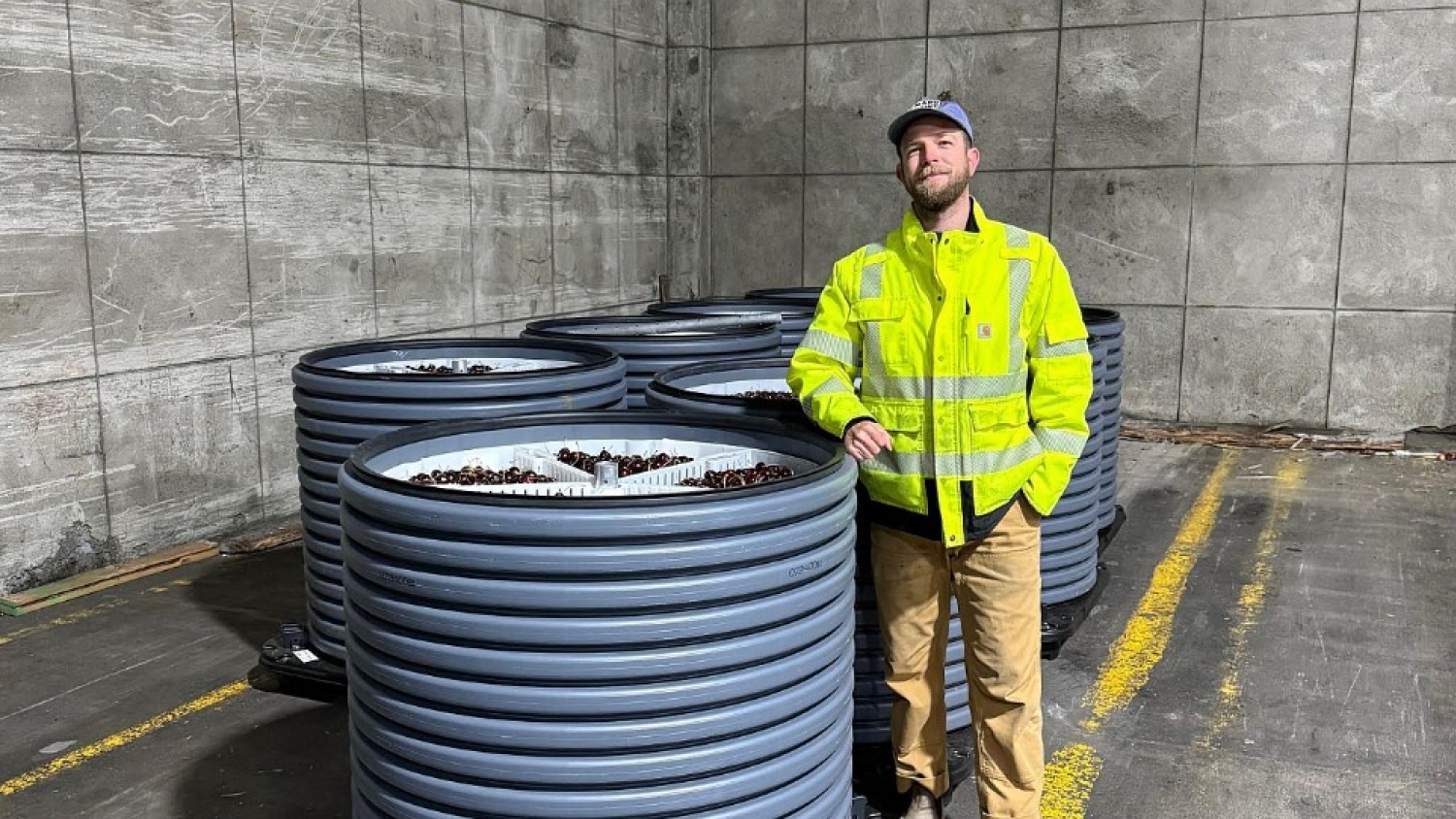
RipeLocker, a Seattle-based agtech startup, is developing container-sized vacuum chambers designed to extend the shelf-life of fresh produce and enable global shipping without transferring items into individual drums. The move addresses a key limitation of the company’s drum-sized storage, which has constrained shipping capacity and raised costs.
Founded on technology that creates a near-vacuum, ultra-low-oxygen environment for perishables—from blueberries and avocados to flowers and hops—RipeLocker allows producers to preserve quality for weeks longer than conventional controlled atmosphere or modified atmosphere methods. Unlike those approaches, which rely on nitrogen flushing, RipeLocker dynamically monitors and adjusts oxygen and CO₂ levels, even during transit.
Expanding from drums to full-size shipping containers
While RipeLocker’s drum system has proven effective for stationary storage and small-scale shipping, it poses logistical challenges. Transferring produce into individual drums is labor-intensive, and a container filled with drums holds roughly half the volume of a standard palletized shipment.
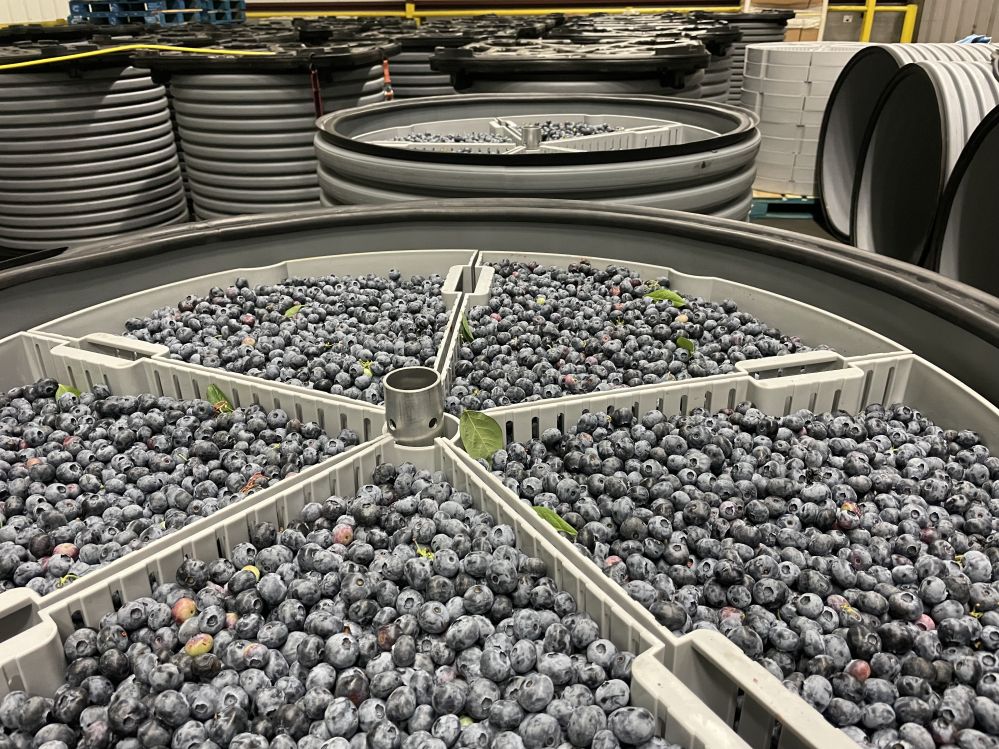
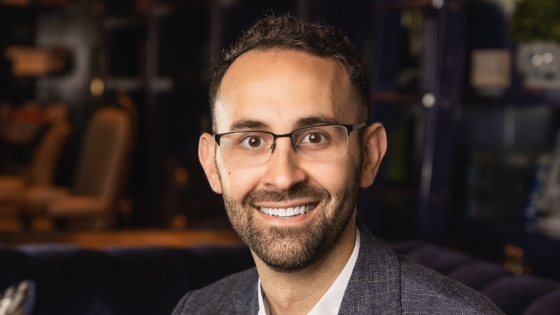
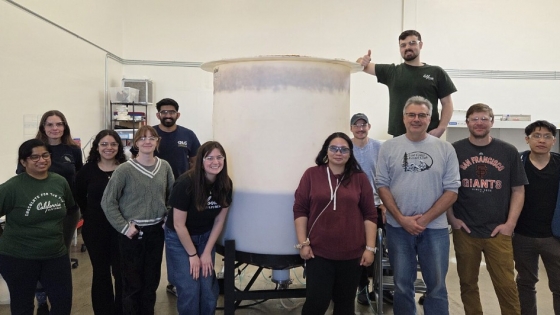
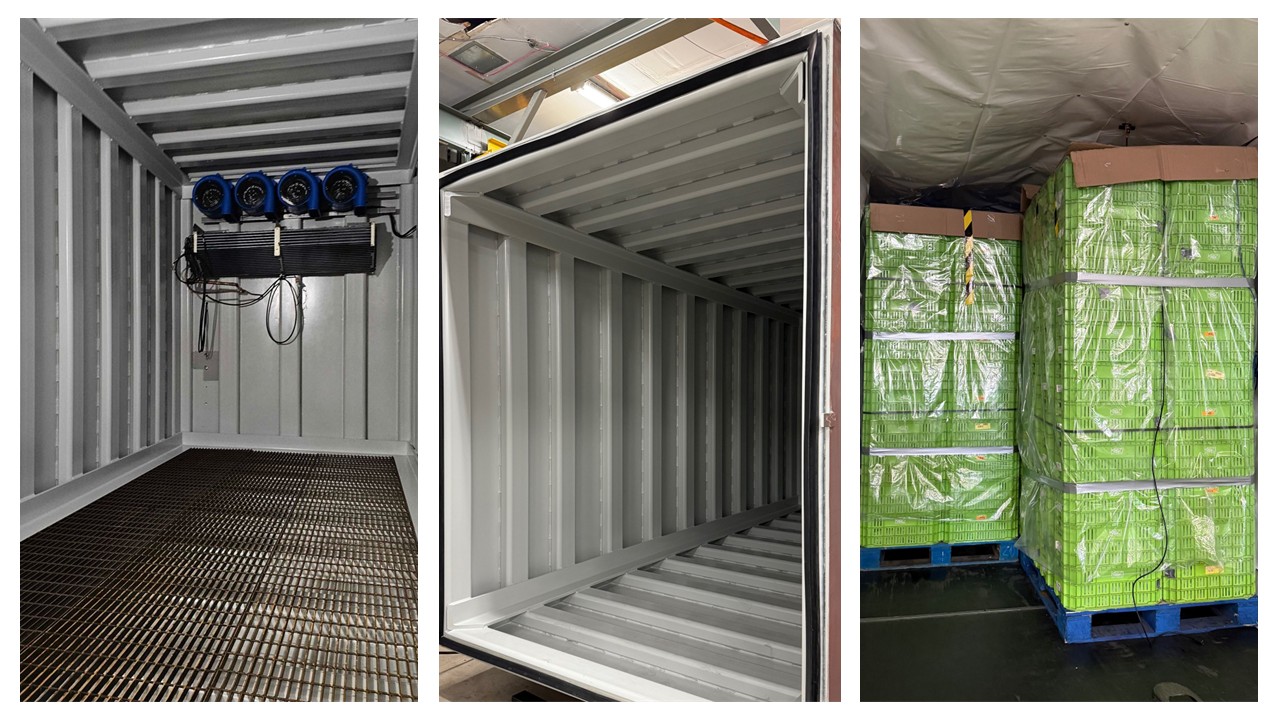
“To make this viable for global shipping, we had to scale our technology to fit a refrigerated container,” said Brendon Anthony, PhD, RipeLocker president. The company has built a 20-foot prototype, successfully testing it with blueberries and kiwifruit, and plans a 40-foot commercial container that can carry nearly double the previous capacity. “This reduces the cost per kilogram and makes long-distance ocean transport competitive with air freight,” Anthony added.
Engineering breakthroughs
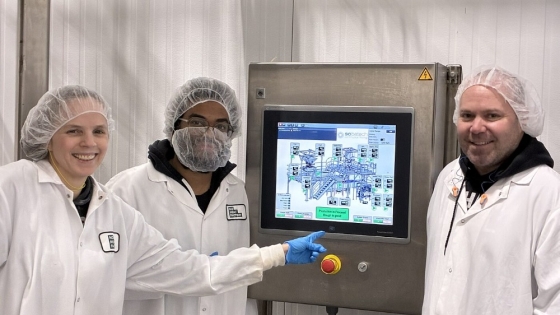
The new design shifts the refrigeration system inside the vacuum chamber rather than placing vacuum inside a refrigerated unit. Engineers are also moving from steel to aluminum to reduce weight and optimize cooling under low-pressure conditions. Anthony emphasized that ease of use, integration with existing operations, and cost-effectiveness are critical to commercial success.
Global market opportunities
RipeLocker aims to help growers in Latin America and other regions access high-value markets in Asia, including India, South Korea, and Taiwan. Currently, air freight is required to ensure fruit arrives in good condition, costing $3–4 per kilogram, compared with about 50 cents per kilogram by sea. With extended shelf-life, the company can offer shipping by ocean while maintaining quality.
The system also enables strategic timing for market entry. By holding containers for several weeks, growers can sell when prices recover or supply gaps emerge, improving profitability. The technology is particularly attractive to producers of premium fruit varieties who seek consistent, high-quality delivery.
Next steps and commercial rollout
RipeLocker is in talks with ocean carriers, logistics providers, and refrigerated container manufacturers to finalize the commercial design. The company plans to license production and leasing to partners, following the model used for controlled-atmosphere containers. Trials with customers are expected by late 2026 or early 2027.
Anthony noted that the company has relied on angel funding to date and aims to raise institutional investment once the container-scale technology is fully validated.
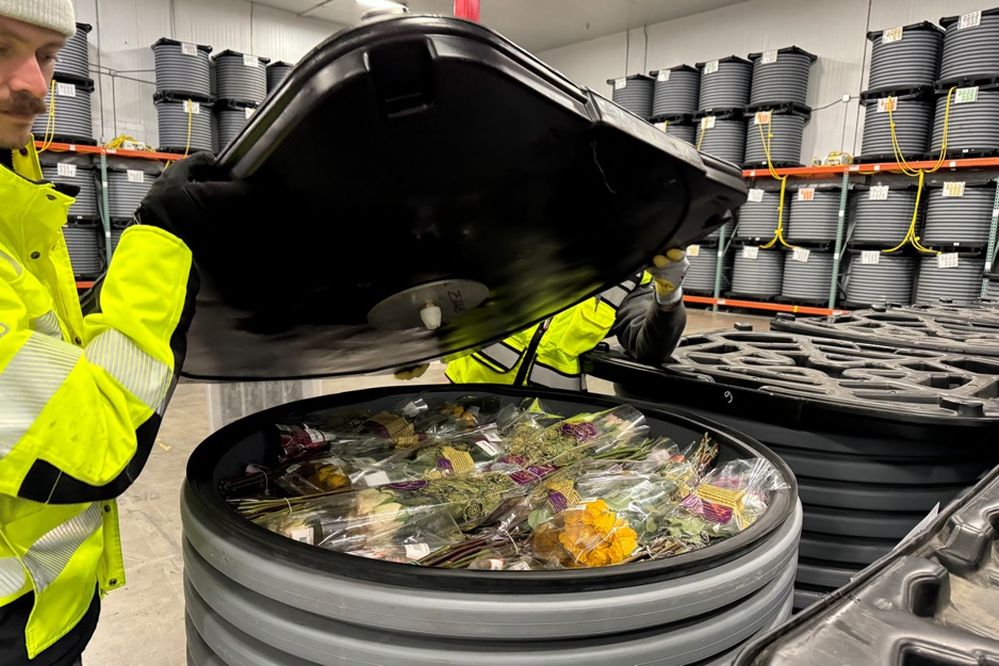
“Low-pressure storage offers advantages that controlled atmosphere cannot match. Containers can be opened, inspected, resealed, and returned to vacuum, ensuring longer shelf-life and higher quality during transport,” Anthony said.
With the RipeReefer prototype, RipeLocker is poised to transform how perishable goods are shipped globally, combining efficiency, scalability, and produce preservation in a single solution.