The future of glyphosate is increasingly tied to the development of new agricultural technologies rather than court decisions, according to an analysis published by AgFunderNews. As legal pressure on Bayer intensifies in the United States, researchers and agtech companies are accelerating work on precision spraying, AI-powered weeders and alternative herbicides that could eventually reduce dependence on glyphosate without affecting productivity or increasing farming costs.
According to AgFunderNews, the debate around glyphosate intensified after the International Agency for Research on Cancer classified the herbicide as “probably carcinogenic” in 2015. Since then, Bayer has faced more than 100,000 lawsuits related to Roundup, despite the fact that regulators including the US Environmental Protection Agency concluded that glyphosate is unlikely to cause cancer when used correctly.
The article, written by Breakthrough Institute director Dan Blaustein-Rejto, argues that an abrupt restriction on glyphosate could create unintended consequences for agriculture. The analysis highlights that glyphosate remains one of the most effective and affordable herbicides available for farmers worldwide.
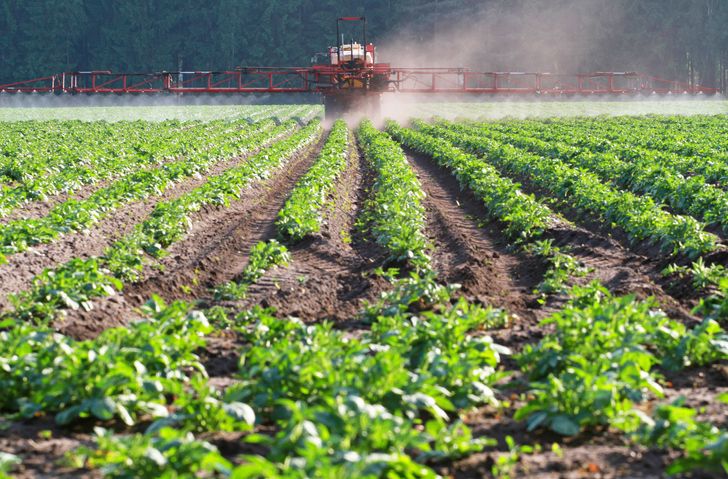
According to the report, many producers could be forced to increase tillage practices or shift toward alternative herbicides that may carry greater environmental or toxicological risks. The text also notes that glyphosate played a key role in expanding no-till and reduced-till farming systems in crops such as soybeans, corn and cotton.
Why glyphosate remains widely used
The AgFunderNews analysis explains that glyphosate became dominant because it combines low cost, efficiency and compatibility with genetically modified herbicide-tolerant crops. Farmers commonly use it before planting, after harvest and during crop growth cycles.
The report also states that, compared with several competing herbicides, glyphosate generally shows lower toxicity levels for mammals, birds, fish and pollinators. It cites studies indicating that alternative products such as paraquat can present higher ecological risks.
Another key point involves soil conservation. Reduced tillage systems supported by glyphosate have helped lower soil erosion, fuel consumption and sediment runoff in US agriculture during recent decades.
However, the article also recognizes that glyphosate is not without environmental concerns. Overuse has contributed to the spread of herbicide-resistant weeds, while some studies linked herbicide-tolerant farming systems to declines in milkweed, an important habitat for monarch butterflies.
How agtech companies are developing alternatives
According to AgFunderNews, the most promising path forward involves technological innovation rather than immediate bans.
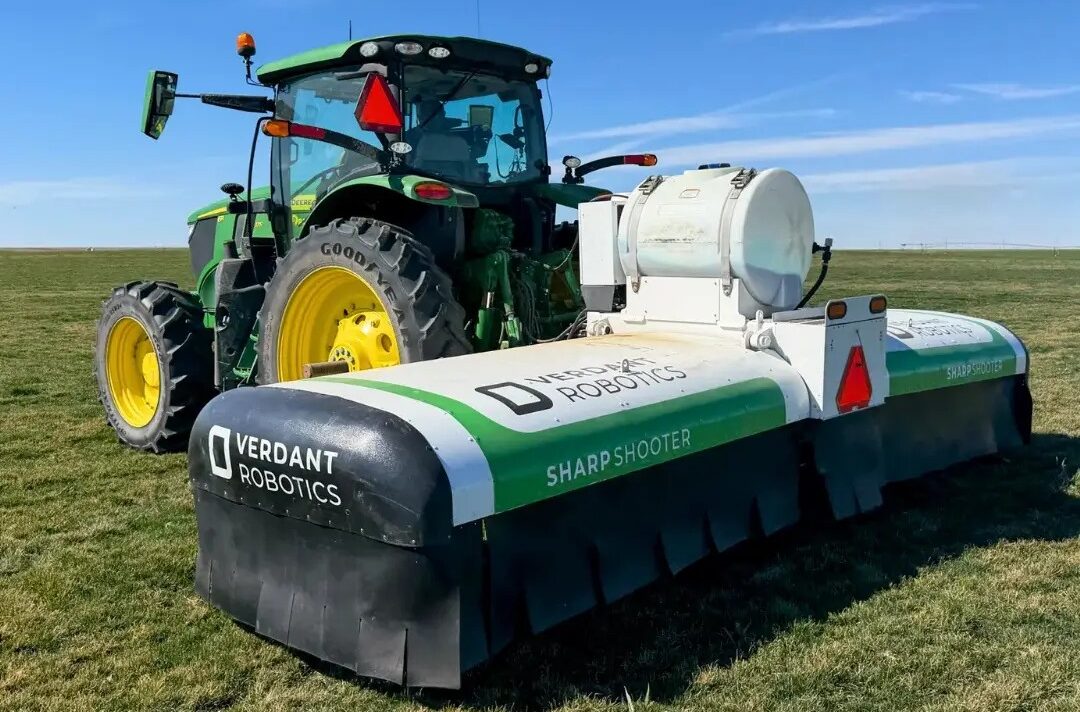
Several startups are developing tools designed to reduce herbicide use through precision agriculture. Companies such as Verdant Robotics are using computer vision, sensors and machine learning to spray weeds individually instead of applying chemicals across entire fields. The company claims its precision applicator can reduce herbicide application by as much as 99%.
Other firms are focusing on robotic weed removal. AgriPass developed AI-powered machines capable of identifying and physically removing weeds without herbicides, while Carbon Robotics uses laser systems to destroy weeds autonomously.
The article also highlights advances in new herbicide chemistries. UK startup Bindbridge is researching targeted protein degradation technologies designed to destroy proteins essential for weed survival. Other companies, including Quercus Biosolutions and Invasive Species Corporation, are working on broad-spectrum herbicides that could eventually compete with glyphosate.
Blaustein-Rejto argues that future weed-control technologies must outperform glyphosate in several areas simultaneously: environmental impact, toxicity, operational efficiency and cost.
“The way beyond glyphosate is not to wish it away. It is to outperform it,” he wrote, according to AgFunderNews.
The article concludes that policymakers should focus on accelerating innovation, improving regulatory efficiency and supporting precision agriculture research instead of relying solely on litigation or restrictions.