A former executive from Eat Just, Udi Lazimy, is developing a new food-tech venture focused on RuBisCO protein, aiming to scale production from alfalfa in the United States and position it as a viable alternative to eggs and whey, in response to rising global demand for sustainable and functional proteins.
The initiative is led through his startup Fudi Protein, which seeks to commercialize one of the most abundant proteins on Earth. According to Lazimy, RuBisCO stands out because it combines digestibility, functionality, and sustainability, a rare combination among plant-based proteins.
As reported by AgFunderNews, Lazimy’s experience in sustainability and sourcing at Eat Just exposed him to multiple plant proteins, each with trade-offs. “Perhaps you find one that is excellent in sustainability, cost or emulsification. You rarely find one that has it all… except RuBisCO,” he said.
RuBisCO is naturally present in all green leaves, yet it has not become mainstream in food formulation. The main limitation lies in its extraction process, which requires large volumes of biomass to produce relatively small amounts of usable protein. There are also technical challenges: once leaves are harvested, processors have a narrow window to preserve functionality while removing chlorophyll and other compounds without damaging the protein. Achieving a neutral taste, color, and odor is critical for food applications.
Despite these barriers, Lazimy argues that the potential is significant if both the process and business model are optimized. The company is currently operating at laboratory scale, focusing on refining extraction methods and preparing for future commercialization.
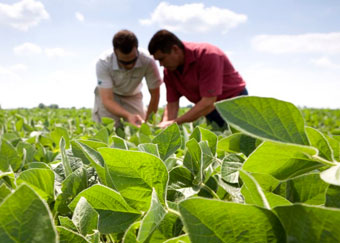
Fudi Protein is building its model around alfalfa supply chains, working directly with farmers in Wisconsin. The crop offers multiple harvests per year and can yield more protein per acre annually compared to alternatives like soy. “Farmers told me: if you provide high-quality fiber with consistent standards, we will give you the protein for free,” Lazimy explained, highlighting the economic advantage of integrating into existing agricultural systems.
The company’s approach also emphasizes valorizing byproducts. After protein extraction, the remaining biomass can still be used as high-value animal feed, supporting both economic viability and sustainability.
Instead of investing in large centralized plants, Fudi Protein plans to deploy mobile and modular processing units at or near farms. This strategy aims to reduce logistics costs and integrate production directly into existing infrastructure. The startup is already collaborating with large alfalfa producers and exploring the use of underutilized assets such as biodigesters.
The final product, according to Lazimy, is expected to be a complete protein with at least 84–85% purity, and neutral sensory characteristics suitable for a wide range of food applications. The company’s initial focus is on replacing eggs and whey proteins, two ingredients facing price volatility and supply challenges, while long-term plans target the broader protein fortification market.
The RuBisCO space is becoming increasingly competitive, with companies exploring different feedstocks and technologies. Despite past setbacks in the sector, renewed interest is driven by advances in processing and rising global demand for protein. “The protein RuBisCO is the holy grail among proteins and arrives at a time when consumer interest in protein is surging,” said Peter van Dijken, co-founder of Green Boy Group.
Fudi Protein has already secured early funding from investors including Green Boy Group and industry figures via crowdfunding platforms. “We are leveraging our investor network as we prepare for a more significant institutional round,” Lazimy said. While commercial agreements are still in development, partnerships with established ingredient companies are expected to be key for market entry.
RuBisCO remains a technically complex but highly promising protein. If scalable production is achieved, it could become a major alternative in the global protein market, reshaping food formulation and supply chains in the coming years.