A new analysis of regenerative agriculture certification programs has reignited debate over how sustainability claims are defined and verified across the food industry. According to information reported by AgFunderNews, environmental organization Friends of the Earth argues that regenerative agriculture should serve as a pathway toward organic production rather than a substitute for it, citing significant differences in standards, pesticide restrictions, and verification systems.
The report examined 10 prominent regenerative certification programs used in agricultural supply chains and found that requirements vary considerably. While regenerative farming is often associated with improved soil health, biodiversity, and climate resilience, the study concluded that not all certifications provide the same level of assurance regarding environmental outcomes or the use of agrochemicals.
According to AgFunderNews, Friends of the Earth Deputy Director of Science Kendra Klein emphasized the importance of reducing pesticide use as a central component of regenerative agriculture.

“We are trying to ensure that agrochemical reduction is a part of every conversation about regenerative ag, because very often it’s left out,” said Klein.
The organization argues that continued reliance on synthetic pesticides and fertilizers can undermine many of the ecological goals commonly associated with regenerative agriculture, including healthier soils, greater biodiversity, and stronger ecosystem resilience.
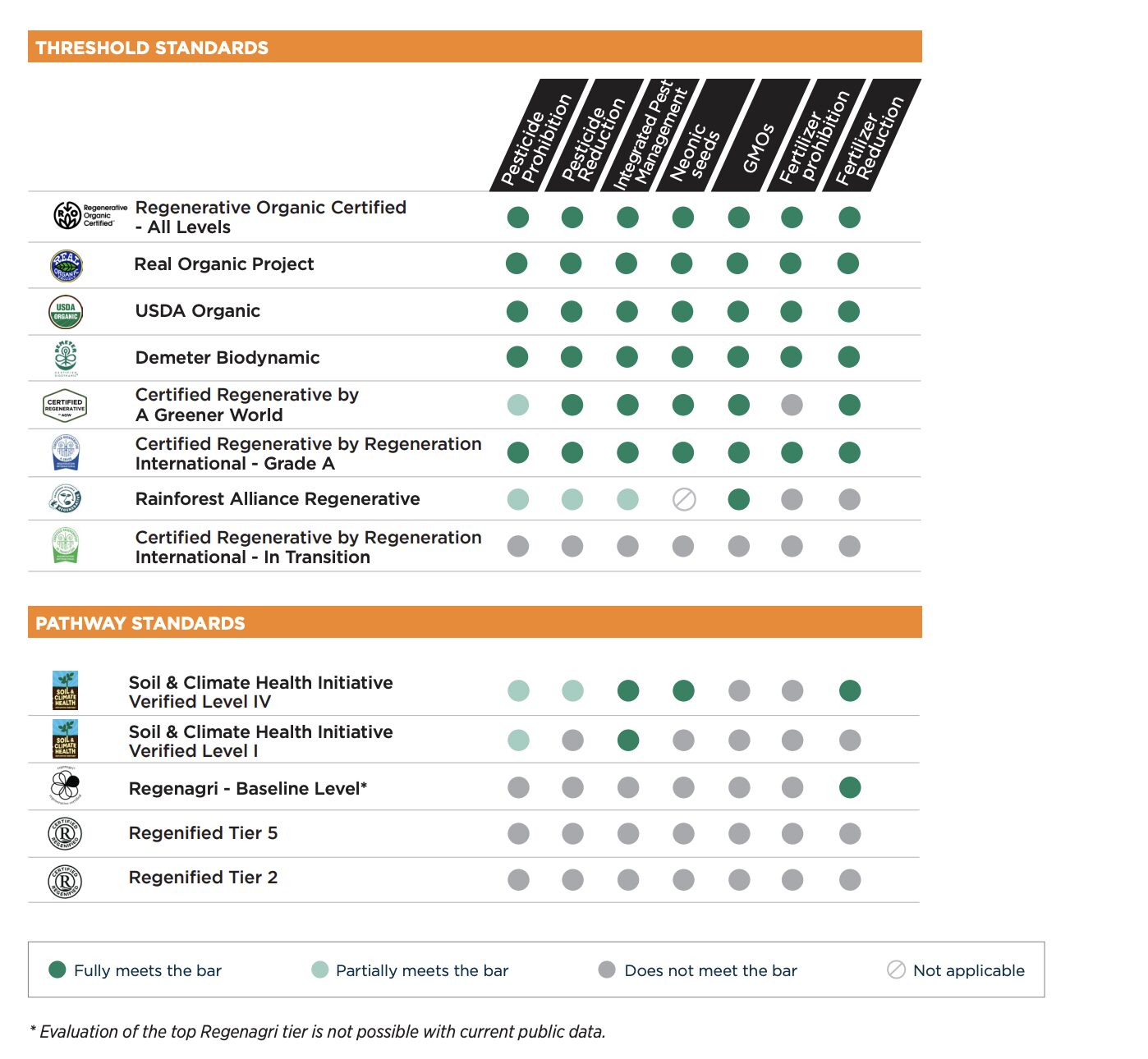
One of the report’s key findings is that regenerative certification programs differ widely in their treatment of pesticides. Some programs impose strict restrictions, while others allow broad use of agrochemicals with limited limitations.
Friends of the Earth identified USDA Organic, along with programs built upon organic standards such as Real Organic Project (ROP) and Regenerative Organic Certified (ROC), as the strongest certifications reviewed. These programs follow established organic regulations that clearly define which substances are permitted or prohibited.
“In our view, organic should serve as the baseline for formal regenerative definitions because it provides both strong environmental outcomes and a clear, enforceable standard,” Klein said, according to AgFunderNews.
The report also highlights a structural divide within regenerative certification systems. Researchers categorized programs into two groups: threshold certifications and pathway certifications.
Threshold certifications require producers to meet a fixed set of standards from the beginning. These programs generally maintain stricter requirements related to pesticide use, soil health management, and ecological practices.
Pathway certifications, by contrast, are designed to help farmers gradually improve their operations over time. These programs encourage continuous progress but may allow producers to enter with lower initial requirements.
While Friends of the Earth recognizes the value of pathway programs in encouraging broader adoption of regenerative practices, the organization warns that consumers may struggle to distinguish between different levels of achievement when products carry the same label.
According to the report, some certifications provide strong assurances about farm-level practices, while others focus more on finished products or lack transparent verification systems. This variation creates challenges for consumers seeking clarity and for food companies investing in sustainable sourcing strategies.

The findings are also relevant for major food manufacturers pursuing regenerative supply chains. Friends of the Earth recommends that companies prioritize partnerships with organic farmers and producers transitioning toward organic systems, arguing that these operations already deliver many of the environmental benefits companies seek through regenerative agriculture.
At the same time, the organization acknowledges that pathway certifications can play an important role in helping producers begin the transition toward more sustainable farming models.
Ultimately, the report concludes that regenerative agriculture and organic farming should not be viewed as competing systems. Instead, regenerative practices may function as a bridge that helps producers move toward more comprehensive standards that include stronger environmental protections, clearer accountability, and greater consumer confidence.