Ag biologicals grow but need more farmer education
The agricultural biologicals market continues expanding worldwide, but adoption depends on greater trust and knowledge among farmers and investors
lunes 13 de julio de 2026
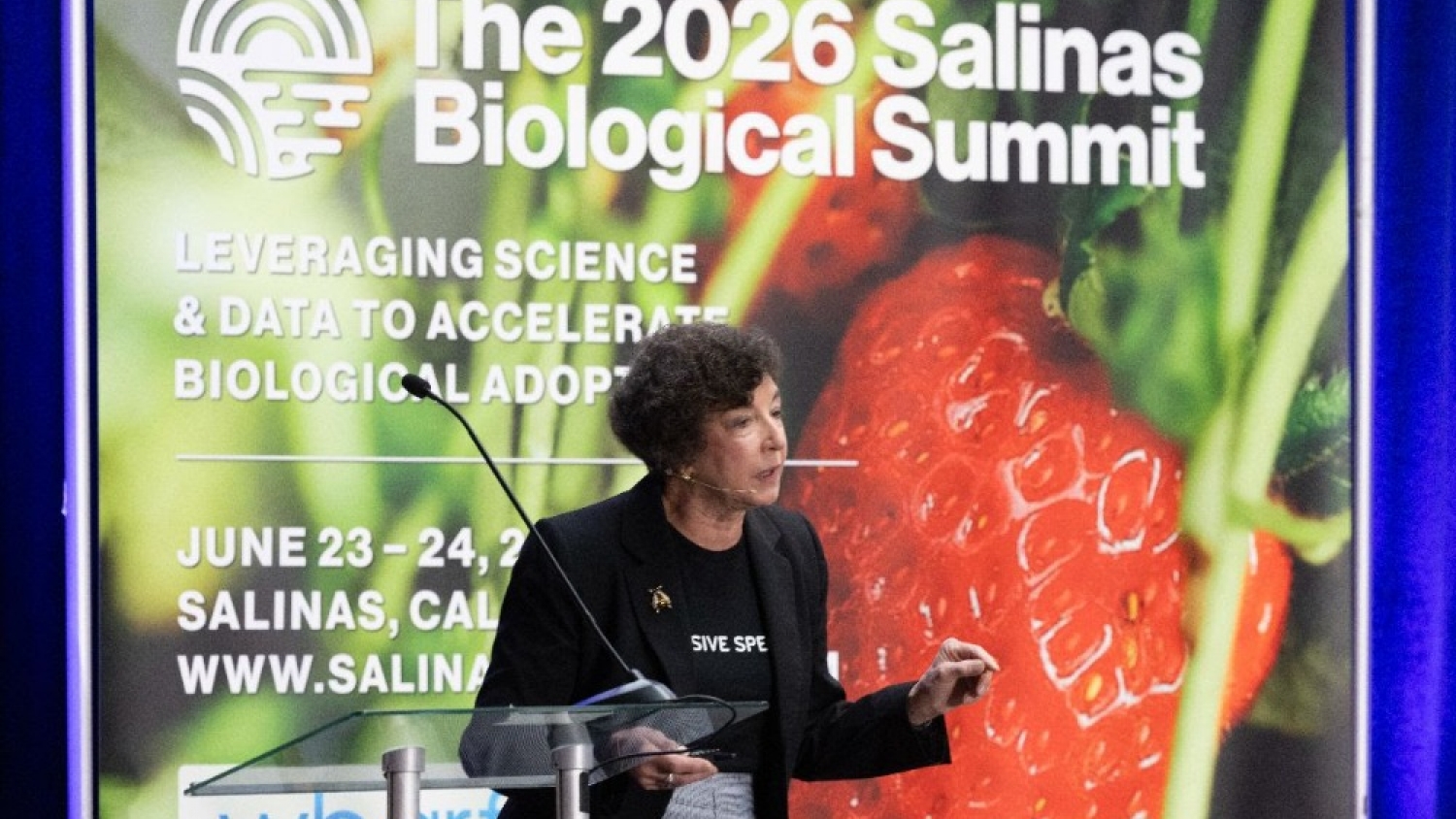
According to a report by AgFunderNews, the ag biologicals sector continues to grow despite global economic uncertainty, regulatory challenges and a difficult investment environment. During the 2026 Salinas Biological Summit in California, Dr. Pam Marrone, founder and chair of the Invasive Species Corporation, highlighted that the market is advancing steadily, although farmers and investors still need more education about how these technologies work and how to use them effectively.
The agricultural biologicals industry includes products such as biocontrols, biostimulants and biofertilizers, which use biological processes to improve crop performance, protect plants and support more sustainable farming systems.
Marrone cited data from research firm Dunham-Trimmer, showing that most biological segments continue to register double-digit annual growth. According to the figures presented at the summit, biocontrols are growing at a 10.65% compound annual rate, biostimulants at 9.93%, and biofertilizers at 11.08%.
The United States and Canada remain the largest regional market, with a projected value of $5.68 billion by 2027. However, Latin America is rapidly closing the gap, driven mainly by Brazil, which could reach $4.97 billion in the same period.
Brazil has become one of the main examples of biological input adoption worldwide. Marrone explained that the country reached a $1.2 billion ag biologicals market in 2025, covering nearly 200 million hectares.
Unlike many markets where biological products are mainly used in specialty crops such as berries and almonds, Brazil has expanded their use in large-scale crops. According to Marrone, one of the keys to this success is that Brazilian farmers are integrating biological products with other agricultural tools instead of treating them as a replacement for conventional inputs.
“The growth has been astonishing,” Marrone said during her presentation, highlighting Brazil’s rapid expansion in the sector.
The expert also pointed to the age profile of farmers as a possible factor behind adoption. Brazilian growers are, on average, younger than farmers in other regions, which could make them more open to testing new technologies.
Despite the positive outlook, investment in biological startups has become more challenging. Marrone noted that fewer companies received funding during the last year compared with the previous period, partly because artificial intelligence has attracted a large share of venture capital attention.
Much of the current investment activity is concentrated in Europe, where investors were less exposed to the high valuations of 2021 and 2022. Among the companies that recently secured funding are several European startups focused on biological solutions.
The sector has also attracted private equity interest, particularly in companies that have already reached profitability or financial stability. Marrone highlighted that biological companies are increasingly developing alternatives to traditional exits through major agricultural corporations.
Companies such as Rovensa Next, based in Spain, and Belgium’s BioFirst demonstrate that biological businesses can achieve significant revenues without necessarily being acquired by large agrochemical companies.
However, one of the biggest challenges remains education. According to Marrone, both farmers and investors need a clearer understanding of what biological products can achieve and how they should be evaluated.
For growers, the main obstacle continues to be trust in product performance. Many farmers struggle to distinguish effective biological solutions from products that lack reliable results because sales claims often focus on potential yield increases without enough supporting information.
Marrone emphasized that farmers need better tools to evaluate biological products and ask the right questions before making purchasing decisions.
The next developments to watch in the sector include artificial intelligence applied to biological discovery, microbial metabolites, RNA-based technologies, stress mitigation solutions and integrated agricultural programs.
The bioherbicide segment is also gaining attention after years of slower growth compared with biopesticides and biofertilizers. New companies are exploring biological alternatives for weed control, including solutions based on peptides and natural metabolites.
Dr. Marrone’s own company, Invasive Species Corporation, is developing bioherbicides designed to combat weeds, including species resistant to glyphosate.
The expansion of ag biologicals suggests that these technologies will play a growing role in agriculture, but their future growth will depend not only on innovation and investment, but also on building confidence among the farmers who will use them in the field.
Invertí en periodismo de calidad
En Agroempresario trabajamos para acercarte contenidos que agregan valor.