Upstream Biotechnology has raised a seed funding round to accelerate the development of SwitchBlade, a biotechnology platform designed to activate plants' natural defenses only when they are exposed to disease or environmental stress. According to AgFunderNews, the technology aims to solve one of agriculture's biggest challenges: improving crop resistance without sacrificing yield.
The North Carolina-based startup was founded on research from Professor Xinnian Dong's laboratory at Duke University. Its technology introduces a molecular "switch" that keeps defense-related proteins inactive under normal conditions, allowing plants to devote more energy to growth. When pathogens or environmental stress are detected, the system activates those defenses precisely when and where they are needed.
Co-founder and CEO George H. Greene said the company is enhancing the plant's existing immune system by adding a new layer of control over protein production. "We're using the plant's natural immune system and adding this control layer to fine-tune its performance," Greene explained.
The seed round was led by LeVert Ventures, with participation from Corteva Catalyst, Silver Blue, VTC Ventures, and other investors. The funding will support validation of the SwitchBlade platform across additional crops, strengthen the company's intellectual property portfolio, and expand collaborations with seed industry partners.
Unlike conventional approaches that continuously activate plant defenses, SwitchBlade regulates protein production at the messenger RNA translation stage. Under normal conditions, defensive proteins remain largely inactive, reducing unnecessary energy consumption. When disease or stress occurs, the system rapidly enables protein production, triggering the plant's immune response only where it is required.
According to Greene, the localized activation of defenses is one of the platform's key advantages. Rather than forcing the entire plant into defense mode, SwitchBlade targets only the infected or stressed tissues, minimizing the yield penalties commonly associated with permanent immune activation.
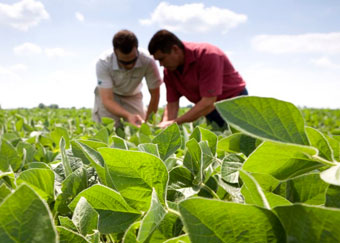
The technology can be adapted to multiple crops, including soybeans, corn, rice, and tomatoes, and may help protect against fungal diseases, bacterial pathogens, drought, heat stress, and other environmental challenges. While each crop requires some optimization, the company says the platform can be adapted without starting from scratch for every application.
Upstream Biotechnology plans to commercialize the technology through licensing agreements with seed companies. Instead of discovering new resistance genes, the company provides a regulatory platform that improves the timing and performance of existing genetic traits already developed by plant breeders.
Greene noted that many seed companies already possess valuable disease-resistance traits but need better control over when those traits are expressed. SwitchBlade serves as a precision control layer, improving the effectiveness of those traits while maintaining normal plant growth under favorable conditions.
The company believes its platform could become a foundational technology for crop resilience, helping agriculture respond to increasing disease pressure and climate-related stress while preserving productivity.