AI cameras help fruit growers predict yields with 95% accuracy
Orchard Robotics combines cameras, AI and field data to reduce labor and input costs while improving yield forecasts and farm planning
jueves 03 de septiembre de 2026 - 08:00
Orchard Robotics is expanding an AI-powered precision agriculture platform designed to help fruit and specialty crop growers reduce labor and input costs, improve yield forecasts and make faster operational decisions. The US startup uses camera systems mounted on tractors and other farm vehicles to collect millions of field images and turn them into actionable information for growers, according to AgFunderNews.
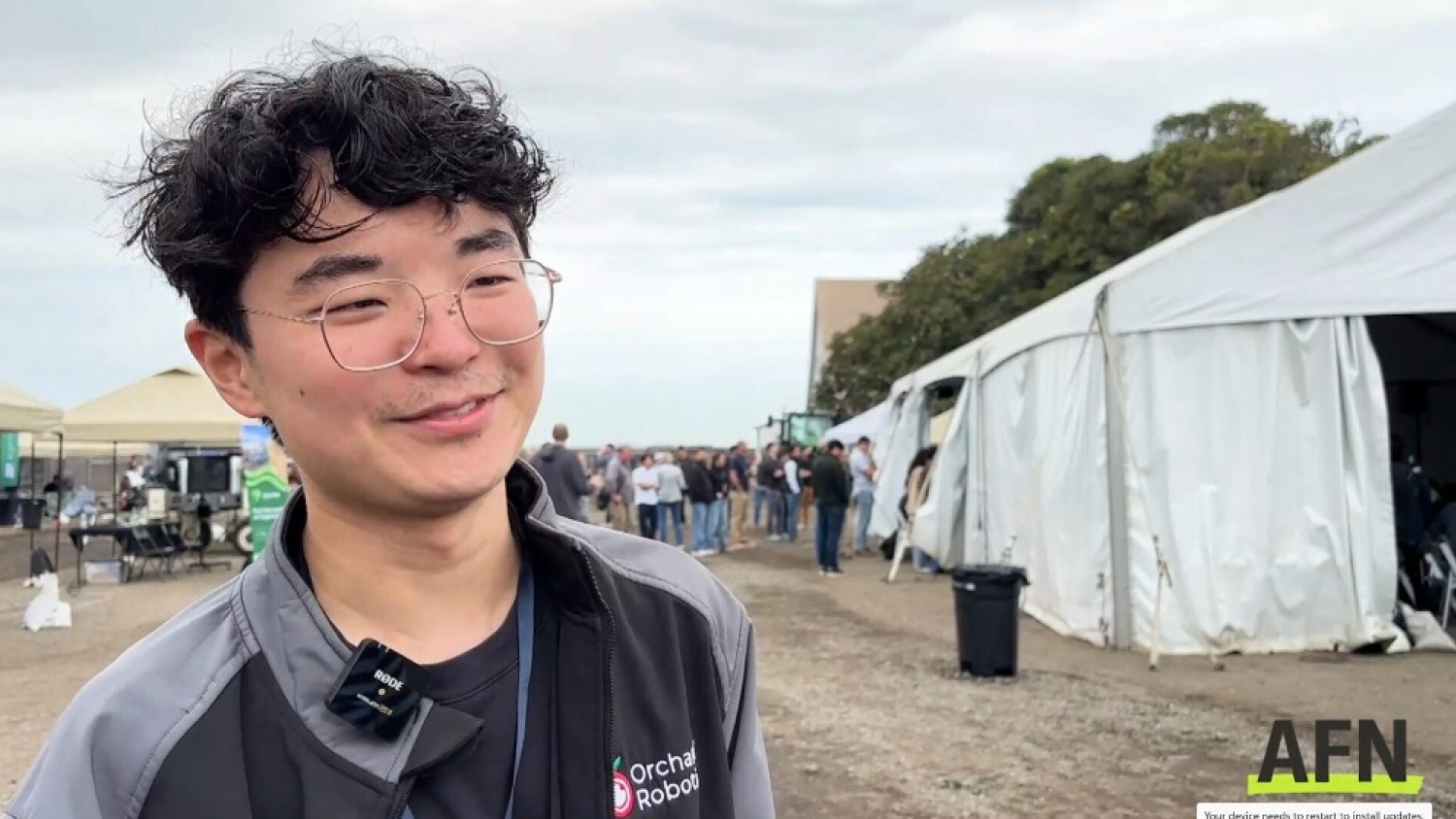
Founded and led by Charlie Wu, Orchard Robotics has developed a camera approximately the size of a large tissue box that can be installed on existing farm machinery. As tractors move through orchards and vineyards, the device captures images that are analyzed to measure fruit counts, size, color, growth rates, canopy health, water stress, disease and expected yield.
The system is designed around a simple idea: growers should not need to become data specialists to benefit from artificial intelligence.
“A million numbers in a spreadsheet is not a product,” Wu said. “Data is only useful if there is an actual use for that data, and it’s not just a fancy map on screen. Data is only useful if a grower has a mechanism of taking an action on that data easily. Your average grower does not want to be, nor should they be, a data analyst.”
Because many farms do not have the connectivity required to upload terabytes of imagery, the company processes much of the information directly on the vehicle using an NVIDIA Jetson computer.
The processed data is then integrated into Orchard’s FruitScope platform, where producers can inspect conditions down to the individual-tree level and identify where labor, irrigation, crop protection or other inputs may need to be adjusted.
“We’re not actually selling hardware. We’re not even selling software. We’re not even selling data. We’re selling the outcome that a grower sees by using all of it effectively,” Wu said.
One of the clearest applications is fruit counting. Orchard can estimate how many fruits are growing on each tree, allowing growers to direct pruning and thinning crews more precisely.
That matters because fruit loads can vary significantly even within the same block. Some trees may require more labor while others need less intervention, creating an opportunity to improve productivity and lower operating costs.
“The biggest ROI is through reduction of labor and inputs,” Wu told AgFunderNews.
The technology also has potential beyond field operations. Orchard says its platform can predict yields with accuracy of 95% or higher, giving growers better visibility into how many workers they may need, how many harvest bins to order, how much storage capacity to prepare and what sales teams can realistically promise customers.
That supply-chain visibility can be particularly valuable for high-value specialty crops, where inaccurate forecasts may create additional costs at harvest.
Some farms already connect Orchard’s data with precision sprayers and spreaders that automatically adjust applications across the field. For producers without those systems, instructions can be sent directly to workers through a mobile application showing where to go and what action to take.
The company offers both self-service and full-service models. Growers can install cameras on their own equipment and collect data as part of normal field operations, or Orchard technicians can visit farms, scan fields and provide processed information by the following day.
Its commercial model is based on an annual per-acre subscription, which includes the software platform, unlimited scans and access to hardware. When Orchard introduces upgraded cameras, customers receive the new equipment without having to purchase an entirely new system.
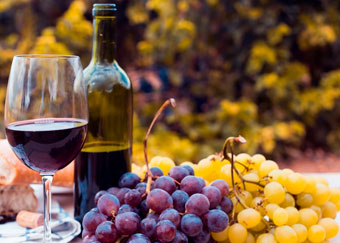
The company started with apples but has since expanded into wine grapes, table grapes, cherries, blueberries, almonds, pistachios and citrus. It is also moving into pomegranates, coffee, strawberries and other crops.
Orchard currently has hundreds of systems operating in the field and is scanning tens of thousands of acres. Its longer-term goal is to reach hundreds of thousands of acres and eventually support a broader range of specialty crops.
Most customers are still based in the United States, although Wu said the company is seeing strong international demand.
For growers evaluating the economics of the technology, Orchard focuses its sales pitch on measurable operating savings rather than promising higher yields.
“When we sell our product, we don’t actually claim to boost yield. We pitch them on the labor savings, the input savings, and supply chain efficiencies,” Wu said.
According to the company, growers that capture the full value of labor and input savings in the first year can potentially see a return on investment ranging from three to 10 times.
The broader opportunity for Orchard Robotics lies in making precision agriculture easier to use. Instead of adding another layer of raw data to farm management, the startup is positioning AI as a tool that can convert field information into specific actions, with the goal of reducing costs, improving planning and making specialty crop production more efficient.
Invertí en periodismo de calidad
En Agroempresario trabajamos para acercarte contenidos que agregan valor.