TRIC Robotics Scales to 1,500 Strawberry Acres in California
The agtech startup uses UV-C light and bug vacuums to control pests and disease while charging growers through a service model
martes 01 de septiembre de 2026 - 16:36
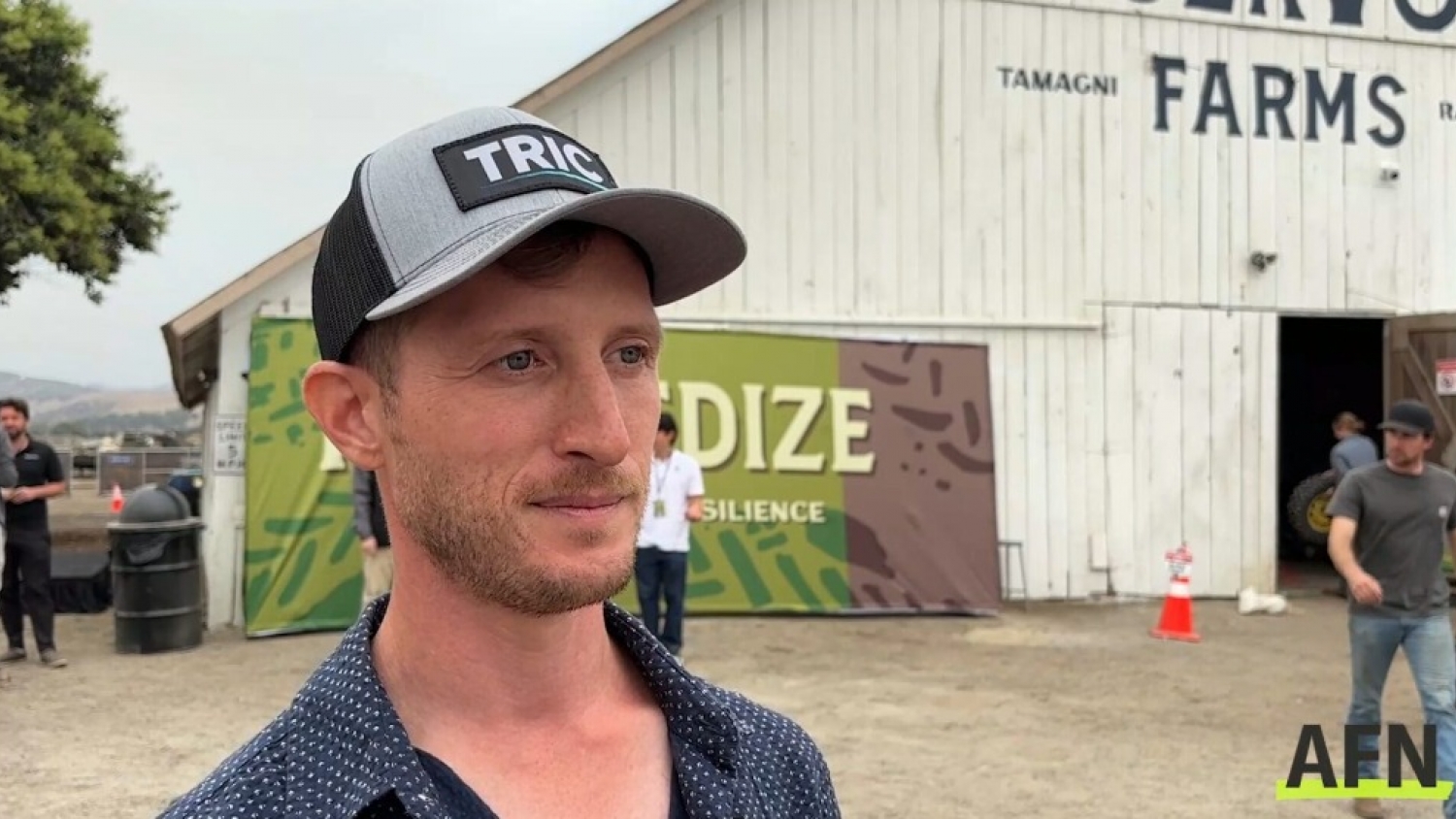
TRIC Robotics has expanded from half-acre trials in 2021 to treating more than 1,500 acres of commercial strawberries in California with a fleet of 15 autonomous robots. The machines operate at night and use UV-C light and bug vacuums as alternatives to chemical pesticide applications, according to AgFunderNews.
The startup, founded by Adam Stager and Vishnu Somasundaram at the University of Delaware, has built its business around a robots-as-a-service model, meaning farmers do not need to purchase the equipment upfront.
Instead, TRIC Robotics operates the machines directly and charges growers for the agricultural service. The approach is designed to reduce the financial barrier to adopting farm automation while giving the company recurring revenue from customers.
“At TRIC Robotics, we’re helping farmers control pests and disease using ultraviolet light and bug vacuums as a replacement for chemical pesticides,” Stager told AgFunderNews.
The company’s current fleet consists of large machines designed specifically for open-field strawberry production. Unlike smaller battery-powered robots developed for vineyards and other crops, TRIC Robotics uses machines capable of covering multiple rows and larger areas.
According to Stager, the company now has 15 machines operating every night across commercial strawberry farms.
“Starting on just half acre sites in 2021, now we’re full scale commercial. So this year we’ve done over 1,500 acres of commercial strawberries and we’ve got 15 machines that are out there running every single night.”
Nighttime operation is a central part of the company’s strategy. Strawberry fields can be extremely busy during the day, making autonomous equipment harder to integrate with workers, tractors and other farm activities.
By operating after dark, the robots can work with less interference while helping growers become familiar with autonomous technology.
The service model also removes the need for farmers to make a major capital investment. TRIC Robotics owns the equipment, handles deployment and can add new capabilities to the same machines without requiring growers to buy another robot.
The company initially entered the market using UV-C light to combat fungal pathogens. It later added bug vacuums as a second service.
That ability to combine multiple functions on the same autonomous platform is becoming increasingly important to its growth strategy.
TRIC Robotics says its pricing is similar to what strawberry growers already pay for conventional spraying services. At the same time, the company argues that healthier plants can extend the production season and reduce spending on chemical applications.
Stager cited an independent case study by the California Strawberry Center that evaluated the economics of the technology.
According to his account, the study found that the savings generated by the vacuum service alone could cover the cost of both the vacuum and UV-C treatments.
The company’s machines have also changed significantly since the first prototypes.
TRIC Robotics originally tested smaller, golf-cart-sized robots. Those early machines struggled with field conditions and could not cover enough acreage to generate attractive economics.
The startup later worked with Andros Engineering to increase the size of the machines to roughly tractor scale. It also automated the boom carrying the UV-C system so its height can adjust to differences in plant and field conditions.
The next phase could extend well beyond disease control.
TRIC Robotics sees an opportunity to use the same autonomous platform for additional tasks already performed in strawberry fields. These could include leveling soil in furrows and, eventually, removing weeds growing close to strawberry plants.
Stager said weed removal alone could potentially double the company’s revenue if successfully added to the platform.
The broader opportunity also includes expansion into new crops and international markets. For now, strawberries provide an attractive starting point because production is geographically concentrated and growers are already accustomed to paying for agricultural services on a per-acre basis.
That concentration makes it easier for TRIC Robotics to operate a fleet efficiently while adding new services over time.
The company’s expansion from experimental plots to more than 1,500 commercial acres illustrates how farm robotics is moving from isolated trials toward recurring field operations. For TRIC Robotics, the strategy is to use UV-C treatment as the entry point and gradually turn the robot into a multi-purpose agricultural platform.
Invertí en periodismo de calidad
En Agroempresario trabajamos para acercarte contenidos que agregan valor.