UK-based The Bland Company has raised $2.67 million in a pre-seed round to scale its technology that transforms plant proteins from agricultural side streams into highly functional, soluble ingredients capable of replacing eggs in multiple food applications. The funding round was led by Initialized Capital, with participation from Entrepreneur First, Transpose Platform, Behind Genius Ventures, Alumni Ventures, and Vento, according to AgFunderNews.
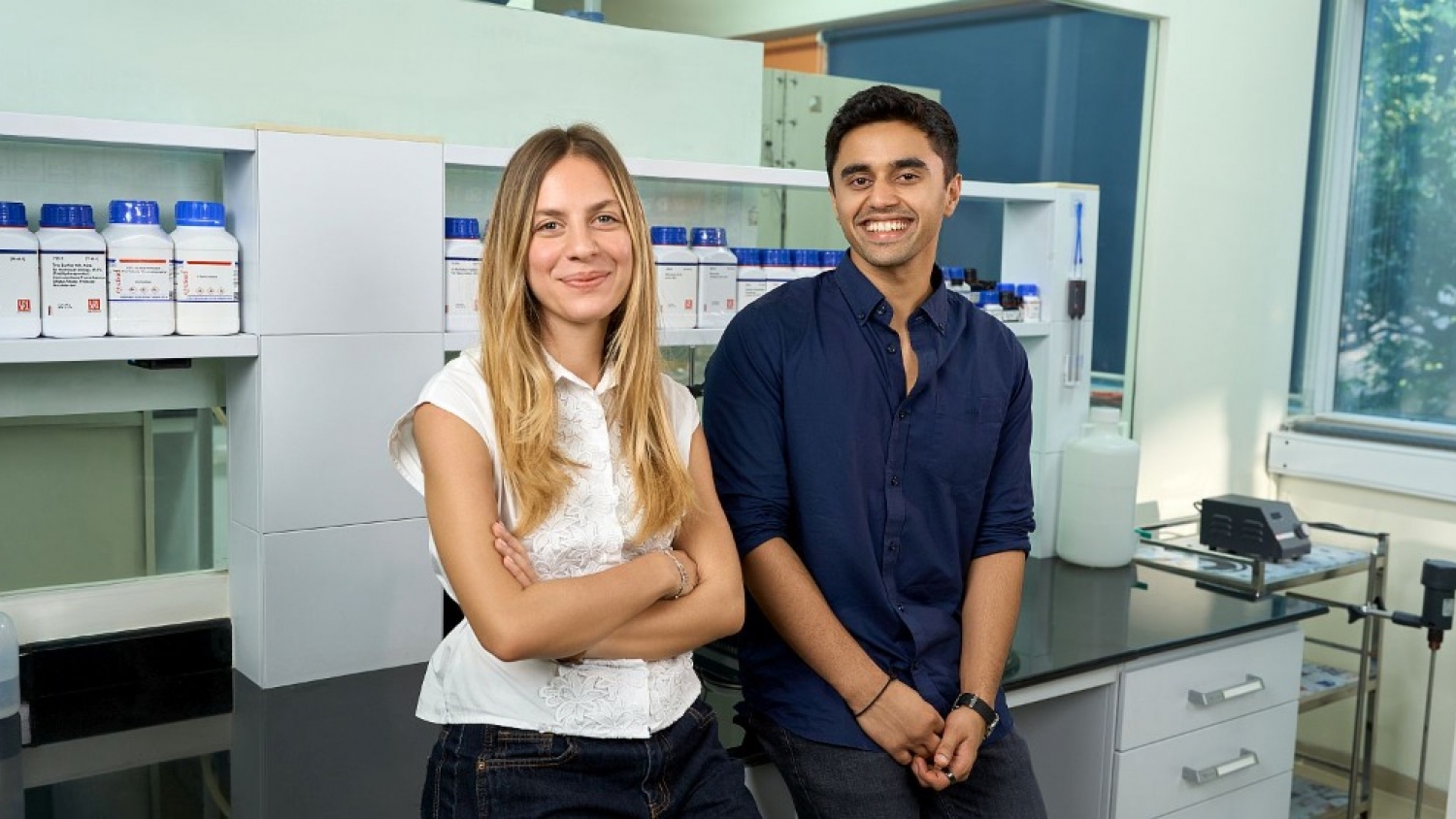
Founded by biochemists Yash Khandelwal and Micol Hafez, the startup aims to address what investors describe as a structural bottleneck in food manufacturing: access to affordable, high-performance functional proteins.
“Functional proteins are a massive supply-chain bottleneck, and whoever builds the replacement becomes the backbone of modern food manufacturing,” said Zoe Perret, partner at Initialized Capital. “[Cofounders] Yash [Khandelwal] and Micol [Hafez] have paired real scientific rigor with a platform that’s already surpassing egg-white performance and hitting the economics manufacturers actually buy. That combination is why commercial interest is moving fast and why this is such a clear infrastructure play.”
Tackling volatility in the egg market
The company is entering a market where egg alternatives remain technically challenging and often costly. Precision fermentation-derived egg proteins require high capital and operating expenditures, while plant-based options such as mung bean or Rubisco face performance or processing limitations. In many cases, manufacturers must combine multiple ingredients—starches, hydrocolloids, and plant proteins—to approximate egg functionality.
“Existing solutions either lack performance or come at a price point that blocks significant scale,” said Khandelwal.
At the same time, volatility in egg supply has intensified interest in alternatives. “Eggs are a procurement nightmare. Prices swing wildly due to avian flu outbreaks, cage-free regulation rollouts, demand seasonality, climate shocks, and feed costs. In the past 18 months alone, prices have fluctuated by 2–3x, forcing manufacturers to constantly reformulate and re-forecast,” he added.
The Bland Company uses a proprietary biochemical process to enhance the functional properties of proteins found in agricultural byproducts, including side streams from rice and pasta production. These raw materials contain significant protein content but typically lack the structure needed for strong emulsification, foaming, binding, and solubility.
“We’ve seen 3-4x increases in solubility, and a significant boost in foaming and emulsification, so it’s very exciting,” said Khandelwal.
While details remain confidential due to ongoing patent filings, the company describes its approach as a clean-label process compatible with existing plant protein infrastructure. “It’s a clean label process that can plug and play into existing plant protein infrastructure. So depending on the ingredient, it might be chemistry or a combination of physics and chemistry to make these proteins much more functional,” he explained.
Business model and regulatory pathway
The Bland Company operates as a protein science platform. Upstream, it partners with agricultural commodity producers and food manufacturers that generate side streams. Downstream, it plans to sell functionalized ingredients business-to-business, either directly to CPG companies or via ingredient distributors.
“For food and ag companies, many of these side streams are just a cost center right now. We can help them create bio refineries to create multiple revenue streams,” said Khandelwal.
The company is also consulting regulatory experts to determine how its ingredients will be classified in different markets. The source materials are already familiar to the food industry, which may streamline approvals.
Commercial trials are underway with large CPG companies in the United States and Europe to test egg replacement in baked goods and other applications. The long-term goal is to build a portfolio of functional proteins tailored to specific formulation challenges.
On fundraising, Khandelwal acknowledged the hurdles but said investors recognized the scale of the opportunity. “The question then is, can you do it, and is there a clear path to cost parity [with eggs]? But at worst we should be price competitive, and at best, undercutting [eggs] by a significant amount.”
With egg supply volatility and cost pressures persisting globally, the company is positioning itself as a technology provider capable of delivering both performance and economic viability to large-scale food manufacturers.