A U.S. agricultural technology startup, Crop Diagnostix, has launched a crop health monitoring system based on RNA sequencing that can detect plant stress weeks before visible symptoms appear, offering farmers a new tool to improve productivity and reduce input use. The technology, developed in California, is designed to provide an early warning for issues such as nutrient deficiencies, disease pressure, or water stress, allowing producers to act before yield losses occur.
According to AgFunderNews, the system analyzes the gene expression of plants to understand how crops respond biologically to environmental stress. Unlike traditional visual inspections or tissue analyses, which often detect problems only after damage has occurred, RNA sequencing identifies which genes are activated or suppressed when a plant encounters stress factors.
The company explains that gene expression changes immediately when crops face challenges such as pathogens, drought, or nutrient imbalance. This allows the platform to identify risks earlier than conventional agronomic diagnostics.
Applying a medical technology to agriculture
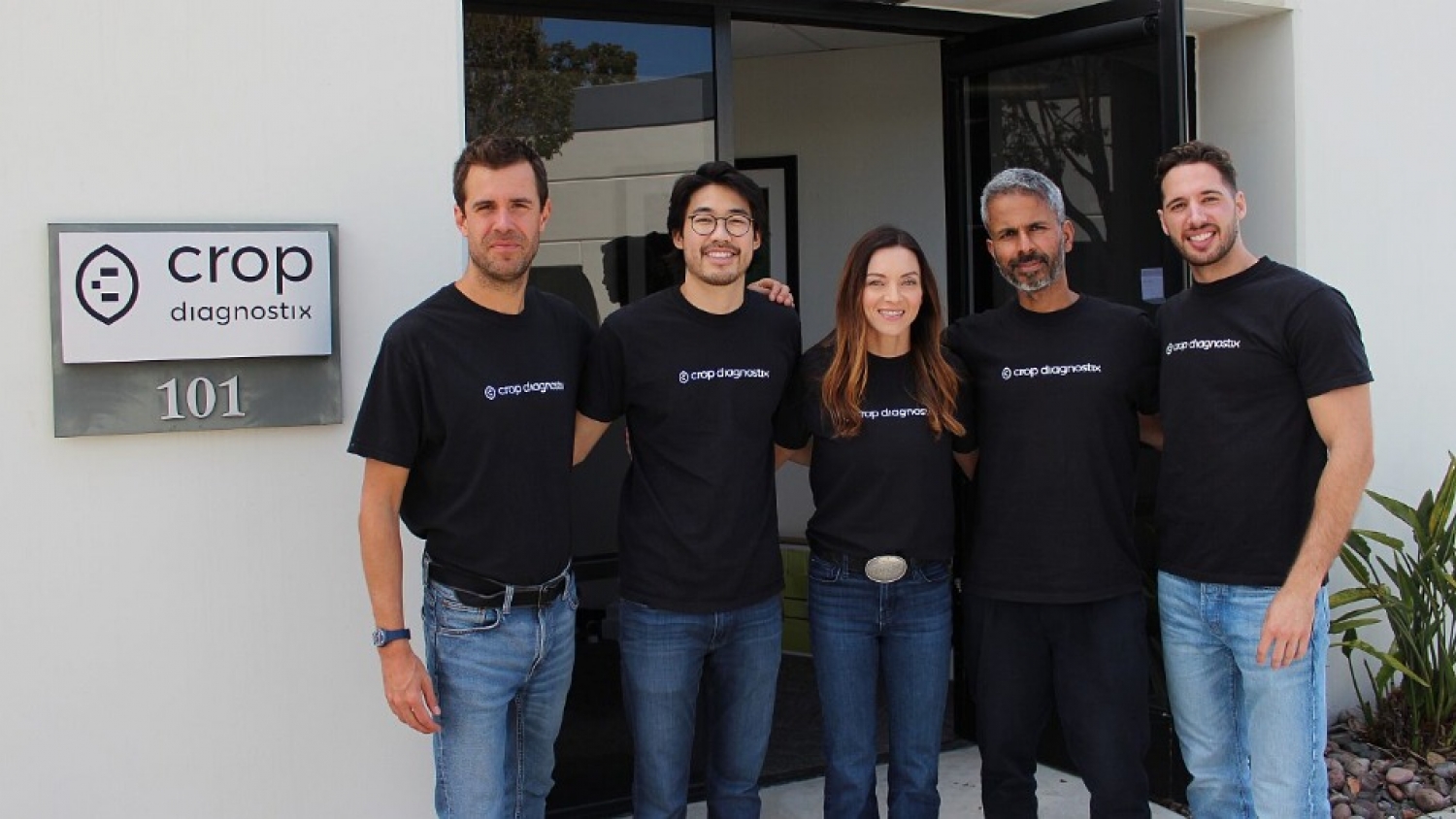
Crop Diagnostix was founded in 2023 by Brandon Chi, an engineer and Harvard MBA, together with Joseph Swift, a plant molecular biologist, and Amitesh Pratap, an artificial intelligence and machine-learning scientist who previously worked with RNA analysis in human health research.
The founders adapted this concept from human medicine, where RNA sequencing is often used to detect early biological responses to disease.
“The example we like to give is that if you’re sitting on an airplane and the person next to you is coughing, that doesn’t mean you’re already sick, but there’s a pathogen load in your environment and your genes are going to turn on to try to defend yourself, and that’s what we’re monitoring,” Chi told AgFunderNews.
He added that falling genomic sequencing costs have made it possible to deploy the technology beyond healthcare. “With the cost of genomic sequencing declining exponentially, we’ve been able to deploy the technology for plant health, not just human health.”
Monitoring plant stress through gene activity
The company’s platform focuses on identifying biomarkers linked to specific stress conditions. These markers are derived from large datasets built from thousands of crop samples and are used to train machine-learning models.
The system generates four main crop health indexes:
- Yield response, which indicates whether plants are on track to reach yield targets
- Nutrient response, including indicators such as nitrogen status
- Pathogen stress, detecting disease pressure
- Water stress, identifying irrigation needs
By interpreting these gene-expression patterns, the platform can identify crop problems earlier than traditional diagnostics.
In field trials, Crop Diagnostix reported that its system detected plant disease up to four weeks before visible symptoms appeared, allowing farmers to respond with targeted treatments rather than routine preventive spraying.
From field trials to commercial launch
The technology has initially been tested in corn and potato crops, where the company has collected thousands of RNA samples to train its predictive models.
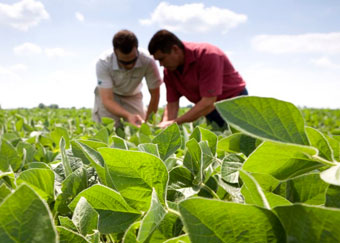
During the growing season, farmers collect leaf samples weekly by punching small holes in the leaves and placing the material in vials containing a stabilizing solution. The samples are then sent for genomic sequencing.
Results are delivered within 48 hours, allowing growers to adjust irrigation schedules, fertilizer applications, or crop protection strategies in real time.
“We started in corn and potato and we’ve done two seasons in both of those crops,” Chi explained. “We launched a pilot with 15 growers last year in potato, and then this year we’re launching both crops commercially, and looking at expanding into others.”
The company distributes its service through agronomy partners and agricultural retailers, including CHS Inc. and Wilbur-Ellis, and collaborates with the Total Acre network of high-yield corn growers.
Yield gains and reduced input use
According to pilot project results shared by the company, farms that adopted RNA-guided management achieved a net profit advantage of about $720 per acre compared with conventional crop management practices.
The improvement was attributed to an 8% increase in yields and a 23% reduction in agricultural inputs, including a 38% decrease in nitrogen fertilizer use.
The service is priced at approximately $500 to $700 per field per season, depending on field size. For a typical 120-acre field, the cost would be roughly $4 to $6 per acre.
“It’s all by letting the plant RNA tell us what the plant needs and then applying it, or in some cases not applying it,” Chi explained. “When the RNA of the plant says there’s no nitrogen deficiency, you don’t need to apply nitrogen.”
Data as a competitive advantage
Crop Diagnostix has raised $3.5 million in seed funding, with investors including Trailhead Capital and entrepreneur Kevin O’Leary.
The company believes its main competitive advantage lies in the proprietary datasets linking gene activity to plant stress conditions. These datasets are built from thousands of RNA samples collected in real agricultural environments.
Chi said the complexity of plant genetics makes artificial intelligence essential for interpreting the information.
“Within a corn plant, for example, there are 35,000 genes turning on and off in response to stress,” he said. “Imagine each of these is a dimmer switch. We’re using AI and machine learning to decode what this pattern of dimmer switches is trying to tell us.”
Despite the complexity of the analysis, the company emphasizes that the results presented to farmers are designed to be easy to understand.
“The RNA will show you when you have nitrogen stress, sulfur stress, water stress, or specific pathogen stress,” Chi said.
The company is also developing a new feature that will help identify the main limiting factor affecting crop performance, enabling farmers to prioritize interventions more effectively.
By providing what the firm describes as a 360-degree view of crop health, RNA-based monitoring could become a new tool in precision agriculture, helping producers optimize resources while improving crop productivity.