Micropep, a France- and US-based agricultural biotechnology company, is moving closer to commercializing its biofungicide Promisin after submitting regulatory applications in the United States and the European Union. The filings follow previous submissions in Paraguay and Brazil and represent a key step toward bringing to market a technology based on peptides discovered with artificial intelligence, according to AgFunderNews.
Promisin is the first product developed through Krisalix, Micropep’s discovery platform that combines computational biology, artificial intelligence and formulation science to identify micro-peptide sequences with potential applications in crop protection.
Micropep’s vice president of regulatory affairs, Kevin Leiner, said the regulatory submissions represent an important milestone for the company and its potential partners.
“It’s a really strong proof point for the capabilities of Micropep and for the ability of our Krisalix discovery platform to advance interesting product candidates and de-risk them to the point where we can get them on the market and provide a valuable tool to the farmer,” Leiner said, according to AgFunderNews.
The executive said the process also marks a change in Micropep’s evolution, moving from a company primarily focused on research and discovery toward one preparing products for commercial launch.
Promisin was designed to fight fungal diseases through a different biological mode of action from many conventional fungicides. The product is intended to complement existing crop protection tools and, in particular, help manage the growing problem of fungicide resistance.
Resistance occurs when fungi develop genetic changes that reduce their sensitivity to specific products. Many conventional fungicides act on a specific metabolic target, meaning a mutation can reduce their effectiveness.
Promisin belongs to a class of peptides that works by disrupting cell membranes, rather than binding to a single specific target. According to Leiner, this characteristic could make it more difficult for fungi to develop resistance.
“It would be very difficult for an organism to evolve resistance to Promisin peptides,” the executive said, according to AgFunderNews.
The technology can also be combined with other products in the same application. Micropep aims to use different modes of action to control diseases and reduce the likelihood of resistant strains developing.
According to Micropep, Promisin has shown positive results in hundreds of field trials conducted over several years and in different countries. The company also highlights what it describes as a favorable safety and sustainability profile, although the product’s final characteristics will be assessed by regulatory authorities in each market.
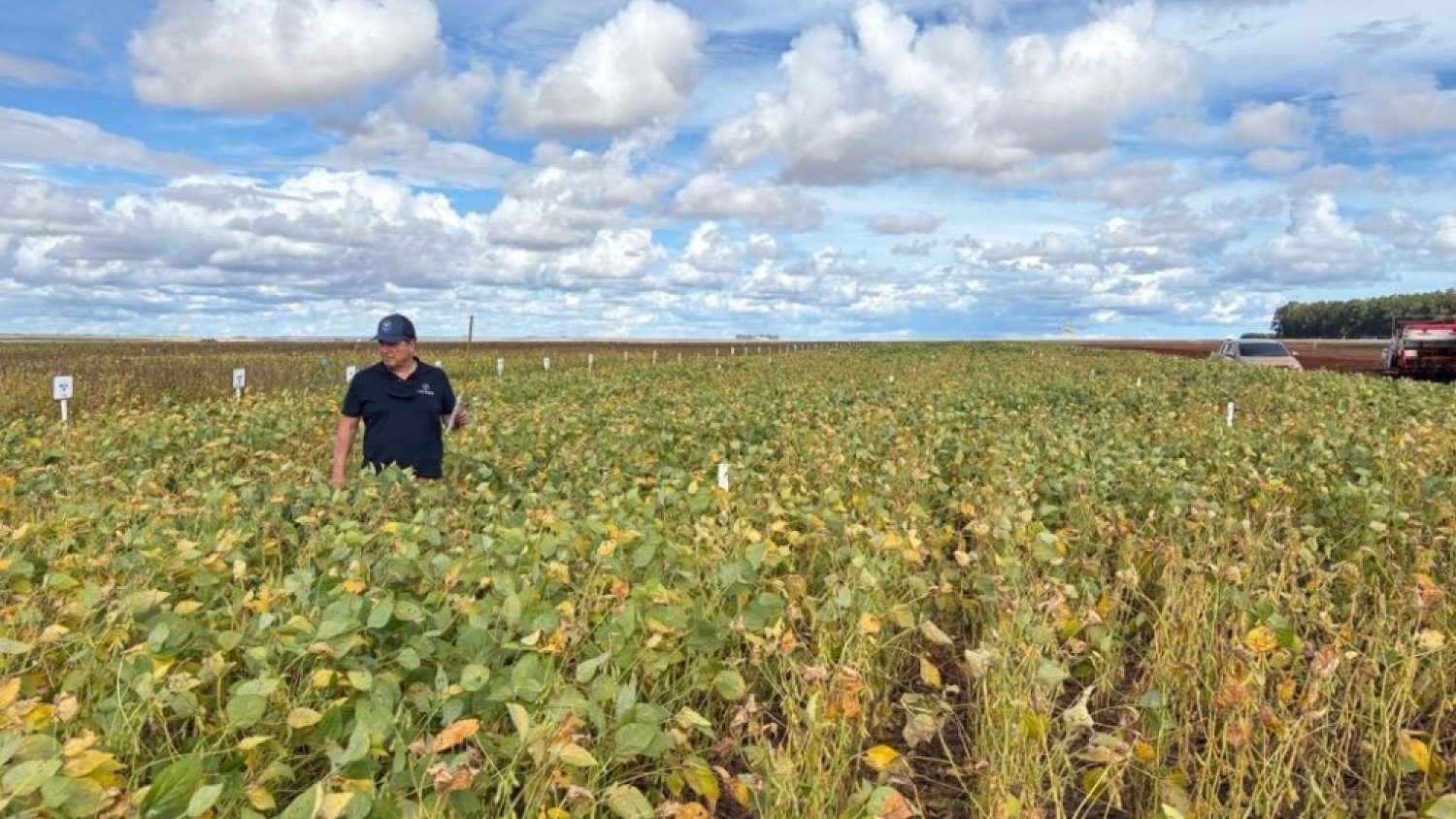
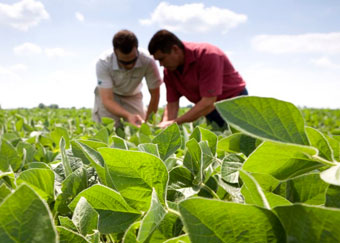
The approval process will vary by country. Micropep plans to focus on soybeans and other row crops in Brazil and Paraguay, targeting diseases including Asian soybean rust, Target Spot and Leaf Blight.
In the United States, the company will work with row crops as well as grapevines and potatoes. In Europe, where soybean production is significantly smaller, the focus will be mainly on grapevines and potatoes.
The company has been led since last year by Georg Goeres, who previously headed the biologicals division at Indigo Ag. His appointment is part of Micropep’s strategy to move from research and discovery toward commercialization.
Regulatory timelines will depend on each market. According to AgFunderNews, Brazil can complete these processes in around 18 months, while approvals in the European Union can take several years.
While waiting for regulatory authorizations, Micropep is preparing its commercial infrastructure. The company wants to have its supply chain, distribution network and logistics in place before receiving the approvals required to sell Promisin.
Micropep does not intend to limit its platform to fungicides. The company will continue searching for new peptides that could be used as herbicides and insecticides, expanding the potential application of its artificial intelligence technology to the development of new crop protection products.