ProducePay, a digital platform focused on improving transparency across the $1.5 trillion fresh produce industry, is transforming its business model by moving away from balance-sheet financing and toward agtech, data and technology services. The Los Angeles-based company expects to become profitable by the end of 2026 and believes 2027 could mark a major turning point for the business.
According to AgFunderNews, the company recently secured $140 million in new equity and financing capacity, led by Avenue Capital and Astanor. The new structure is designed to reduce the amount of ProducePay's own capital required to finance growers while allowing the company to expand its technology platform.
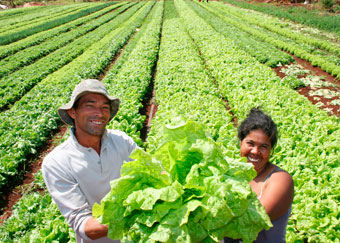
ProducePay historically generated most of its revenue by providing working capital advances to farmers before their crops were harvested. Under its new strategy, the company expects to finance as much as $1 billion for growers next year, while expanding technology services that connect payments, financing, supply-chain visibility and program management.
“We think this is just a monster pivot that sets up the right strategy and ultimately the right financial returns for our investors,” ProducePay CEO Patrick McCullough told AgFunderNews.
“We think 2027 will be a breakout year.”
The new financing structure includes a lending facility that could eventually reach $300 million. Outside investors will provide most of the capital, while ProducePay maintains a smaller equity position.
The company says its ability to attract institutional investors is closely linked to the performance data accumulated over 11 years of financing growers. ProducePay has tracked advances, repayments and defaults across its portfolio, creating a data set that it now sees as a strategic asset beyond financing.
“We’ve created what we believe is a financeable asset class,” McCullough said.
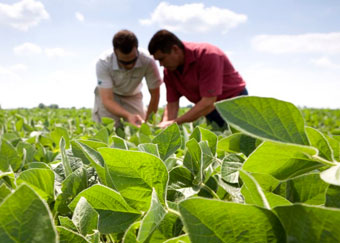
That historical data is also at the center of the company's next stage of growth. ProducePay originally deployed agronomists into farms to monitor crops because it had capital at risk. Over time, the company realized that the information collected in the field could become a separate technology and revenue business.
“We realized we could really benefit ourselves and our customers by structuring that data and solving problems with it,” McCullough explained.
Today, ProducePay's agronomists can collect information such as photographs, sugar levels and crop-quality measurements before produce reaches the market. That information can then be shared with importers, retailers and other participants in the supply chain.
One example involved table grapes. ProducePay provided data that allowed Costco to evaluate fruit that did not meet one element of its usual specifications. Because supply was tight, the retailer agreed to accept the grapes under different conditions.
“We were able to send that signal digitally from the field in real time. Costco said, ‘Harvest early. It meets my spec everywhere but length, and I don’t care about length. I don’t have any fruit, so I’ll waive the tier one spec on length and I’ll give you tier one pricing.’”
The company is building technology to provide greater visibility across the supply chain, including tracking products at the invoice and pallet level and monitoring variables such as location, temperature, humidity and vibration.
ProducePay sees different participants paying for different services. Farmers generally pay for financing, while importers and other supply-chain companies increasingly pay for the intelligence generated from agricultural data.
“We see the farmer paying for the capital and the importer paying for the intelligence. It’s a new line of revenue for us that’s just getting off the ground, but we are optimistic.”
The strategy is based on a structural challenge facing fresh produce: high volatility combined with limited mechanisms for locking in prices before crops reach the market.
McCullough said ProducePay has measured 117% annual price volatility in fresh produce, highlighting the difficulty faced by farmers and buyers when supply and demand shift rapidly.
“We think our real role in the future is an agtech service provider, not a capital provider. We really believe this is a data play at the end of the day.”
The company is also expanding beyond its traditional focus on Latin American growers supplying North American buyers. Its next growth markets include Europe, Africa and the Middle East, where ProducePay sees opportunities to apply its technology and agricultural expertise to new supply chains.
Ultimately, the company aims to use field-level information to make fresh produce markets more predictable and financially attractive.
“We’re making the market for capital because of our know-how, but we think a lot of people can provide capital.”
For ProducePay, the long-term opportunity is therefore less about supplying capital itself and more about becoming the technology and data infrastructure connecting growers, importers and retailers. McCullough envisions future systems capable of bringing real-time supply and demand together and eventually enabling fixed pricing for perishable products.