Nestlé has announced a multi-year partnership with Soil Capital to accelerate the adoption of regenerative agriculture practices among European farmers, reinforcing efforts to build more resilient food supply chains. The initiative focuses on improving soil health, supporting farmers with financial incentives, and reducing environmental impact. According to AgFunderNews, the agreement reflects a broader shift in agrifood strategies toward long-term system stability.
The collaboration aims to expand regenerative practices across Nestlé’s sourcing network, with the company targeting 50% of its key ingredients from farmers using regenerative methods by 2030. In 2025, that figure stood at 27.6%.
“We want to back farmers with the tools, science and market continuity to drive change, not by just asking them to take on risk,” said Anita Wälz, head of sustainability at Nestlé Europe. She added that the company is focused on strengthening the long-term resilience of its supply base through soil health investment.
Soil Capital plays a central role in implementing the program by providing monitoring, reporting and verification (MRV) systems, agronomic expertise, and data infrastructure to track farming outcomes. Alejandro Trenor, cofounder and CFO of Soil Capital, explained: “What we provide is the trust, the MRV, the verification process, the data gathering, and the support to the farmer,” he said.
The partnership builds on pilot projects launched in France in 2023, initially focused on wheat and corn production. The program expanded to the UK in 2024 and later into Belgium. It currently supports around 230 farmers across 13,000 hectares.
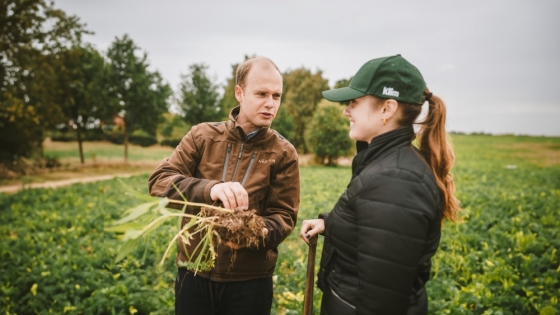
Participating farmers receive tailored agronomic guidance and access to a digital platform that tracks soil improvements, emissions performance, and changes in farming practices. The goal is to create measurable and verifiable transitions toward regenerative systems.

Beyond Europe, Soil Capital is also involved in regenerative agriculture projects in Argentina, one of the world’s largest peanut exporters and a key supplier to the European market. According to AgFunderNews, the initiative involves a large share of Argentina’s peanut producers and aims to ensure most exports to Europe come from farms adopting regenerative practices.
The company is also working with HSBC in the UK to expand access to financing for farmers transitioning to regenerative methods. Through the Sustainable Farming Pathway program, participating farmers can access improved loan conditions.
According to Trenor, financial institutions are beginning to recognize that farmers adopting regenerative practices may present stronger credit profiles. This is creating new incentives beyond sustainability goals alone.
The broader trend reflects a shift in agrifood systems from a sole focus on carbon reduction toward a stronger emphasis on resilience and supply chain security. Rising production costs in Europe, combined with climate and geopolitical risks, are accelerating this transition.
Trenor noted that reducing dependence on external inputs and strengthening local control over production systems has become increasingly important for food security.
While the partnerships are not solely reactive to current crises, they are seen as part of a long-term strategy to stabilize agricultural systems through incremental change and sustained investment in soil health.