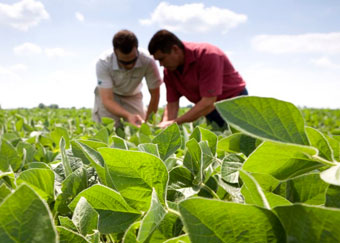
US-based startup Mozza Foods plans to launch its first dairy proteins made from genetically engineered soybeans by late 2028. According to AgFunderNews, the California company is awaiting approval from the US Department of Agriculture (USDA) to grow the crop and from the Food and Drug Administration (FDA) to commercialize the extracted casein proteins.
The company is developing a molecular farming platform, a technology that uses plants as biological factories to produce ingredients normally sourced from animals. In this case, soybeans are engineered to produce casein, the main protein found in milk and a key ingredient in cheese production.
Mozza Foods CEO and cofounder Adam Tarshis said the company is not focused on selling consumer-facing vegan products. Instead, its strategy targets food manufacturers and large dairy companies seeking alternative protein sources with competitive pricing and reliable supply chains.
“We’re a molecular farming company because that’s the only path we see that gets us to cost parity without having to build hundreds of millions of dollars of infrastructure,” Tarshis said, according to AgFunderNews.
The startup has conducted field trials for three years across multiple US states and is aiming to reach a major technical milestone by the end of this year: producing 7 grams of casein protein per 100 grams of soybeans. The company currently produces 4 grams and says expression levels have doubled annually over the past four years.
One of Mozza Foods’ main advantages is cost reduction. Unlike many alternative protein companies relying on precision fermentation, Mozza plans to use existing soybean farming and dairy processing infrastructure to minimize capital and operational expenses.
According to Tarshis, scaling production would mainly involve distributing more seeds and expanding acreage instead of building expensive fermentation facilities.
Another innovation is that Mozza’s soybeans produce casein micelles, the spherical protein structures naturally present in milk. This allows easier separation of casein from soy proteins during downstream processing and improves the functionality of the final ingredient.
“By producing this big casein micelle, not only do we eliminate a processing step after extraction, but we can use standard dairy filtration equipment,” Tarshis explained.
The company currently produces three of the four main casein proteins: alpha S1, beta casein, and kappa casein. According to Mozza Foods, extensive testing showed that the fourth protein, alpha S2, is not always necessary.
Mozza Foods also plans to monetize every component of the soybean. The soybean oil extracted from engineered crops could still enter the traditional market because refined oil contains no detectable casein proteins. Meanwhile, leftover soy protein could continue to be used in animal feed.
To manage regulatory and supply chain challenges, the startup developed its own traceability platform called Grain Track, designed to segregate engineered soybeans from conventional commodity crops.
“Mozza is as much a crop segregation company as it is a seed engineering company,” Tarshis said.
The company has already submitted a petition to the USDA and expects a response within months. A GRAS submission to the FDA is planned for next year. To date, Mozza Foods has raised approximately $24 million from investors including Stray Dog Capital and Alumni Ventures.
The project reflects the rapid growth of the molecular farming industry, where companies genetically engineer plants to produce high-value ingredients such as dairy proteins, vaccines, enzymes, sweeteners, and therapeutic compounds.
According to AgFunderNews, startups across the United States, Europe, Israel, and New Zealand are developing similar technologies to produce animal-free dairy, egg, and meat proteins through plants.
For Mozza Foods, the biggest challenge remains economic scalability. The company believes the alternative protein industry will only succeed if it can match or undercut the cost of traditional animal agriculture.
“We have the technology to reduce reliance on animal agriculture, but it still requires capital and time to scale,” Tarshis said.