Australian agtech startup BioScout has raised A$6.75 million ($4.8 million) in seed funding to expand its AI-powered early warning system for crop diseases. The round, co-led by Demea Sustainable Investment and Astanor, will support the company’s expansion in Europe and increase its global sensor network from 250 to 1,000 units by 2029, according to AgFunderNews.
BioScout’s technology is designed to help farmers identify fungal pathogens before visible symptoms appear in the field. The system continuously collects airborne particles, captures microscopic images of fungal spores and uses artificial intelligence to identify potential threats.
The company was founded in Australia and is headquartered in Sydney. Its technology is currently used by growers across 15 countries, with applications ranging from grains and potatoes to vineyards and soybeans.
The funding round also included GrainInnovate, GrainCorp Ventures, Hort Innovation Venture Fund, Artesian and Division Q.
According to AgFunderNews, the company plans to use the new capital to strengthen its European presence and expand its sensor network. BioScout currently operates around 250 sensors and aims to reach 1,000 units by 2029.
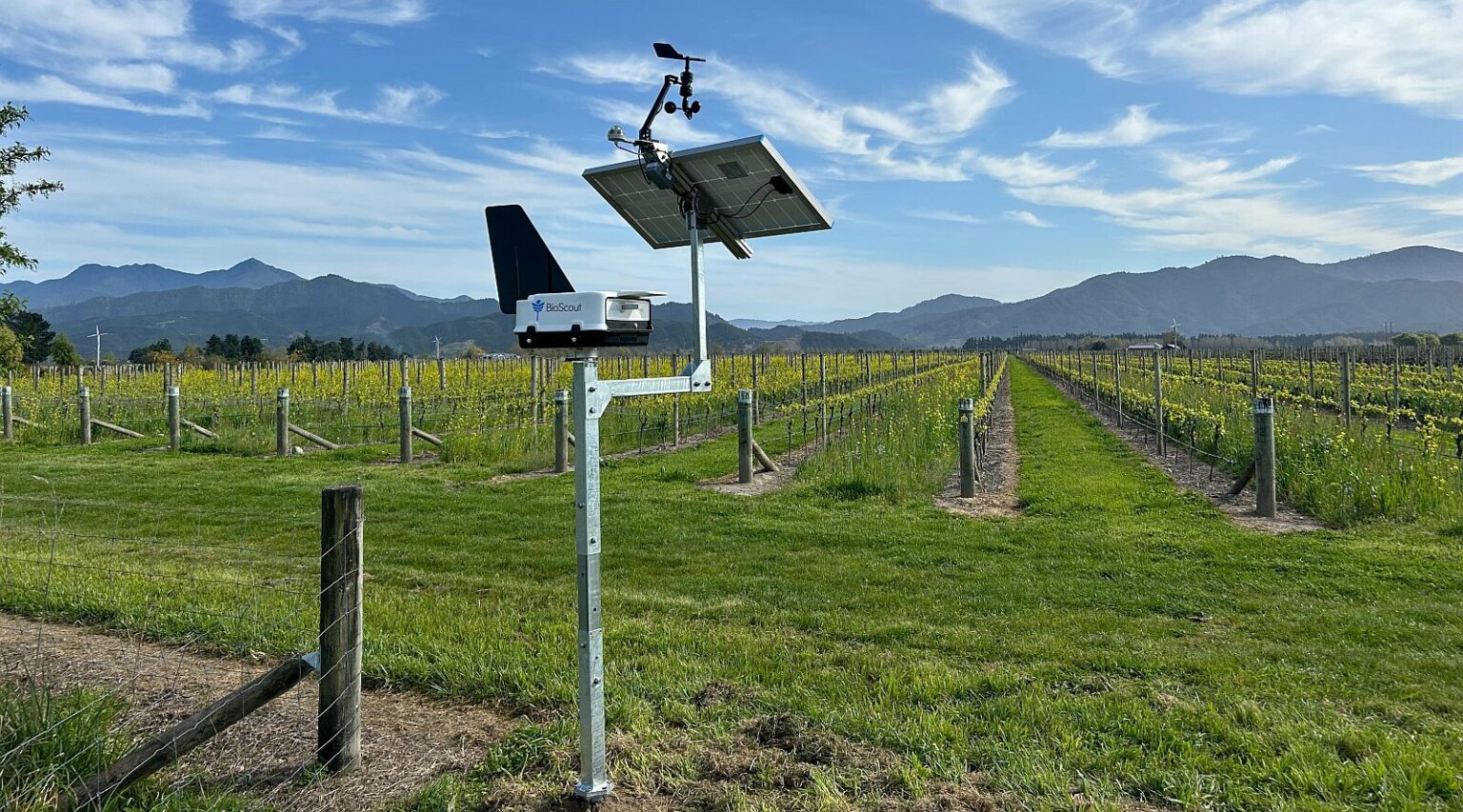
The system works by drawing air into a device using a wind vane. Airborne particles, including fungal spores, are collected on adhesive tape. After each sampling period, the tape moves automatically beneath a microscope that captures hundreds of high-resolution images.

Those images are sent to BioScout’s headquarters, where AI models identify fungal spores. The information is then combined with environmental variables such as temperature, humidity, atmospheric pressure, rainfall and wind conditions.
The objective is not simply to detect whether a pathogen is present. BioScout also measures spore concentrations and their changes over time, allowing growers to distinguish between isolated increases and patterns that could indicate a developing infection.
Founder and CEO Lewis Collins described the technology to AgFunderNews as “a tornado or hurricane watch, but for crop disease.”
The approach could also change how farmers use fungicides. According to Collins, growers often follow preventive spraying schedules because fungal infections can become difficult and expensive to control once symptoms are visible.
BioScout claims that acting on real-time spore data can reduce fungicide applications by up to 50% in some crops. In one example cited by the company, a grower in New Zealand achieved savings of almost $500 per hectare.
The system monitors more than 40 airborne threats, including crop-disease spores, pollen and other particles. BioScout has identified pathogens affecting potatoes, onions and canola, among other crops.
Potatoes have become one of the company’s main target markets, with deployments in Europe, South Africa, Australia, New Zealand and the United States. The startup also expects to have between 20 and 25 systems operating in Brazilian soybean fields by the end of the year.
The business model combines hardware sales with recurring service fees. Each unit costs approximately A$15,000, while annual service fees range from around A$10,000 to A$20,000, depending on the level of support.
Beyond disease detection, BioScout is also exploring how its technology could improve risk management in agriculture. The company can alert growers when spore levels increase and allow them to compare pathogen pressure with their existing fungicide programs.
The startup is now looking to expand the use of artificial intelligence beyond microscopic image analysis. According to AgFunderNews, BioScout is exploring ways to combine spore data with weather information, spray programs, field observations and grower notes to better understand disease outbreaks and improve recommendations.
Astanor partner Harry Biggs said the company is addressing a major challenge for farmers while creating a growing global dataset on fungal threats.
For BioScout, the next stage is to scale the technology internationally while demonstrating that early detection can help farmers make more precise crop-protection decisions, potentially reducing unnecessary chemical applications without compromising yields.