ProducePay is reshaping its business from a capital-intensive fintech platform into an agtech and data services company, with CEO Patrick McCullough expecting profitability and describing 2027 as a potential “breakout year.” The Los Angeles-based company plans to combine financing, payments, crop visibility and supply-chain intelligence while expanding beyond its traditional markets in the Americas, according to AgFunderNews.
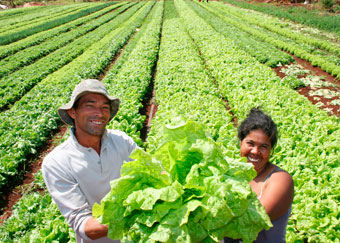
The strategy marks a significant change for a company that historically generated most of its revenue by providing working capital to fresh produce growers. ProducePay recently announced $140 million in new equity and financing capacity, including a structure backed by outside investors that reduces the amount of its own capital required to finance producers.
With that structure in place, ProducePay expects to be able to advance $1 billion to growers in 2027, while building a larger technology business around the financing operation.
“We think this is just a monster pivot that sets up the right strategy and ultimately the right financial returns for our investors,” McCullough told AgFunderNews. “We think 2027 will be a breakout year.”
Under the new financing model, ProducePay retains a relatively small portion of the risk while external investors provide most of the capital. The lending fund is supported by The i80 Group, AgAide, Thiele Capital Management and Millenium Capital and could eventually reach $300 million.
Around 15% of the structure consists of an equity layer that absorbs the first losses in the event of grower defaults, while i80 Group provides the remaining 85% through debt financing.
ProducePay says its ability to attract institutional capital is supported by 11 years of historical performance data tracking money advanced to growers and subsequent repayments. McCullough said defaults have occurred but argued that historical losses have remained low.
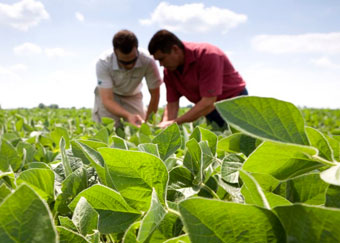
The bigger transformation, however, is taking place around data. ProducePay originally developed its farm-monitoring infrastructure to protect the capital it advanced before crops were harvested. Agronomists were sent into fields to assess crop development and monitor whether financing was being used as expected.
That information gradually became a product of its own.
By structuring field data, the company began offering intelligence services to major customers including berry supplier Fruitist and table grape specialist Four Star Fruit. Agronomists can photograph crops, measure sugar levels and evaluate quality before harvest, giving buyers earlier visibility into whether produce will meet retail specifications.
One example involved Costco and a grape shipment. According to McCullough, field information allowed the retailer to determine that the grapes met its requirements except for one physical specification. Because supply was limited, Costco agreed to accept the fruit earlier and maintain top-tier pricing.
ProducePay has expanded this approach with technology that can track fresh produce at invoice and pallet level, including location, temperature, humidity and vibration, while connecting each shipment back to its farm and field of origin.
This creates a second revenue model alongside financing. McCullough explained that growers generally pay for access to capital, while importers can pay for the intelligence generated through ProducePay's technology and field network.
The shift addresses a structural problem in the fresh produce industry: extreme price fluctuations. ProducePay estimates annual price volatility in fresh produce at 117%, a level McCullough described as higher than cryptocurrency, oil and gas.
Unlike grains, livestock and some other commodities, many fresh fruits and vegetables cannot simply be stored while producers wait for better market conditions. Watermelons, tomatoes and table grapes have limited windows for harvesting and selling, increasing the risk of both shortages and oversupply.
ProducePay argues that the lack of forward pricing mechanisms compounds the problem. Growers can face sharp price swings while retailers seek year-round supply, consistent quality and greater price stability.
That volatility is one reason the company increasingly sees its future in technology and supply-chain intelligence rather than directly providing capital. “We think our real role in the future is an agtech service provider, not a capital provider. We really believe this is a data play at the end of the day,” McCullough said.
The company, which has historically focused on Latin American growers supplying North American buyers, is now expanding into Europe, Africa and the Middle East. The underlying model can be transferred to those regions, although regulatory and commercial requirements vary by market.
In Europe, for example, buyers place greater emphasis on pesticide residues and food safety, increasing the potential value of detailed farm-level information and traceability.
ProducePay's longer-term ambition is broader. McCullough envisions systems capable of bringing real-time supply and demand information together and potentially supporting forward pricing for perishable produce.
For now, the company's bet is that the combination of agronomic expertise, structured farm data, technology and third-party capital can make the $1.5 trillion fresh produce industry more predictable while transforming ProducePay itself into a global agtech services platform.