By Agroempresario.com
Dr. Siegmar Pohl is a partner at the San Francisco office at law firm Kilpatrick; Jordan Glassman is an associate at the firm’s Raleigh office.
The views expressed in this article are the authors’ own and do not necessarily represent those of AgFunderNews.
Artificial intelligence (AI) and machine learning (ML) are set to transform precision agriculture, offering numerous benefits such as enhanced crop yields, optimized farming solutions, and significant environmental gains. However, these technological advancements also bring legal risks that farmers, suppliers, and developers must navigate.
Consider a scenario where orchard management software utilizing AI recommends a pesticide application that violates government regulations. This raises the question: who is liable for the breach?
Understanding precision agriculture
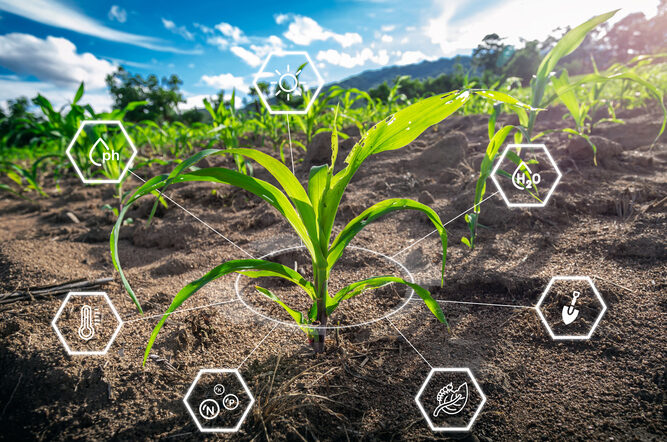
Precision agriculture leverages advanced technologies—robotics, cloud computing, smart sensors, and AI—to refine traditional farming techniques. AI, particularly ML, identifies patterns in data to make probabilistic predictions, which can inform automated decision-making systems. Applications range from disease detection via satellite imagery to automation of harvesting robots.
Despite its potential, the adoption of AI in agriculture is fraught with challenges, such as bias in training data and data privacy issues. The U.S. Senate Committee on Agriculture, Nutrition, and Forestry held a hearing in November 2023 to address these concerns and explore ways to mitigate risks.
Bias in AI algorithms
AI algorithms are only as good as the data used to train them. Biases in training data can lead to skewed predictions that may not generalize across different farming contexts. Smaller farms might suffer disproportionately if AI systems are primarily trained on data from large-scale operations.
To mitigate this, transparency about the training data and efforts to standardize data collection are essential. Developers should document precautions taken to minimize bias and educate users about the limitations of AI predictions.

Data privacy and security
The legal status of agricultural data remains unclear. Developers often need to purchase or license training data, which may include sensitive farm operational data. Protecting this data is crucial to maintaining trust and promoting innovation.
Deere & Company, for instance, ensures that farmers control their data. Industry standards and cooperative data-sharing initiatives can help protect individual privacy while enabling the benefits of comprehensive data analysis. Additionally, cybersecurity measures, such as multi-factor authentication, are vital to safeguard against cyber threats.
Liability and accuracy
AI systems can produce misleading or incorrect outputs, leading to potential legal disputes over liability. For instance, if AI-driven recommendations violate regulations, the farmer might bear the legal burden. Developers should manage expectations by clearly communicating the accuracy and limitations of their AI models.

Government Initiatives and Regulatory Updates
Government support for precision agriculture technologies is crucial. However, farmers worry that increased data sharing could lead to new regulations. Legislation encouraging cooperatives and voluntary standards can help build trust and clarify data ownership and liability issues.
In conclusion, while AI holds tremendous promise for precision agriculture, it is essential to address the legal risks associated with bias, data privacy, and liability. By implementing robust standards and transparent practices, stakeholders can harness the full potential of AI while mitigating its risks.