TerraBlaster raises $12.5m to map soil nutrients in real time
The agtech startup uses NASA-inspired laser technology to measure soil fertility directly from tractors, targeting commercial launch in 2027
martes 25 de agosto de 2026 - 18:06
California-based agtech startup TerraBlaster closed a $12.5 million seed round on August 25, 2026, bringing its total funding to $16.5 million. According to AgFunderNews, the investment round was led by Ulu Ventures, with participation from Khosla Ventures, Trailhead Capital, Builders Vision, Bidra, Ag Startup Engine, Reservoir, Sunna, Plug and Play, GrainInnovate, and the Hort Innovation Venture Fund managed by Artesian. The company plans to use the capital to prepare for commercial operations in 2027 with its real-time soil mapping sensor system.
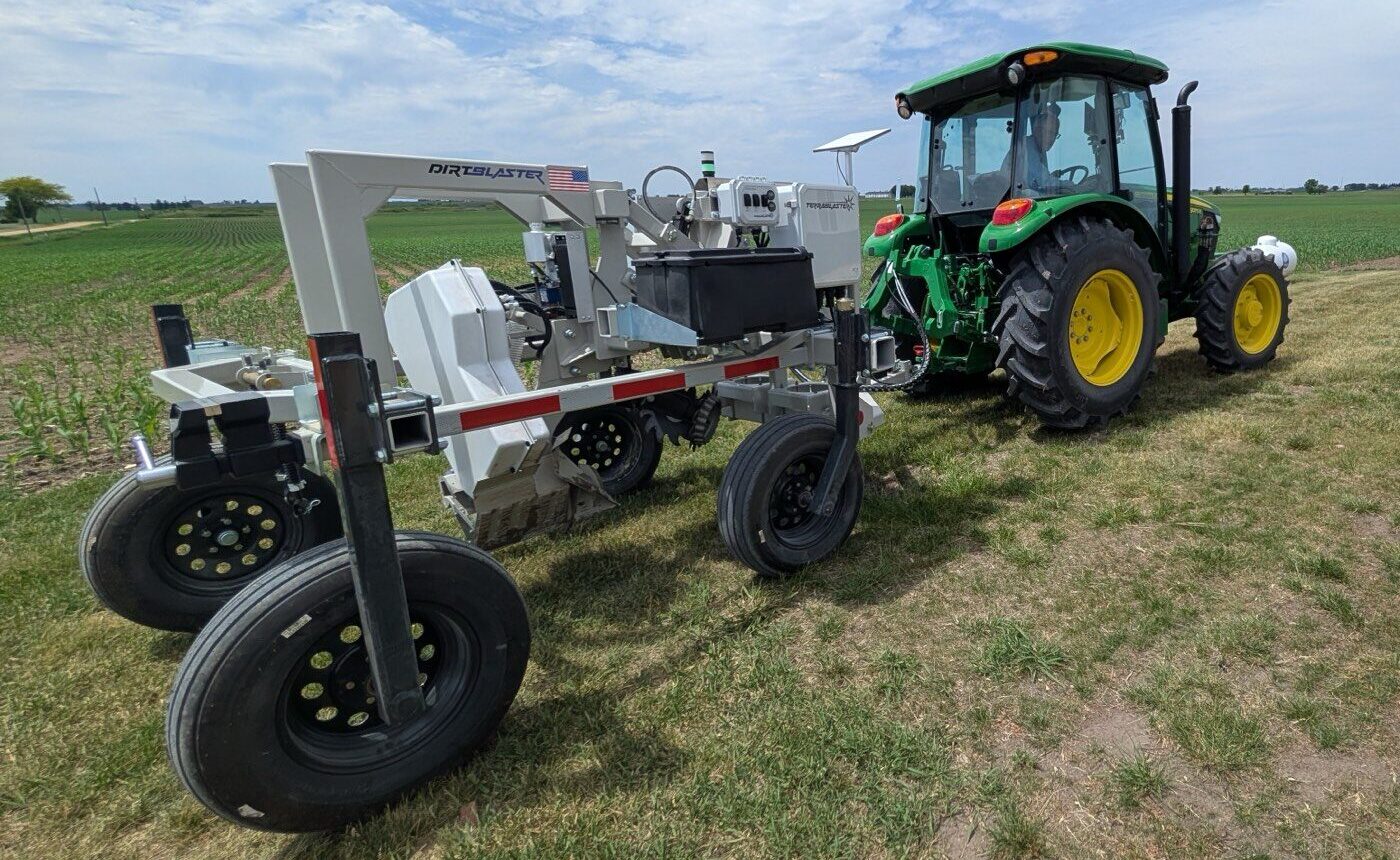
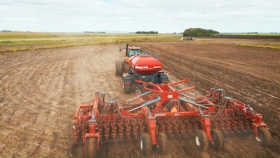
The core technology behind the startup uses laser-induced breakdown spectroscopy (LIBS), a technique originally deployed on Mars rovers. Attached to a tractor or ATV and dragged at a depth of roughly six inches, the sensor analyzes soil composition dynamically. The system emits high-energy laser pulses that vaporize tiny amounts of soil to create plasma, measuring light wavelengths as the plasma cools to evaluate pH, nitrogen, phosphorus, potassium, and other essential nutrients.
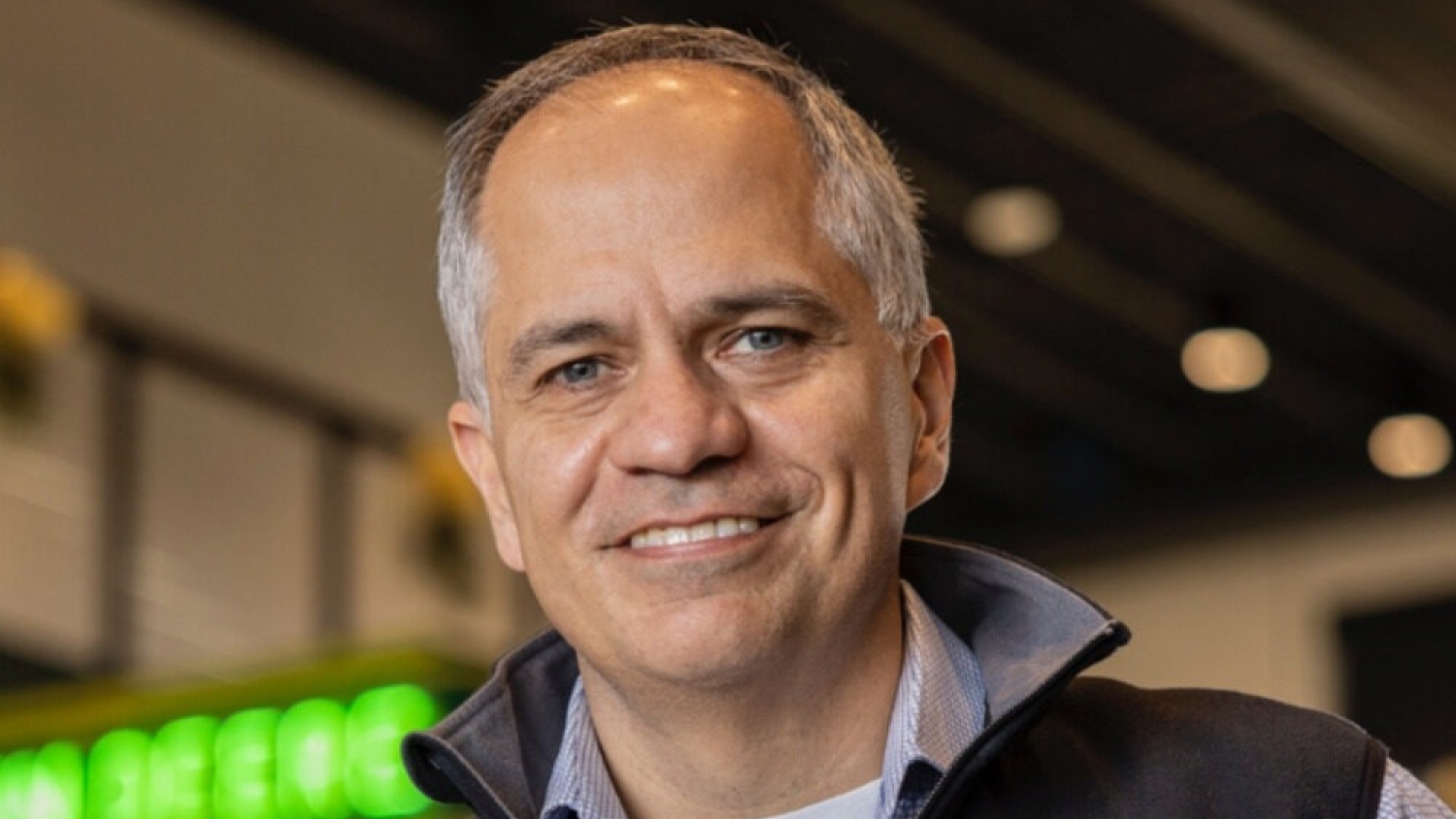
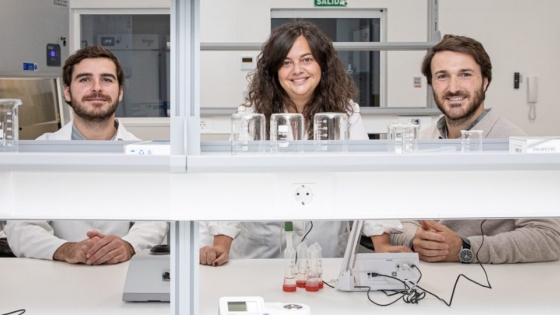
The startup was cofounded by CEO Jorge Heraud, who previously cofounded ag robotics company Blue River Technology before its acquisition by John Deere for $305 million. TerraBlaster collaborated with Impossible Sensing to adapt the LIBS sensor for agricultural applications. "With our technology, there’s no reason to suffer suboptimal yields by applying nutrients to a field based on low-resolution or old measurements," said Jorge Heraud. "We are quickly moving to a future where real-time measurements enable precise soil fertilization, all in one pass."
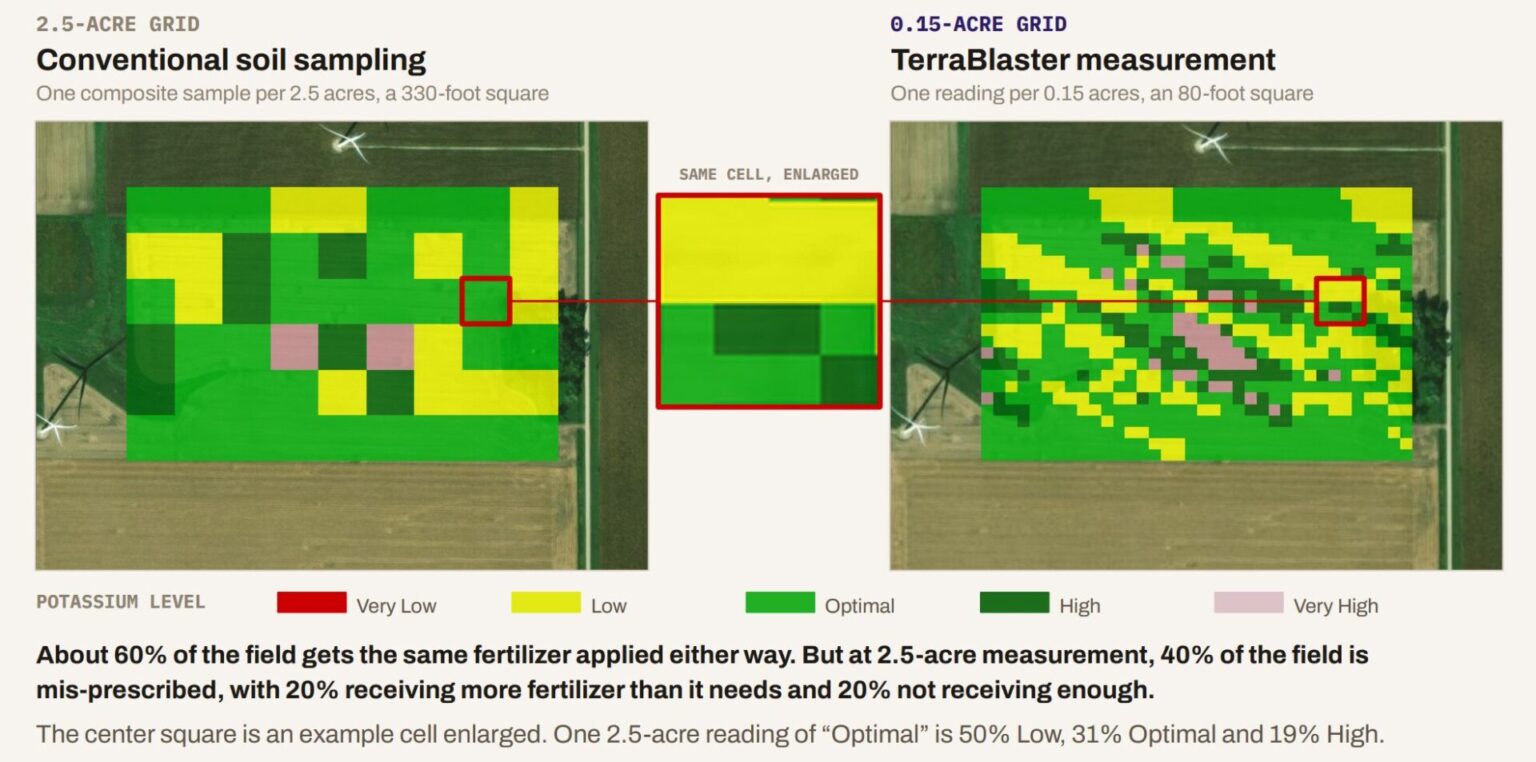
The company aims to address key limitations of conventional soil testing methods, which typically rely on broad grid sampling across 2.5-acre plots and manual laboratory analysis. TerraBlaster's first commercial device, the Blaster 1000, operates at a resolution of 0.15 acres (80 by 80 feet), generating data roughly twenty times per second. This higher resolution allows farmers to apply variable-rate fertilizers precisely where needed, reducing input waste and preventing yield loss caused by undetected nutrient deficiencies.
Currently operating at 5 mph, TerraBlaster plans to increase mapping speeds to 10 mph, with potential long-term target speeds of 20 mph using narrower soil probes. The initial go-to-market plan focuses on selling hardware to row-crop farmers, agronomists, and agricultural retailers. The business model projects potential savings of $10 per acre on testing labor alongside yield gains of up to $35 per acre for corn and soybean crops, with yield increases reaching up to 20 percent in highly deficient field zones.
Looking ahead, TerraBlaster plans to conduct Midwest field demonstrations during fall 2026 before launching pre-sales ahead of its spring 2027 commercial rollout. The company also aims to test fully integrated real-time measurement and fertilizer application systems by 2028.
Invertí en periodismo de calidad
En Agroempresario trabajamos para acercarte contenidos que agregan valor.