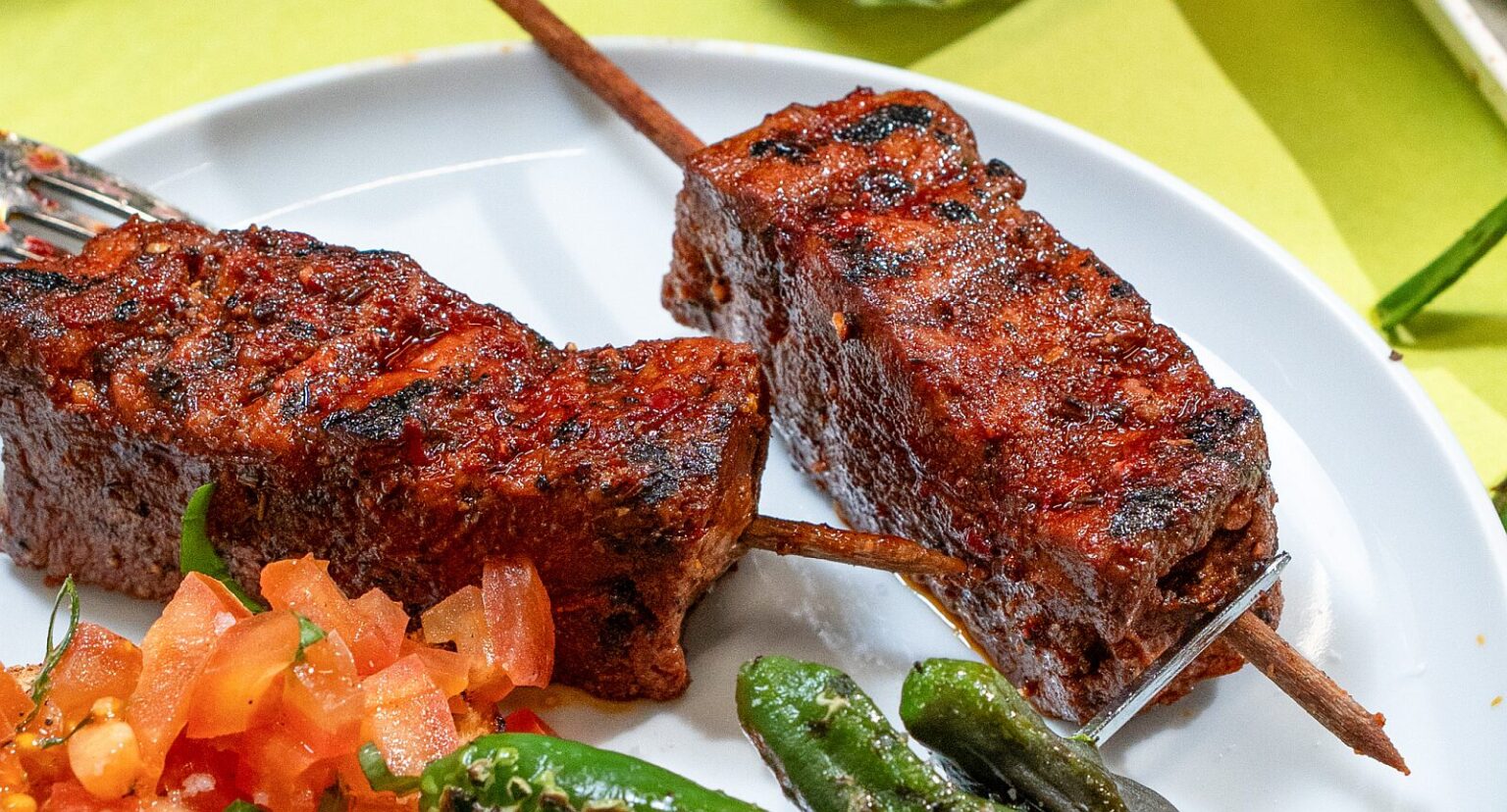
Swiss plant-based meat company Planted is expanding its production capacity in Germany and developing new products based on its proprietary solid-state fermentation technology, according to a report by AgFunderNews. The company plans to double capacity at its facility in Memmingen while exploring partnerships with food brands, manufacturers and butchers across Europe.
The expansion is aimed at meeting growing demand for steaks, steak bites, cold cuts and other whole-cut products made through a combination of extrusion and fermentation.
“We’re adding more capacity and taking our whole-muscle technology into new product categories, including cold cuts, where basically, you create a whole muscle that can be cut into thin pieces,” Planted CEO Pascal Bieri told AgFunderNews.
The Memmingen facility, which opened in 2025, uses an industrial process in which extruded plant proteins undergo solid-state fermentation inside specialized chambers. According to Bieri, extrusion provides the initial structure, while fermentation adds texture, flavor and juiciness.
The company currently produces around eight tons of products per day at the German plant. Together with its original facility in Kemptthal, Switzerland, Planted reaches approximately 20 to 25 tons per day, with production split roughly equally between retail and foodservice.
Planted's portfolio includes steaks, steak bites and pastrami, while a minced-meat product is also expected to launch soon. However, Bieri acknowledged that current production capacity is insufficient to meet all of the demand from customers.
The company is also focused on keeping production costs competitive. Its internal goal, known as the “One Plus One Vision,” is to spend one dollar on raw materials and another dollar on processing and packaging, with the aim of producing one kilogram of meat for two dollars.
“We learned one thing going into the most difficult retail market in the world, Germany, which is that price matters,” Bieri said.
The executive explained that Planted does not want its products to remain limited to premium restaurants or niche consumers. Instead, the company is seeking technologies capable of producing alternative proteins at a cost that allows them to reach a broader market.
At the same time, Planted is considering a broader B2B business model. Rather than selling every product under its own brand, the company could supply fermented plant-based “muscle” as a semi-finished ingredient to local food manufacturers, brands and butchers.
The strategy is particularly relevant in markets such as France, where the company is exploring potential partnerships. Under this model, Planted would produce the fermented protein in bulk while local partners would handle additional processing, product development and adaptation to regional tastes.
“I don’t think a better protein always needs to be branded,” Bieri said. “I don’t imagine a protein shelf being purple [the Planted brand color] across the world in 20 years. I think local brands prevail, local tastes prevail, and we do look at that very strategically.”
Growth in Germany and Europe
Planted's expansion comes as the alternative meat market shows different trends across European countries.
According to figures cited by Bieri, plant-based meat retail sales in Germany increased 7.2% in the first quarter, while Planted's own sales grew 49%, driven by wider distribution and particularly strong demand for its steak products.
The company also reported growth in Austria and Italy, while the Swiss market remained broadly stable. Spain was described as declining and the UK as a more difficult market.
Planted currently has products listed with major retailers including Tesco, Albert Heijn and Carrefour. Because of limited production capacity, however, the company has prioritized Germany, Austria and Switzerland.
The company has also undergone a workforce adjustment. Planted reduced its workforce by approximately 11% over the past year and now employs 231 people, according to Bieri. He described the cuts as a “readjustment to the future” linked to changes in priorities, technologies and geographic focus.
Despite those challenges, the CEO remains optimistic about the long-term potential of the sector. He argues that the relevant market is not limited to plant-based meat but encompasses the broader global protein market, including animal, plant-based and cultivated proteins.
“I still truly believe the addressable market is the total protein market, and that the better technologies, the better unit economics, and the better products will prevail,” Bieri said.
For Planted, the strategy is therefore to combine fermentation technology, lower production costs and partnerships with local companies to increase volumes and adapt products to consumers in different European markets.
As Bieri summarized: “Screw the ‘alt-protein’ [characterization]. The whole protein market will be so much more diverse in the future.”