Mafix raises $5.4M to turn rocks into climate-smart fertilizer
The California startup will scale trials of a fertilizer designed to improve soils while permanently removing CO2
jueves 20 de agosto de 2026
Mafix, a California-based startup developing a rock-based fertilizer and carbon removal technology, has raised $5.4 million in pre-seed funding to scale its approach to enhanced rock weathering. According to AgFunderNews, the company plans to produce about 1,000 tons of its product for agricultural trials across the United States.
The funding round was led by Azolla Ventures, with participation from Counteract VC, Astera Institute, Plug and Play Ventures, Impact Science Ventures and a Dutch family office.
Mafix's technology is designed to accelerate the natural weathering of silicate minerals. The company says its approach could provide several benefits at once: removing carbon dioxide from the atmosphere, improving soil quality, increasing crop yields and potentially reducing fertilizer costs.
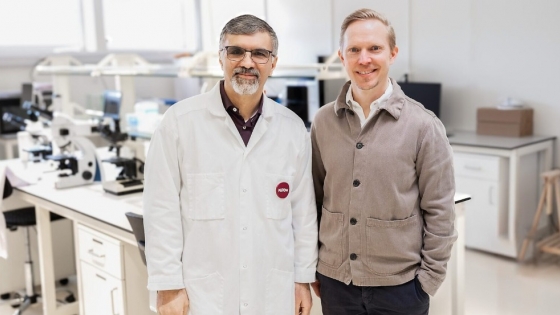
The technology was developed at Stanford University by cofounder Jade Marcus and Matt Kanan. Instead of applying conventional silicate minerals directly to farmland, Mafix processes silicate rocks and limestone in cement kilns.
The process triggers a solid-state ion exchange that creates more reactive calcium-magnesium silicates. When the resulting material is applied to agricultural land, it dissolves more quickly and reacts with carbon dioxide, converting it into stable bicarbonates that can remain stored over long periods.
Marcus explained to AgFunderNews that one of the main advantages is the possibility of making carbon removal easier to measure.
“What you hear a lot about in the ERW space is that there’s not enough signal to noise. MRV is super expensive and you’re having to go out there and do it year after year. By having something that can weather quickly, you’re able to get over that signal to noise barrier.”
The company refers to this as enhanced rock weathering (ERW). The technique uses crushed silicate rocks such as basalt or olivine, which naturally react with rainwater and atmospheric CO2. Mafix's process aims to accelerate that reaction significantly.
Beyond carbon removal, the startup is developing its product as an agricultural input. The silicates can release nutrients into the soil, including plant-available silicon, which could help strengthen crops and improve their resilience.
Mafix is also exploring whether the product could improve the efficiency with which crops use nitrogen and phosphorus. The company says this could potentially reduce farmers' reliance on conventional NPK fertilizers.
However, Marcus stressed that larger field trials are still required before the company can substantiate those agronomic benefits.
The startup also sees potential in using its product as a liming material. Mafix says its material has a 126% calcium carbonate equivalent, indicating a higher acid-neutralizing capacity by weight than conventional agricultural lime.
The company's business model initially relies on carbon markets. Mafix expects carbon-credit revenue to allow farmers to receive the product at no cost while the company gathers more data on its agricultural performance.
In the longer term, however, the startup wants the fertilizer itself to become economically valuable. One possibility would be incorporating Mafix's material into conventional fertilizer blends, replacing some of the inert filler typically used in NPK products.
The new funding will support the production of approximately 1,000 tons of material, enough for an estimated 1,000 to 2,000 acres depending on application rates. Mafix plans to use the output for larger agricultural trials across multiple locations.
The company estimates that enhanced rock weathering credits currently generate between $200 and $500 per ton of CO2 removed, while Mafix believes its technology could eventually bring carbon-removal costs below $100 per ton. Those economics, however, will depend on production scale and the profitability of the agricultural product.
Mafix also plans to take advantage of underused cement kiln capacity. The company intends to work with cement producers to process limestone and silicate rocks locally, creating a distributed production and logistics network.
Marcus acknowledged that the additional processing requires energy and generates emissions, but argued that the resulting increase in mineral reactivity can more than compensate for those impacts.
The company points to early scientific results as evidence of the technology's potential. A 2025 Nature study from Kanan's Stanford laboratory demonstrated the underlying mineral chemistry and rapid dissolution of the materials. Mafix says one of the tested silicate rocks became fully carbonated within seven weeks.
The startup also cites controlled mesocosm experiments in which it says its material removed more than 4.7 tons of CO2 in 10 weeks, while conventional basalt and olivine showed negligible removal over the same period.
With the new capital, Mafix expects to have enough funding to conduct trials across at least two growing seasons. The company argues that its long-term opportunity depends on creating an agricultural product that has value beyond carbon credits.
As Marcus told AgFunderNews: “A lot of the products you see are carbon first and products later. What we see is that you first need to create a product that people want that also is good for the planet.”
According to AgFunderNews, Mafix's strategy is therefore to combine carbon removal with agricultural benefits, creating a product that can generate value for farmers while contributing to long-term CO2 removal.
Invertí en periodismo de calidad
En Agroempresario trabajamos para acercarte contenidos que agregan valor.